A solid oak kitchen can feel dated long before it is worn out. The doors may have an orange-toned finish, heavy raised panels, or hardware that has seen better days, but the cabinet boxes themselves may still be strong and useful. That is where cabinet refacing for oak kitchens can make a real difference. It changes the visible parts of the kitchen while preserving the sound structure already in place.

For more than 30 years, Kitchen Perfect has been helping Northeast Ohio homeowners transform outdated kitchens without the expense of a complete remodel. As a family-owned company, we believe every homeowner deserves a beautiful kitchen that combines lasting quality, expert craftsmanship, and exceptional value.
Whether you’re considering cabinet painting, cabinet refinishing, or cabinet refacing, our experienced team specializes in giving existing cabinets a durable, factory-quality finish that can completely change the look of your kitchen. The information below will help you make informed decisions and choose the best solution for your home.
What Cabinet Refacing Changes
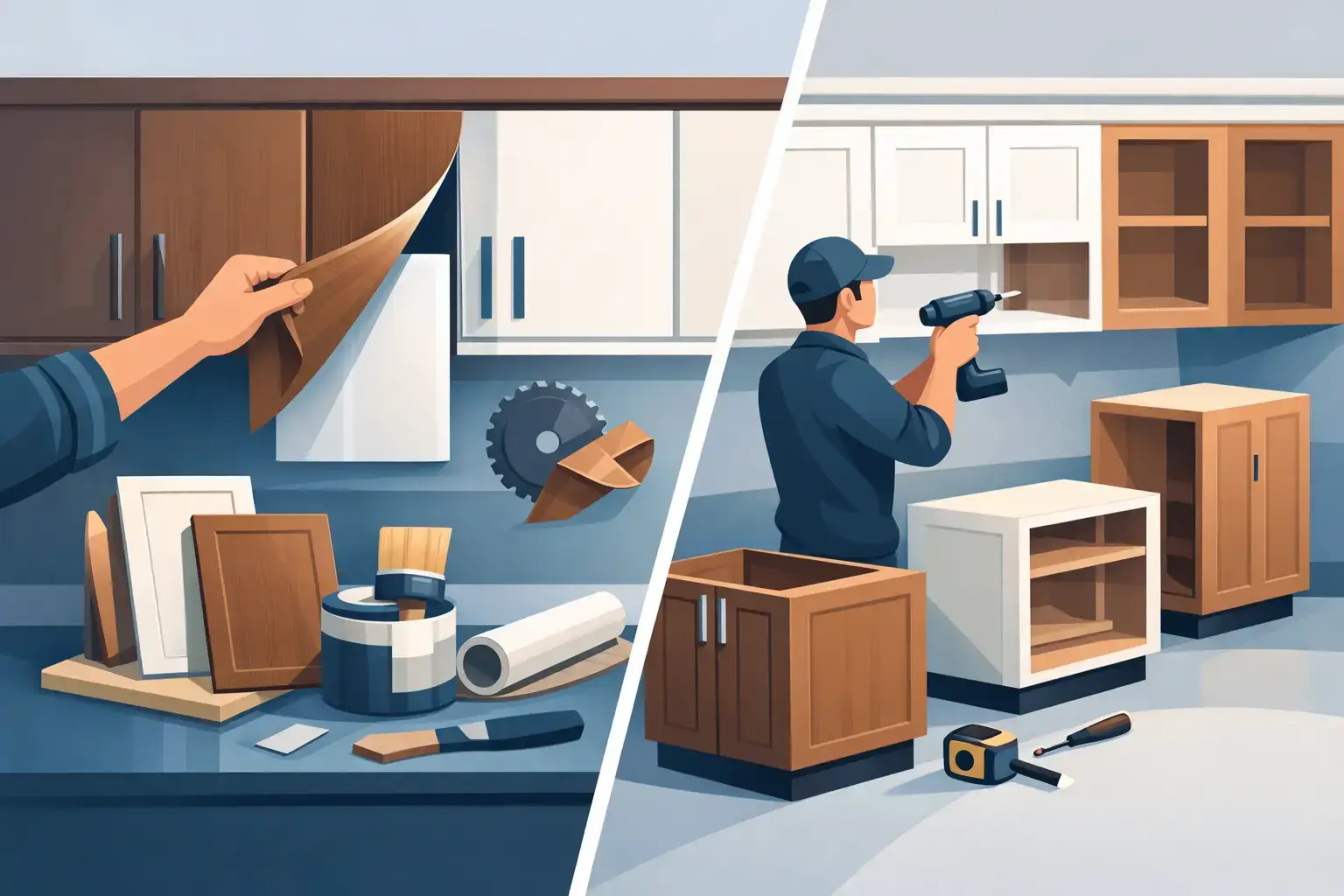
Cabinet refacing is more than putting a new coat of paint on old doors. The process typically involves removing the existing cabinet doors and drawer fronts, covering the exposed cabinet frames with a new matching material, and installing new doors, drawer fronts, hinges, and hardware. The result is a coordinated, finished look from every angle.
With an oak kitchen, this matters because oak grain is often very noticeable. If you simply replace the doors but leave the original face frames exposed, the old and new materials can clash. Proper refacing gives the cabinet fronts, sides, and doors a consistent appearance.
Homeowners can choose a new door style, color, finish, and hardware to move away from the traditional oak look. A simple shaker-style door in a warm white, soft gray, natural wood tone, or deeper painted color can make the same kitchen layout feel much more current.
When Oak Cabinets Are Good Candidates for Refacing
Oak is a durable hardwood, which is one reason so many older kitchens still have usable cabinet boxes decades later. Cabinet refacing makes sense when those boxes are structurally sound, securely mounted, and laid out in a way that still works for your household.
Look closely at the areas around the sink, dishwasher, and floor-level cabinets. Water damage, swollen particleboard, loose frames, or severe warping can change the decision. A few small repairs may be manageable, but widespread damage is a sign that replacement may be the better investment.
Function matters just as much as condition. If you like where your sink, range, refrigerator, and main storage areas are located, refacing can preserve a layout that already serves you well. If the kitchen is cramped, lacks needed storage, or requires major plumbing and electrical changes, new cabinetry may offer more value in the long run.
A straightforward question helps: are you unhappy with the cabinets themselves, or are you unhappy with how they look? If the answer is mostly appearance, refacing is often worth serious consideration.
Cabinet Refacing for Oak Kitchens vs. Refinishing
Refacing and refinishing are both useful services, but they solve different problems. Refinishing keeps your existing doors and drawer fronts. The surfaces are prepared, repaired as needed, then stained or painted for a fresh look. It can be a good choice when you like the existing door style and want to update the color or reduce the orange tone common in older oak finishes.
Refacing replaces the doors and drawer fronts. That gives you more freedom to change the style of the kitchen, not just its color. A kitchen with ornate raised-panel oak doors can become a cleaner shaker-style kitchen without tearing out the cabinet boxes.
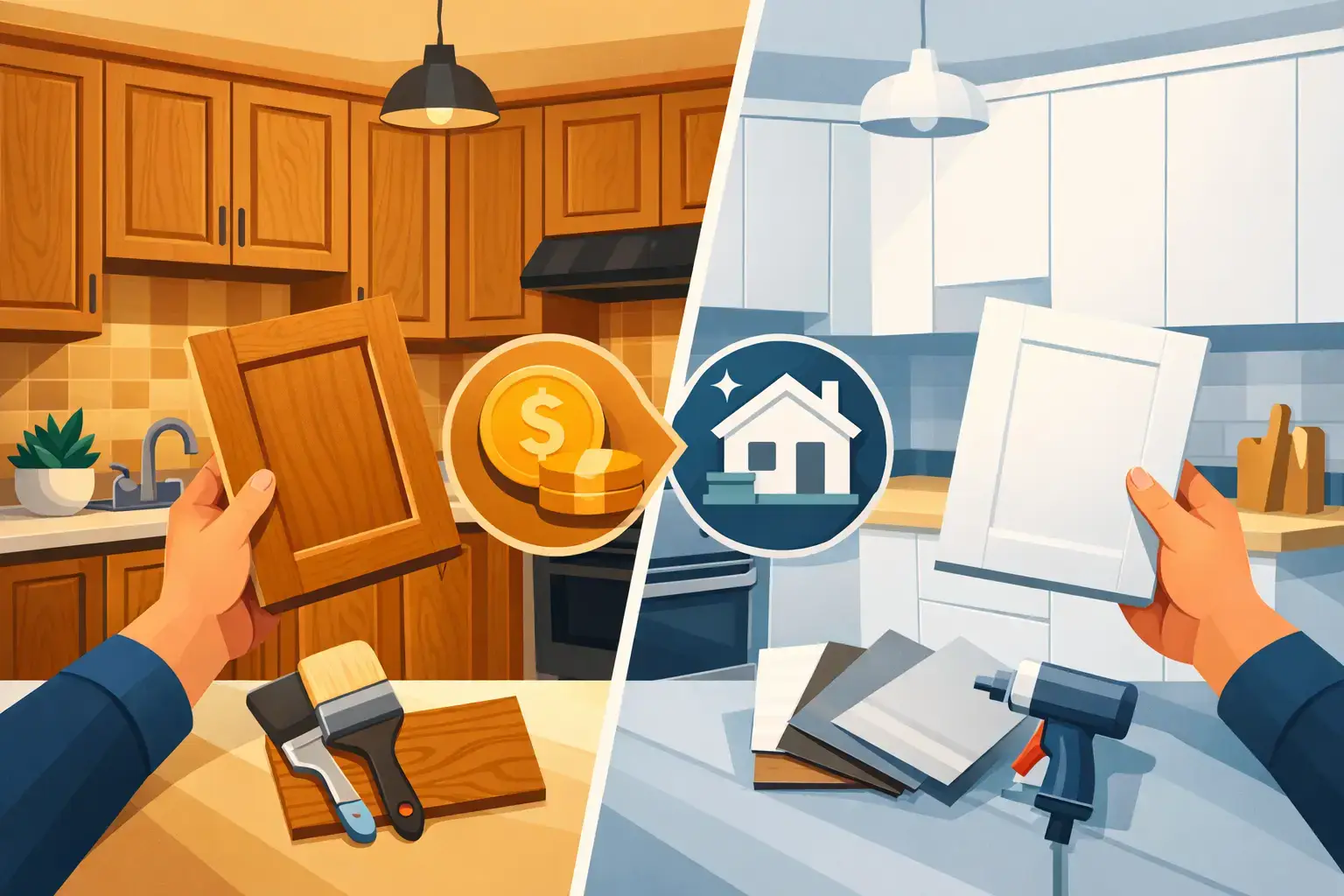
The trade-off is cost. Refinishing is generally the lower-cost option when the doors are in good shape and the style is still right for your home. Refacing costs more than refinishing because it includes new components and more installation work, but it usually costs far less than removing and replacing an entire kitchen.
Neither option is automatically right. The best choice depends on the cabinet condition, the style you want, and how much change you need to see when the project is done.
The Benefits of Keeping the Existing Layout
Full cabinet replacement can involve demolition, wall repairs, flooring changes, plumbing adjustments, electrical work, and longer time without a working kitchen. Those expenses add up quickly, especially when a project reveals issues hidden behind the old cabinets.
Refacing avoids much of that disruption because the cabinet boxes stay in place. There is less demolition, less material going to the landfill, and less chance of a simple kitchen update becoming a major construction project. For homeowners who want a noticeable change while keeping spending under control, that is a meaningful advantage.
Keeping the layout also protects the practical details you already know work. Maybe the pantry is where you need it, the sink has a good view of the yard, and the refrigerator is easy for the family to reach. You do not have to redesign a functional kitchen just to get rid of dated oak doors.
That said, refacing is not a way to ignore storage problems. If you need deeper drawers, a better pantry solution, pullout shelves, or a different cabinet configuration, ask about those needs before the work begins. Some upgrades can be incorporated during a refacing project, while others may require more extensive changes.
Design Choices That Work Well With Older Oak Kitchens
The goal does not have to be making your kitchen look like every other kitchen on the block. A good update should fit the home, provide easy maintenance, and still feel right years from now.
Shaker doors remain a popular choice because their clean lines work in both traditional and more updated homes. They are simple without feeling plain. Slab doors can create a more modern look, while a modest raised-panel profile can preserve some traditional character without repeating the heavy style of many older oak kitchens.
Color should be chosen with the countertop, backsplash, flooring, and natural light in mind. Soft whites can brighten a darker room, but a very bright white may show every scuff in a busy family kitchen. Gray can look sharp, although warmer gray tones often work better with many Ohio homes than cool blue-gray finishes. Natural wood finishes can also be a strong choice for homeowners who still appreciate wood grain but want a cleaner, more current look than old golden oak.
Hardware is a smaller detail with a big effect. New pulls and knobs can make doors feel easier to use and help set the overall style. Brushed nickel, matte black, bronze, and stainless finishes can all work well when they coordinate with the faucet, lighting, and appliances.
Why Workmanship Matters in a Refacing Project
Refacing is a detailed job. Doors need to be properly aligned, drawer fronts need even spacing, and the new material on cabinet frames must be fitted neatly around openings, corners, and finished ends. Small mistakes stand out in a kitchen because the work is at eye level every day.
This is also why the lowest quote is not always the best value. A price should reflect the condition of the cabinets, the door and material options selected, the preparation required, and who is actually completing the work. Homeowners deserve clear answers about what is included and what happens if repairs are found along the way.
Kitchen Perfect has more than 25 years of experience helping local homeowners update kitchens without pushing them into full replacement when it is not needed. With an in-house cabinet shop and work handled directly by its own team, the focus stays on fit, finished quality, and fair pricing rather than layers of subcontractors.
Start With an Honest Look at Your Kitchen
Before choosing colors or door styles, take stock of what you have. Open every cabinet. Check for water damage and loose shelves. Think about whether the current layout supports the way your family cooks, stores groceries, and gathers in the room. Then decide how much of the change is cosmetic and how much is functional.
If the oak cabinet boxes are solid and the layout still works, refacing can give your kitchen a major visual update at a more manageable cost than starting over. A careful in-home estimate can help you compare refacing, refinishing, and replacement based on the actual condition of your kitchen, not a one-size-fits-all answer.
Your kitchen does not need to be torn apart to feel like a room you are proud to come home to.