

A kitchen can look tired long before it stops working. Doors may sag, drawer boxes may stick, and finishes may be worn down from years of family meals, homework, and everyday use. New kitchen cabinets can give the room a fresh start, but replacement is a major decision. For many Northeast Ohio homeowners, the right answer depends less on what is trendy and more on the condition of the existing cabinets, the layout, and the budget.
The goal is not to spend more than necessary. It is to make the kitchen look and work better for the way your household lives. Sometimes that means new cabinetry. Other times, cabinet refacing or refinishing delivers the change you want without tearing out cabinets that are still doing their job.
When New Kitchen Cabinets Make Sense
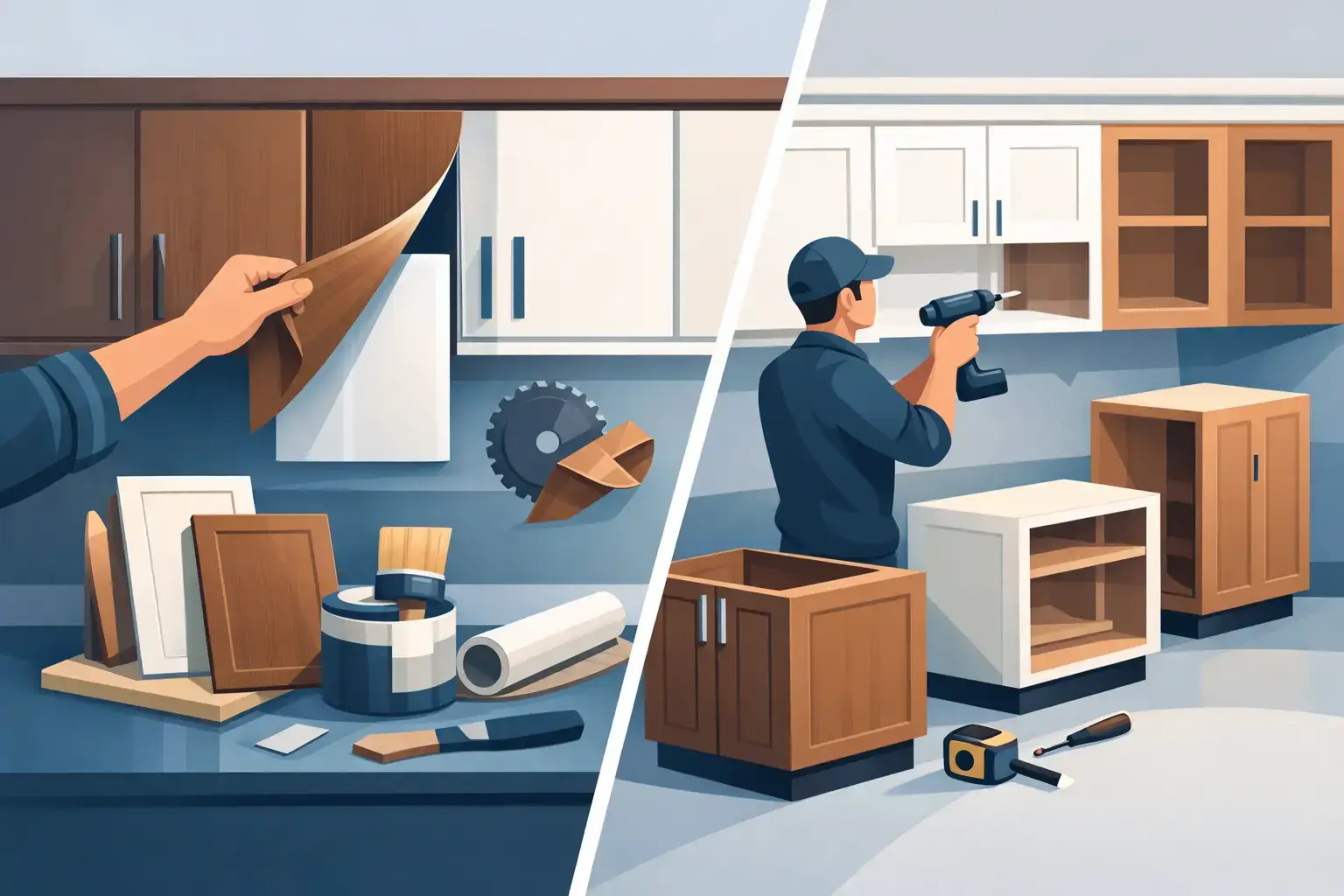
New cabinets are usually the right choice when the cabinet boxes themselves are damaged, poorly built, or no longer fit the kitchen’s needs. If water has caused swelling around the sink base, shelves are sagging, corners are separating, or drawers have failed beyond a practical repair, a new cabinet installation may be the better long-term value.
Replacement also makes sense when you want to change the layout. Moving appliances, adding an island, opening a wall, or creating more usable storage often requires cabinets designed for the new plan. Refacing can transform the appearance of an existing layout, but it cannot create a better work triangle or add a pantry where there is no room for one.
Signs the Existing Cabinets Are Beyond a Surface Upgrade
Cabinets are built to carry weight, withstand humidity, and handle constant opening and closing. When their structure is failing, a cosmetic update can only go so far. Look closely inside the cabinets, not just at the doors. Particleboard that has crumbled from moisture, loose face frames, cracked cabinet sides, and drawer boxes that no longer stay square are signs to take seriously.
Older cabinets can also create a storage problem. Deep shelves without pullout options, narrow drawers, awkward corner cabinets, and little room for trash or recycling can make a kitchen frustrating to use. New cabinetry gives you the chance to address these daily issues rather than simply cover them up.
That said, age alone does not mean replacement is necessary. Many older homes in North Royalton, Brecksville, Broadview Heights, and nearby communities have solid cabinet boxes that were built better than some newer alternatives. If those boxes are level, sound, and laid out well, refacing may be the more sensible path.
When Refacing May Be the Better Value
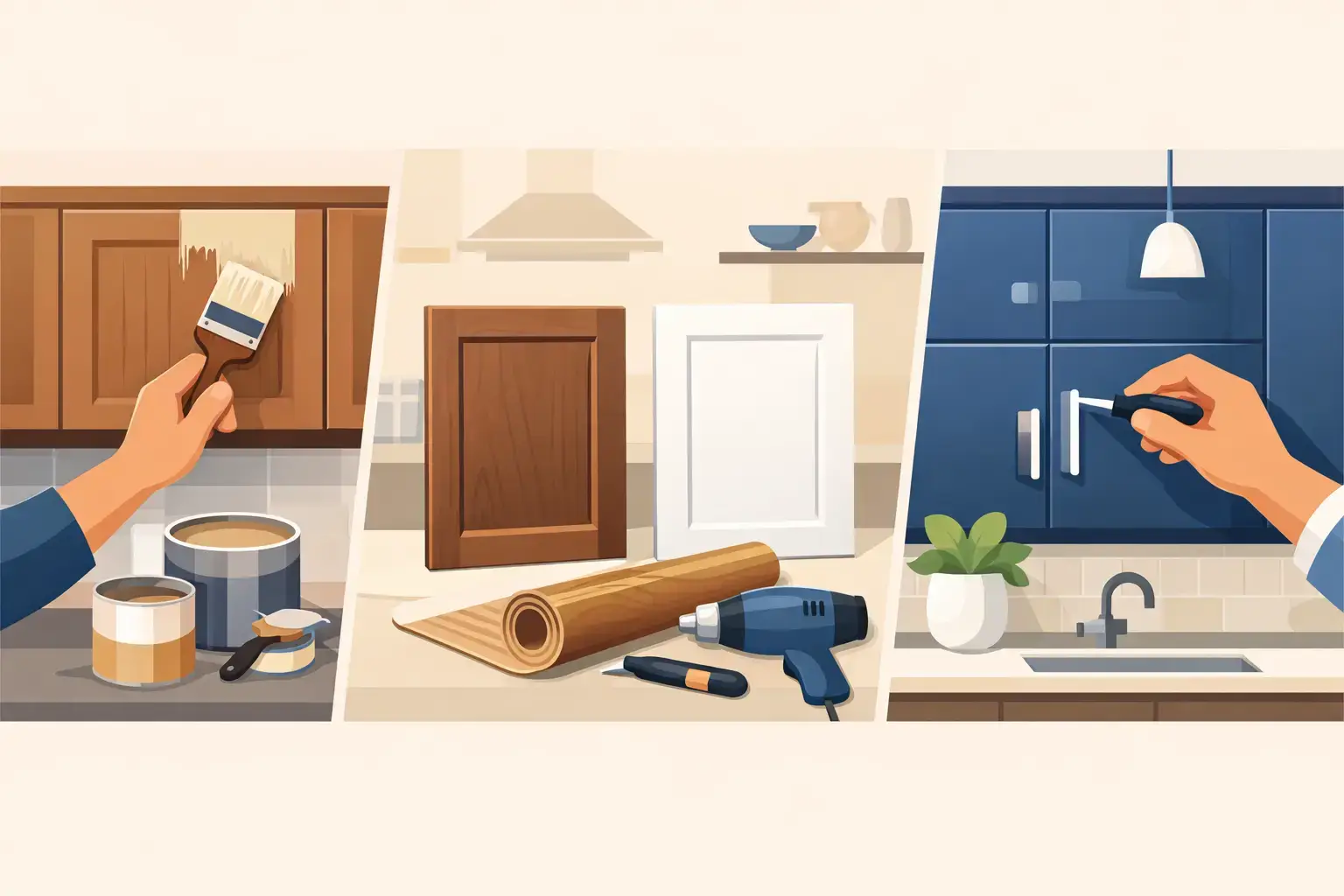
Cabinet refacing keeps the existing cabinet boxes in place while updating visible surfaces with new doors, drawer fronts, and matching veneer. It is a practical choice when you like the current layout but want a major change in style, color, or finish.
This approach can reduce material costs and disruption because the cabinet boxes are not being removed and rebuilt. It also avoids the ripple effect that sometimes comes with full replacement, such as repairing flooring, moving plumbing, or reworking walls after old cabinets come out.
Refacing is not a shortcut when it is done correctly. The finished look depends on careful preparation, properly fitted components, and quality doors and drawer fronts. A poor refacing job can look uneven at the edges or fail early around high-use areas. A well-done job should look intentional, finished, and built for daily use.
For homeowners who want to preserve a functional kitchen while making it feel current, this option often provides the strongest balance of appearance, cost, and convenience. It is especially appealing when the countertop, appliances, and layout can remain in place.
What Drives the Cost of New Kitchen Cabinets?
There is no one price for replacement cabinets because the details matter. A small galley kitchen with standard-size cabinets will be a different project from a large open kitchen with a wall of pantry storage, an island, and custom features.
Cabinet construction is a major factor. Materials, door style, drawer hardware, interior organizers, finishes, and trim all affect the final cost. Stock cabinets can work well for straightforward spaces, while semi-custom and custom cabinetry offer more flexibility for unusual dimensions, storage needs, and design preferences.
Labor matters just as much as the cabinets themselves. Removing old cabinets, leveling new boxes, handling trim work, and making sure doors and drawers are adjusted correctly takes skilled work. If walls or floors are out of square, as they often are in established homes, installation requires even more care to achieve clean lines and proper function.
The broader scope of the kitchen also affects the budget. New flooring, countertops, backsplash, lighting, plumbing changes, and appliance relocation can turn a cabinet project into a full renovation. That may be worthwhile, but it should be a deliberate decision rather than an unexpected expense halfway through the job.
Plan for How You Actually Use the Kitchen
A good cabinet plan starts with habits, not just a door color. Think about where groceries land when you come home, where small appliances live, who cooks, and what always seems to clutter the counter. These everyday details help determine whether you need more drawers, a pantry cabinet, a dedicated trash pullout, or better access to corner storage.
Storage Should Make Daily Work Easier
Drawers are often more useful than lower cabinets with fixed shelves because they bring pots, pans, and food storage containers into view. Deep drawers can make better use of base cabinet space, while shallow drawers keep utensils and tools organized. A pullout for trash and recycling can clear up floor space and make cleanup easier.
Tall pantry cabinets are valuable in kitchens without a separate pantry, but they need to be planned carefully. One large pantry may be ideal for a busy family, while a smaller kitchen may benefit more from a mix of drawers, upper cabinets, and a narrow pullout. The best choice depends on what you store and how much clear walking space the room can spare.
Choose Finishes for Real Life, Not Only the Showroom
White cabinets remain popular because they brighten a room, but they can show spills and scuffs in a busy kitchen. Dark finishes can hide some marks but may make a small space feel heavier. Wood tones, painted neutrals, and two-tone combinations each have their place when they fit the home’s style and your maintenance preferences.
Door style matters too. Shaker doors work in many homes because they are clean without being overly modern. More detailed profiles can suit traditional spaces, while flat-panel doors may fit a simpler, contemporary look. The right style is one you will still enjoy after the first excitement of the remodel has passed.
Work With a Company That Looks at the Whole Job
Cabinet work has to be measured correctly before anything is ordered or built. A clear estimate should explain what is included, whether the layout is changing, how existing surfaces will be protected, and what work may be needed around the cabinets. Homeowners deserve straightforward answers before construction starts.
It also helps to work with people who handle the work directly. Kitchen Perfect has more than 25 years of experience helping local homeowners weigh replacement against refacing and refinishing. With an in-house cabinet shop, the team can maintain control over many of the components and workmanship instead of passing the project through layers of outside contractors.
Ask practical questions during the estimate. Find out how the work area will be kept clean, how long the project is expected to take, who will be on site, and how final adjustments will be handled. The lowest number on paper is not always the best value if it leaves out necessary labor, quality materials, or follow-through after installation.
New cabinets should not force you into a kitchen that looks good but works no better than the old one. Start with an honest look at the cabinet condition, your layout, and the improvements that would make each day easier. A careful plan and skilled local workmanship can turn an aging kitchen into a room your family is glad to use again.
Pingback: Cabinet Refinishing Guide for Northeast Ohio Homes
Pingback: Veneer Options for Cabinet Refacing Explained - Kitchen Perfect