A dated kitchen does not always need a full tear-out. The right kitchen cabinet resurfacing options can change the room’s appearance, add value to your home, and keep a good working layout in place. For many Northeast Ohio homeowners, the decision comes down to the condition of the existing cabinets, the look they want, and how much disruption they are willing to take on.
Cabinets are usually the largest visual feature in the kitchen. When doors are worn, finishes are yellowed, or hardware feels dated, the whole room can look tired even if the cabinet boxes still have plenty of life left. Resurfacing gives homeowners a practical middle ground between living with an outdated kitchen and paying for complete cabinet replacement.
Start With the Condition of Your Cabinet Boxes
Before choosing a finish or door style, take an honest look at what is behind the doors. Resurfacing works best when cabinet boxes are solid, level, and structurally sound. Plywood or quality wood boxes that have held up well can often be updated successfully.
Signs that your cabinets may be good candidates include doors that close properly, shelves that are not sagging, and boxes without major water damage. A few scratched doors or worn drawer fronts are not usually a reason to replace everything. Those visible parts can often be changed.
Replacement may make more sense if there is severe water damage around the sink, widespread delamination, broken cabinet boxes, major pest damage, or a layout that simply does not work for your family. Resurfacing improves what is there. It cannot correct structural problems or create space where the kitchen has none.
The Main Kitchen Cabinet Resurfacing Options
There is no single answer for every kitchen. The best choice depends on the cabinets’ condition, your budget, and whether you want a light refresh or a major change in style.
Cabinet Refinishing
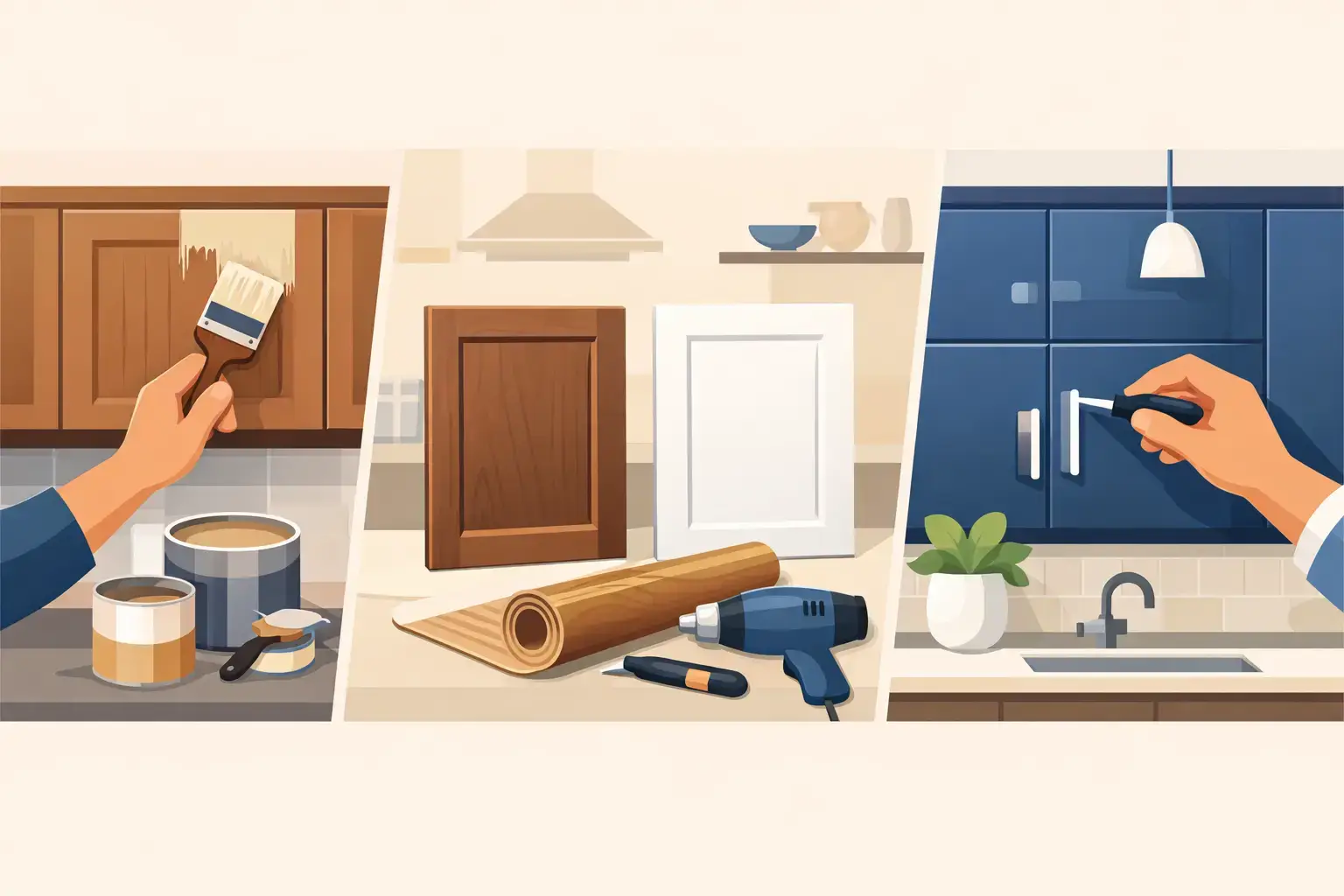
Cabinet refinishing keeps the existing doors and drawer fronts, then updates their finish. Depending on the material and desired result, this may involve cleaning, repairs, sanding, priming, painting, staining, or applying a protective topcoat.
Refinishing is often the most budget-friendly option when you like the existing door style and the doors are in good shape. It can be a strong choice for solid wood cabinets with a dated stain or painted cabinets that have become chipped and worn.
The trade-off is that refinishing does not change the shape of the doors. A raised-panel oak door can look fresh in a new color, but it will still have a raised-panel oak profile. Homeowners who want a cleaner shaker look or a more dramatic style change may be happier with refacing.
A lasting refinishing job also depends on proper preparation. Kitchen cabinets collect grease, moisture, and daily wear. A quick coat of paint may look fine for a short time, but poor surface preparation can lead to peeling, chipping, and uneven coverage. This is one area where workmanship matters more than a low initial price.
Cabinet Refacing
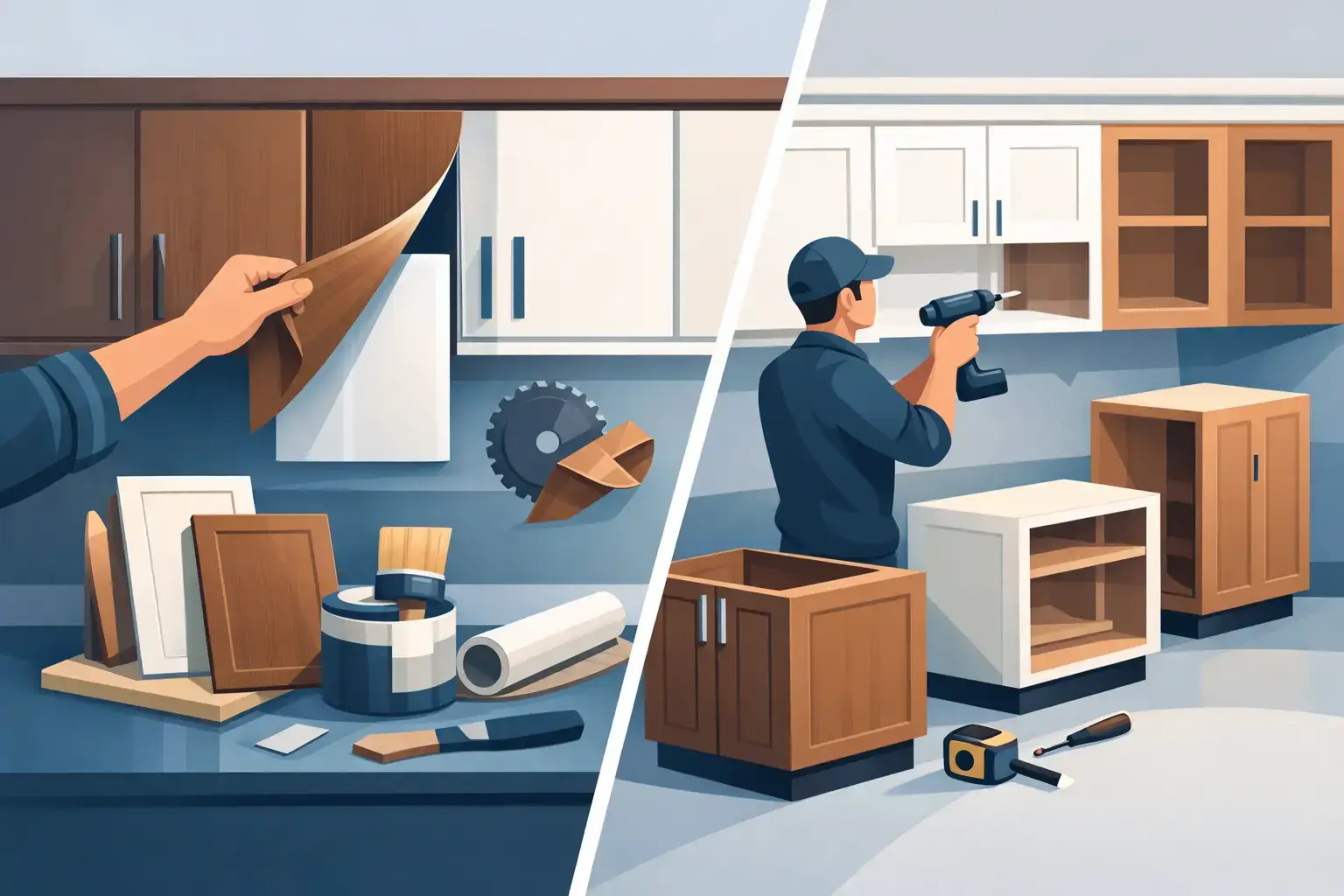
Cabinet refacing retains the existing cabinet boxes but replaces the doors and drawer fronts. The exposed faces of the cabinet boxes are covered to match the new doors, creating a consistent finished appearance. Hardware, hinges, molding, and other details can also be updated as part of the project.
For homeowners who have solid cabinet boxes but want the kitchen to look completely different, refacing is often the best value. You can move from an older door style to a shaker door, choose a new wood finish or painted look, and add details that make the kitchen feel more current.
Refacing costs more than a basic refinishing project because it includes new components and more fabrication work. Still, it is generally less expensive and less disruptive than replacing every cabinet. It also allows you to preserve a layout that already works, which avoids moving plumbing, flooring, electrical connections, and countertops unnecessarily.
At Kitchen Perfect, much of that work can be handled through an in-house cabinet shop. That gives homeowners more direct control over the finished product and helps avoid the added layers of cost that can come with outsourcing cabinet components.
New Doors and Drawer Fronts Only
Some homeowners consider replacing only the doors and drawer fronts without covering the cabinet faces. This can work in limited situations, especially when the cabinet boxes already have a compatible finish and the goal is a modest update.
However, it is easy for this approach to look incomplete if the old cabinet faces do not match the new doors. Color differences, worn edges, and mismatched wood grain can stand out once the new doors are installed. It is worth comparing the savings against a full refacing job that gives the kitchen a more uniform appearance.
Veneer or Laminate Surface Updates
Veneer and laminate materials can be used to update cabinet surfaces, particularly during a refacing project. These materials come in a wide range of wood looks, solid colors, and contemporary finishes. They can offer a clean, durable result when installed correctly.
Material selection should fit the kitchen’s use. A busy family kitchen needs finishes that can handle fingerprints, moisture, frequent cleaning, and everyday bumps. A very glossy surface may look sharp in a showroom but show smudges more readily than a softer matte finish. The best option is not always the trendiest one. It is the one you will still be happy to use every day.
When Replacement Is the Better Choice
Full cabinet replacement is sometimes the right call. If your cabinets are poorly built, damaged beyond practical repair, or arranged in a way that makes cooking and storage frustrating, resurfacing may only delay a larger project.
Replacement also gives you the most freedom to redesign the room. You can change cabinet depths, add an island, improve pantry storage, move appliances, or rework traffic flow. Those improvements are valuable when the layout is the real problem.
The cost and disruption are higher, though. New cabinetry can affect countertops, flooring, backsplash, electrical work, plumbing, and wall repairs. A full remodel is worthwhile when it solves real functional issues, but it is not automatically necessary just because cabinet doors look dated.
How to Choose the Right Option for Your Home
Think about the project in three parts: condition, function, and appearance. If the cabinet boxes are sound, the layout works, and you mainly want a new look, refinishing or refacing can be a sensible investment. If storage is poor or the cabinets are failing, replacement deserves a closer look.
Next, consider how long you plan to stay in the home. A homeowner preparing to sell may want a clean, affordable update that improves first impressions. A family planning to stay for many years may decide that new doors, better hardware, added roll-out storage, and a more durable finish are worth spending more on.
It also helps to look beyond the cabinet color. New pulls, soft-close hinges, crown molding, light rail, and updated countertops can make resurfaced cabinets feel like part of a coordinated kitchen update. You do not have to do every improvement at once, but the choices should work together.
Questions to Ask Before You Commit
A good estimate should explain exactly what will be reused, replaced, covered, repaired, and installed. Ask whether the company does its own work, how cabinet faces will be matched to the doors, what materials are being used, and how the work area will be protected during the project.
Ask about the finish as well. Is it designed for cabinet use? How will doors and drawer fronts be prepared? What kind of hinges and hardware are included? Clear answers help you compare more than just the bottom-line price.
For homeowners in North Royalton, Westlake, Brecksville, Middleburg Heights, Macedonia, Broadview Heights, Solon, and nearby communities, a local cabinet specialist can evaluate the cabinets in person and recommend the approach that fits the home rather than pushing replacement by default.
The best kitchen update is the one that fixes what bothers you, respects your budget, and holds up to real family life. If your cabinet boxes are still doing their job, resurfacing may be the practical change that lets you enjoy your kitchen again without turning your home upside down.