
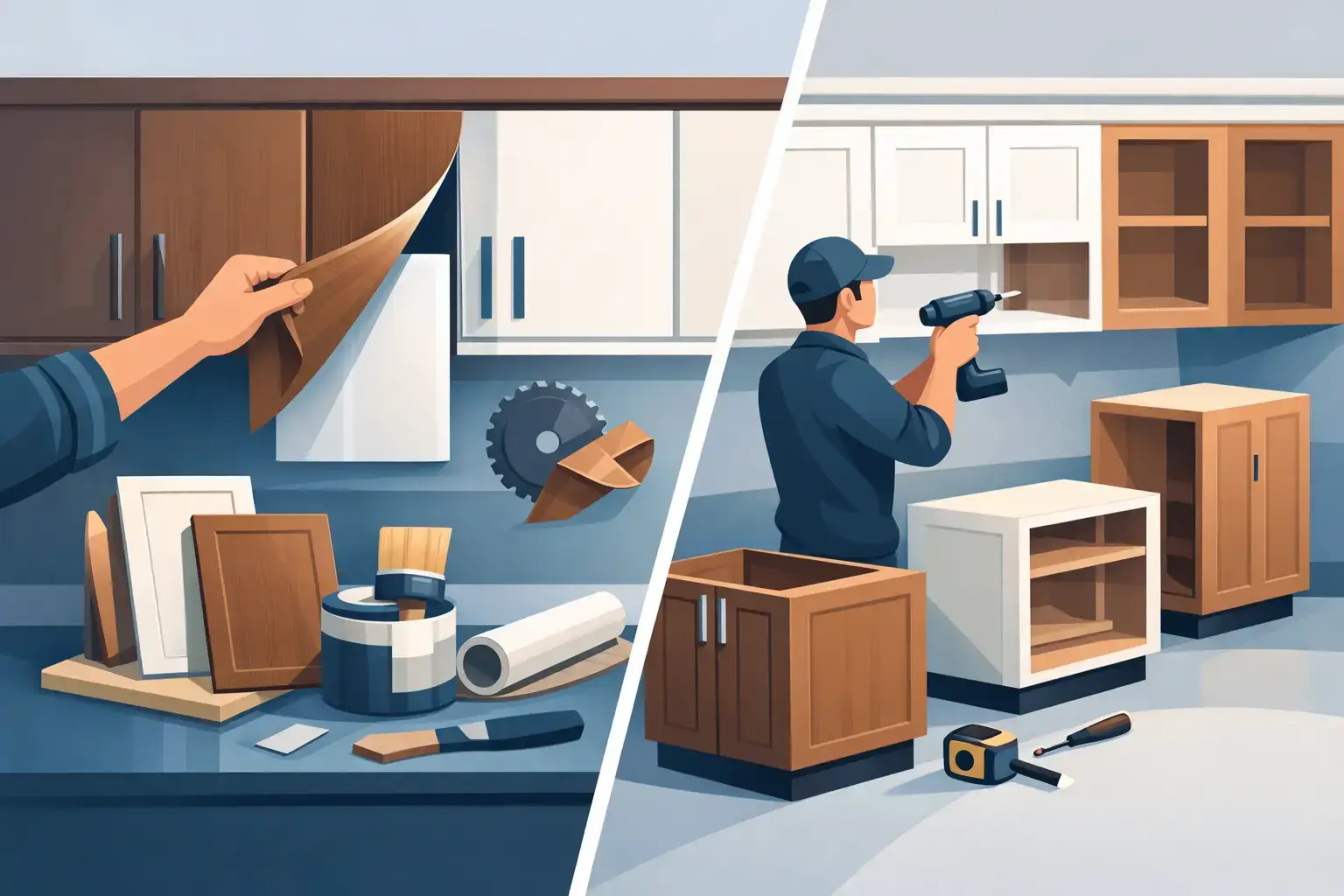
A kitchen can look tired long before it stops working. Worn doors, dated finishes, loose hardware, and a color that belonged in another decade can make homeowners think the whole room needs to be torn out. But when weighing cabinet refacing vs replacement, the right choice often comes down to one practical question: Are the cabinet boxes still worth keeping?
For many homeowners in North Royalton and across Northeast Ohio, the answer is yes. A well-built cabinet box can have plenty of life left, even when the outside of the kitchen needs a complete change. Refacing can deliver that change without paying for demolition, new cabinet boxes, and a full reconstruction of a kitchen that already functions well.
Cabinet Refacing vs Replacement: The Main Difference
Cabinet refacing keeps your existing cabinet boxes in place. The visible exterior surfaces are covered with new material, and the old doors and drawer fronts are replaced with new ones. Homeowners can choose a new door style, wood species, finish, color, and updated hardware. The result is a kitchen that looks substantially different while preserving the basic footprint of the room.
Cabinet replacement means removing the existing cabinets and installing entirely new ones. This creates more freedom to change the layout, add cabinets, move appliances, or alter storage. It also brings more construction, more decisions, and usually a much higher project cost.
Neither approach is automatically better. The best value depends on the condition of what you own and what you want the finished kitchen to do differently.
When Cabinet Refacing Makes Good Sense
Refacing is a strong option when your cabinet boxes are structurally sound and your current layout works for your household. If you have enough storage, your appliances are in sensible locations, and the cabinets are level and solid, there may be no reason to discard the foundation of the kitchen.
This is especially common in homes where the cabinets were built well but the door style has simply become dated. Raised-panel oak doors, faded finishes, scratched drawer fronts, and old hardware can make a kitchen feel older than it is. New doors, drawer fronts, finished surfaces, and hardware can give the room a cleaner, more current look without rebuilding it from the studs out.
Refacing also helps keep a project focused. Because the cabinet boxes remain in place, there is generally less demolition and less disruption to daily life than there would be with full replacement. That matters to families who use the kitchen every day and want a visible improvement without turning the home into a long construction zone.
Cost is another major reason homeowners consider refacing. Replacement includes new cabinet boxes, removal of existing cabinetry, installation, and often additional work once walls, flooring, or plumbing are exposed. Refacing avoids much of that expense while still changing the part of the cabinets everyone sees.
A good refacing project should not feel like a shortcut. It should feel like a sensible use of solid materials already in your home. The workmanship matters here. Doors need to fit correctly, surfaces need to be finished carefully, and the new look needs to hold up to the everyday use a kitchen receives.
Refacing Works Best When the Layout Stays Put
The biggest limitation of refacing is also what makes it affordable: the existing cabinet arrangement stays mostly intact. You may be able to make targeted improvements, such as replacing a cabinet section, adding practical accessories, or updating trim details. But refacing is not intended to completely redesign the kitchen.
If you like where the sink, range, refrigerator, and work areas are located, that is good news. You can modernize the appearance while avoiding the cost and disruption of moving the pieces that already work.
When Cabinet Replacement Is the Better Investment
There are times when replacement is the more honest answer. If cabinet boxes are water-damaged, badly warped, poorly constructed, or deteriorating, putting new doors on them will not solve the underlying problem. The same is true when shelves sag, bases are unstable, or repeated moisture exposure has caused swelling and breakdown.
Replacement may also make sense when the layout is the real source of frustration. Perhaps there is not enough storage, the workspace is cramped, a peninsula blocks traffic, or the refrigerator sits in an awkward location. If you want to move walls, relocate plumbing, change appliance locations, or create a completely new floor plan, new cabinetry gives you the flexibility to do it properly.
Homeowners sometimes choose replacement because they need a different type of kitchen, not just a different look. A growing family may need a pantry cabinet and more drawers. Someone planning to stay in the home long term may want accessibility changes or storage designed around how they cook now. In those cases, replacement can be worth the higher investment because it addresses function as well as appearance.
Still, a full replacement project should be chosen for the right reasons. Replacing sound cabinets only because the finish is outdated can add substantial cost without delivering a matching increase in day-to-day usefulness.
Compare the Cost Beyond the Initial Estimate
The price difference between refacing and replacement is real, but the lowest estimate is not always the best value. Homeowners should look at what work is included, who is performing it, what materials are being used, and how the finished quality will be managed.
With replacement, costs can grow when the project leads to additional work. Removing cabinets may reveal damaged walls, outdated wiring, uneven floors, or plumbing changes that need attention. New cabinet sizes can affect countertops, backsplashes, flooring, and appliance clearances. Those improvements may be worthwhile, but they should be part of the plan from the beginning.
Refacing usually has fewer moving parts because the cabinet boxes remain where they are. That can make budgeting more predictable. It also allows homeowners to put more attention toward the details that change the room most, including door style, finish, decorative elements, hardware, and countertops if desired.
For a value-conscious homeowner, the goal is not simply to spend less. It is to spend where the improvement will make a meaningful difference. If the kitchen functions well, refacing often puts the budget toward the visible transformation rather than toward replacing usable cabinet boxes.
Look Closely at Cabinet Condition First
Before deciding, take an honest look inside the cabinets, not just at the doors. Open every drawer. Check under the sink for signs of water damage. Look for swollen particleboard, loose bases, peeling interior surfaces, weak shelves, and boxes that have pulled away from the wall.
Then consider whether the cabinet construction is solid. Older cabinets are not automatically candidates for replacement. Many were built with sturdy frames and can serve a home well for years. On the other hand, cabinets that were cheaply built or severely damaged may not provide a reliable base for refacing.
A professional evaluation is useful because some problems are cosmetic and some are structural. A worn finish can be corrected. A cabinet box damaged by long-term leaks needs a more careful solution.
Consider the Rest of the Kitchen Plan
Cabinets are the focal point of the kitchen, but they do not exist by themselves. Your decision should fit the rest of the project. If countertops, flooring, lighting, or a backsplash are due for an update, either refacing or replacement can be part of a larger improvement.
The key is coordination. A new cabinet door color should work with the countertop and flooring you plan to keep. New hardware should suit the style of the room. If you are changing appliances, confirm their dimensions before finalizing cabinet work. Small planning steps prevent expensive surprises later.
At Kitchen Perfect, the value of an in-house cabinet shop is that much of the work can be controlled directly rather than passed through layers of subcontractors. For homeowners, that means a more personal process, consistent workmanship, and an approach built around the actual condition of their kitchen.
Choose the Project That Solves Your Real Problem
If you want a fresh kitchen look, your cabinets are solid, and the layout already serves your family, refacing is often the practical choice. It can deliver a major visual change at a lower cost and with less disruption than full replacement.
If your cabinet boxes are failing or the layout no longer works, replacement may be the better long-term move. It costs more because it solves bigger problems. There is no benefit in forcing refacing onto cabinets that are not sound or holding onto a layout that makes daily life harder.
A careful, no-pressure assessment is the right place to start. Look at what is worth preserving, what needs to change, and which investment will leave you happier to walk into your kitchen every morning.

Pingback: How to Choose Cabinet Refacing for Your Kitchen - Kitchen Perfect
Pingback: Does Cabinet Refacing Save Money for Homeowners? - Kitchen Perfect
Pingback: Cabinet Refinishing Guide for Northeast Ohio Homes - Kitchen Perfect
Pingback: How to Plan Kitchen Refinishing Without Overspending
Pingback: Cabinet Refacing Near Me: Find the Right Fit - Kitchen Perfect