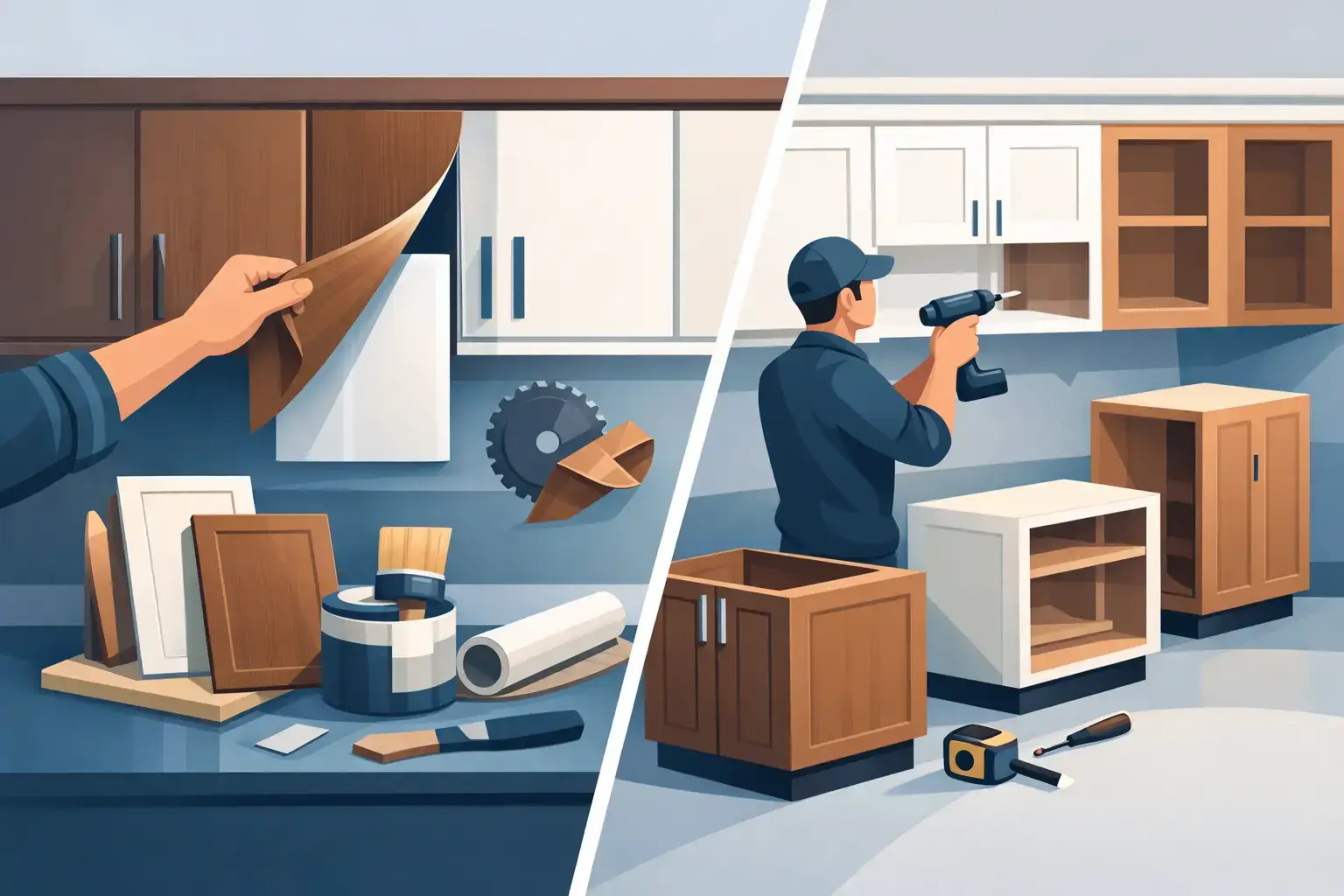
A kitchen can look worn out long before it stops working. If your cabinet boxes are solid, the doors are dated, and the layout still makes sense for your family, learning how to choose cabinet refacing can save you from paying for a full replacement you may not need.

For more than 30 years, Kitchen Perfect has been helping Northeast Ohio homeowners transform outdated kitchens without the expense of a complete remodel. As a family-owned company, we believe every homeowner deserves a beautiful kitchen that combines lasting quality, expert craftsmanship, and exceptional value.
Whether you’re considering cabinet painting, cabinet refinishing, or cabinet refacing, our experienced team specializes in giving existing cabinets a durable, factory-quality finish that can completely change the look of your kitchen. The information below will help you make informed decisions and choose the best solution for your home.
Start With the Condition of Your Existing Cabinets
Refacing is only as good as the cabinets underneath it. Before choosing colors, door styles, or hardware, look closely at the cabinet boxes, frames, and mounting points. Solid wood or quality plywood boxes that are level, securely fastened, and free of serious water damage are usually good candidates.
Open doors and drawers. Check whether they close properly, whether shelves sag, and whether there are soft spots under the sink. Minor issues can often be repaired as part of a refacing project. Widespread swelling, rot, structural damage, or cabinets that are pulling away from the wall may point toward replacement instead.
A dated finish is not a reason to replace good cabinets. Neither are old hinges, worn drawer fronts, or a door style that belongs in another decade. Those are exactly the kinds of problems refacing is designed to address.
Decide Whether Your Layout Still Works
One of the biggest benefits of cabinet refacing is keeping the existing layout. That also means the layout should serve your household reasonably well.
Think about the daily frustrations in your kitchen. If you like where the sink, range, refrigerator, and main storage areas are located, refacing can deliver a dramatic change with less disruption. You may still be able to add practical updates such as pullout shelves, soft-close hinges, new drawers, trim, or an added cabinet in an open area.
If the kitchen feels cramped because the layout is poorly planned, however, refacing may not solve the real problem. Moving plumbing, walls, or major appliances usually turns the project into a larger remodel. In that situation, new cabinetry may be the better investment. A good contractor should tell you that plainly instead of trying to fit every kitchen into the same solution.
How to Choose Cabinet Refacing Materials
The materials you select affect the look, durability, maintenance, and cost of your project. There is no single best choice for every home. The right option depends on your budget, the style of your home, and how heavily your kitchen is used.
Most refacing projects involve new doors and drawer fronts along with a matching finish applied to the visible cabinet frames. Wood doors can provide natural grain, warmth, and the option of stain or paint. They are a strong choice for homeowners who want a traditional look or a painted finish with a more substantial feel.
Thermofoil and laminate-style products can offer a clean, consistent appearance and may be easier to keep looking uniform. They can work well for certain contemporary styles and budget-conscious projects. The trade-off is that material quality and installation matter greatly, especially around heat, moisture, and high-use areas.
When comparing samples, do more than hold them up to the wall. Ask to see how the material looks on an actual door profile and how it will coordinate with your countertop, backsplash, flooring, and appliances. Kitchen lighting can change color dramatically, particularly in homes with limited natural light.
Pick a Door Style That Will Age Well
A new door style does much of the visual work in a refaced kitchen. Shaker-style doors remain popular because they suit many homes, from traditional to more updated spaces. Raised-panel doors tend to fit more classic interiors, while slab doors provide a simpler, cleaner appearance.
Trends can be useful for inspiration, but a kitchen is not a room most homeowners want to redo every few years. Choose a style you will still enjoy after the latest social media look has passed. Neutral cabinet colors, practical hardware, and door profiles that fit the character of the home usually have better staying power than a highly specific trend.
That does not mean every kitchen needs to be white or gray. Rich wood tones, soft greens, blues, and warm painted neutrals can all work well when the overall choices feel intentional. A sample viewed beside your existing countertop is more useful than a color picked from a small screen image.
Compare Workmanship, Not Just the Estimate
Two refacing estimates can look similar at first glance while covering very different work. Price matters, especially when you are trying to avoid the cost of full replacement, but the lowest number is not always the best value.
Ask what is included in the proposal. A clear estimate should identify the door and drawer-front material, frame covering or finishing method, hardware, trim, modifications, installation, and cleanup. It should also make clear whether repairs to cabinet boxes, adjustments to drawers, or removal of existing materials are included.
Pay attention to who will do the work. Some companies sell the project and pass much of it to outside crews. Others handle measuring, fabrication, and installation directly. A company with control over its own cabinet work can often catch problems sooner, maintain more consistent quality, and answer questions without sending homeowners through several layers of communication.
For a project in your home, the measuring process matters as much as the showroom sample. Cabinet openings are not always perfectly square, walls can be uneven, and older homes often have surprises. Careful measurements and experienced installation help the finished doors, panels, and trim look like they belong there.
Ask About Details That Affect Daily Use
Cabinet refacing should improve how the kitchen feels to use, not simply how it photographs. This is a good time to consider the details that make a difference every day.
Soft-close hinges and drawer slides reduce slamming and can make older cabinets feel more current. Full-extension drawers make it easier to reach items stored in the back. Pullout trays can improve access in lower cabinets, and a trash pullout can free up floor space. These upgrades add cost, so prioritize the ones that solve a real annoyance in your kitchen.
Hardware deserves attention too. Knobs and pulls are relatively small, but they affect both appearance and comfort. Try a few styles in person if possible. A handle that looks good but feels awkward every time you open a drawer will not be a good choice for long.
Understand the Project Schedule and Disruption
Refacing is generally less disruptive than replacing cabinets because the existing boxes remain in place. Still, it is active work inside the center of your home. There will be measuring, removal of doors and drawer fronts, installation, adjustments, and cleanup.
Before you commit, ask how long the project is expected to take, when materials will be ordered, and whether you will have access to the kitchen during the work. Find out how the work area will be protected from dust and how the crew handles daily cleanup. Straight answers about timing are more valuable than vague promises of a fast job.
It is also wise to coordinate refacing with countertop, backsplash, flooring, or appliance plans. In some cases, the order of work affects cost and prevents unnecessary rework. A contractor should help you understand those decisions before materials are ordered.
Choose a Local Company You Can Hold Accountable
Cabinet refacing is a craft job. The finished result depends on accurate measuring, suitable materials, careful installation, and people who take responsibility for the details. Look for experience with the type of work you need, local references, clear communication, and an estimate you can understand.
A family-owned company with an in-house cabinet shop may be able to provide more direct oversight than a business that relies entirely on outside suppliers and subcontractors. Kitchen Perfect has served homeowners in North Royalton and nearby communities for more than 25 years by focusing on that practical combination of craftsmanship, fair pricing, and hands-on work.
Do not be pressured into choosing a finish or scope of work at the first appointment. Take samples home, look at them at different times of day, compare proposals carefully, and make sure the plan fits both your kitchen and your budget. The right refacing project should leave you with a kitchen that feels refreshed, works better for your family, and still makes financial sense when the work is done.