

For more than 30 years, Kitchen Perfect has been helping Northeast Ohio homeowners transform outdated kitchens without the expense of a complete remodel. As a family-owned company, we believe every homeowner deserves a beautiful kitchen that combines lasting quality, expert craftsmanship, and exceptional value.
Whether you’re considering cabinet painting, cabinet refinishing, or cabinet refacing, our experienced team specializes in giving existing cabinets a durable, factory-quality finish that can completely change the look of your kitchen. The information below will help you make informed decisions and choose the best solution for your home.
Cabinet Refinishing Guide: Start With Cabinet Condition
Refinishing changes the surface of existing cabinets. It does not repair a cabinet box that is failing, solve a poor kitchen layout, or add storage where none exists. Before choosing colors or finishes, take a hard look at the structure underneath.
Solid wood doors and sturdy plywood cabinet boxes are often strong candidates. Cabinets that have minor scratches, faded stain, grease buildup, yellowed clear coat, or an outdated finish can usually be renewed successfully. Dovetail drawer construction, doors that close squarely, and boxes that are firmly attached to the wall are all good signs that the cabinets are worth keeping.
Water damage deserves closer attention. A little staining under a sink may be repairable, but swollen particleboard, crumbling cabinet floors, persistent mold, or warped doors can point to a bigger issue. The same goes for badly damaged hinges or cabinets that are pulling away from the wall. Refinishing a weak foundation is money spent in the wrong place.
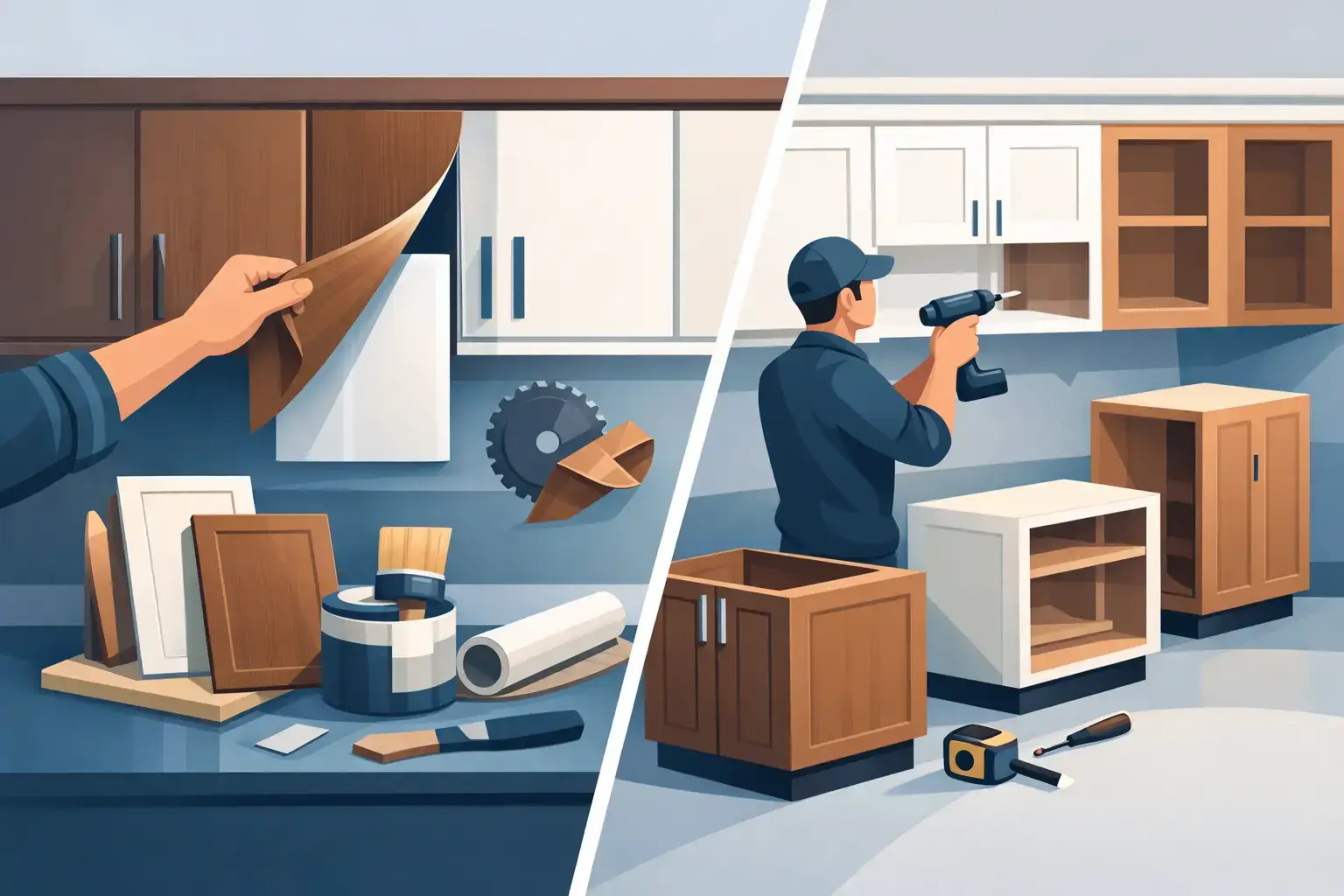
It also helps to distinguish refinishing from refacing. Refinishing keeps the existing doors and drawer fronts and updates their finish. Refacing typically keeps the cabinet boxes but adds new doors, drawer fronts, and matching material to visible box surfaces. If you like your layout but want a completely different door style, refacing may make more sense. If the cabinet construction itself is beyond saving or the layout no longer works, new cabinetry may be the better long-term choice.
Decide What You Want the Finish to Do
The right finish depends on the condition of the wood and the look you want from the room. Stain works well when attractive wood grain is present and you want it to remain visible. A darker stain can help even out minor fading, though it will not hide deep damage, loose veneer, or major color variations.
Paint is often the strongest choice for cabinets with a dated stain color, repaired areas, mixed wood species, or less attractive grain. It offers more freedom with color and can make a dark kitchen feel brighter. White and soft neutral cabinets remain popular because they work with many countertop and backsplash choices, but warmer creams, muted greens, and deeper blue-gray colors can also fit the home when used thoughtfully.
A clear finish can be appropriate when cabinets have good natural color and only need their protective coating renewed. This is a more limited update, but it can bring life back to wood that has become dull or lightly worn.
Do not choose a color from a small sample alone. Look at it next to the countertop, flooring, backsplash, and wall color. Northeast Ohio homes often have kitchens with warm-toned oak floors, granite counters, or existing tile that will affect how a paint color reads. Natural light changes the picture too. A shade that looks crisp in a bright showroom can look cooler or darker in a kitchen with limited daylight.
The Work Behind a Finish That Lasts
Cabinet refinishing is not a quick coat of paint over old doors. The lasting results come from preparation, and preparation takes time.
First, doors and drawer fronts should be removed, labeled, and handled carefully so they go back in the right places. Hardware comes off as well. This is the best time to decide whether existing pulls and knobs still fit the updated look or whether new hardware would give the kitchen a more finished appearance.
Next comes cleaning. Kitchen cabinets collect grease, oils, and residue even when they appear clean. Those contaminants can interfere with adhesion, which is why a proper degreasing step matters. Areas near the range, sink, and frequently used drawers usually need the most attention.
The existing finish then needs to be properly prepared. Depending on the cabinet material and current coating, that may involve sanding, deglossing, filling dents, repairing minor cracks, and using a suitable bonding primer. Skipping these steps is how cabinets end up with peeling paint, rough surfaces, or visible brush marks.
After the finish is applied, curing time matters. A cabinet door can feel dry to the touch well before the coating has fully hardened. Reinstalling doors too soon, slamming them shut, or loading drawers heavily can leave marks in a new finish. A good job includes protecting the work until it is ready for daily use.
What Homeowners Can Do Before Refinishing Begins
A professional crew will handle the detailed prep, but homeowners can make the project smoother by clearing cabinets, removing countertop appliances, and setting aside a temporary spot for daily essentials. Think about coffee makers, medications, pet supplies, and the dishes your family uses most often.
Kitchen work is disruptive, even when the cabinet boxes stay in place. There may be sanding, masking, equipment, and drying time to manage. Ask ahead of time how the work area will be protected, whether doors will be finished in a shop or on site, and how dust and cleanup will be handled. Clear answers usually tell you a lot about the company’s process.
It is also smart to address small kitchen issues before the final finish goes on. A leaky sink, loose countertop edge, failing hinge, or damaged drawer slide should not be ignored just because the cabinets are about to look better. Refinishing is a good opportunity to correct the details that have bothered you for years.
When Refinishing Is a Good Value
Refinishing can deliver strong value when your cabinet layout works and the existing construction is sound. You avoid the cost of tearing out cabinet boxes, changing plumbing locations, replacing countertops just to fit new cabinets, or living through a full kitchen demolition. That can keep the project more manageable for families who want a real improvement without turning the entire house upside down.
Still, the lowest quote is not always the best value. Cabinet finishing requires careful surface preparation, quality materials, controlled application, and time to cure. A rushed job can look acceptable at first and fail later around handles, door edges, and high-use areas.
Ask how the contractor handles repairs, what finish system they use, whether they remove doors and hardware, and who will perform the work. Local experience matters because you want a team that will stand behind the finished kitchen, not a sales company passing the job to an unknown subcontractor.
Kitchen Perfect has served homeowners around North Royalton and throughout Northeast Ohio for more than 25 years, with an in-house cabinet shop and a hands-on approach to workmanship. That kind of direct control can make a difference when details such as door alignment, finish consistency, and cleanup need to be handled correctly.
Care for Refinished Cabinets Without Wearing Them Out
Once cabinets are refinished, simple care protects the investment. Use a soft cloth with mild soap and water for routine cleaning, then dry the surface rather than leaving moisture behind. Avoid abrasive pads, harsh scouring powders, strong degreasers, and furniture polish that can leave residue.
Pay attention to steam and standing water. Run the range hood when cooking, wipe splashes around the sink, and repair leaks promptly. Soft-close hinges and drawer slides can also reduce the daily wear caused by doors and drawers being shut hard.
A refinished kitchen should make you enjoy using the room again, not make you afraid to use it. The right approach is practical: choose a finish that fits your home, invest in proper preparation, and keep the cabinets you already have when they are still built to serve your family well.

Pingback: Cabinet Refacing Near Me: Find the Right Fit - Kitchen Perfect
Pingback: Is Cabinet Painting Right for Your Kitchen? - Kitchen Perfect
Pingback: Should I Stain My Cabinets or Reface Them? - Kitchen Perfect
Pingback: When to Refinish Cabinets and When to Reface - Kitchen Perfect
Pingback: What a Local Remodeling Company Review Should Tell You - Kitchen Perfect
Pingback: Refinishing Versus New Cabinets: Which Fits? - Kitchen Perfect
Pingback: Kitchen Remodeling That Fits Your Home and Budget - Kitchen Perfect