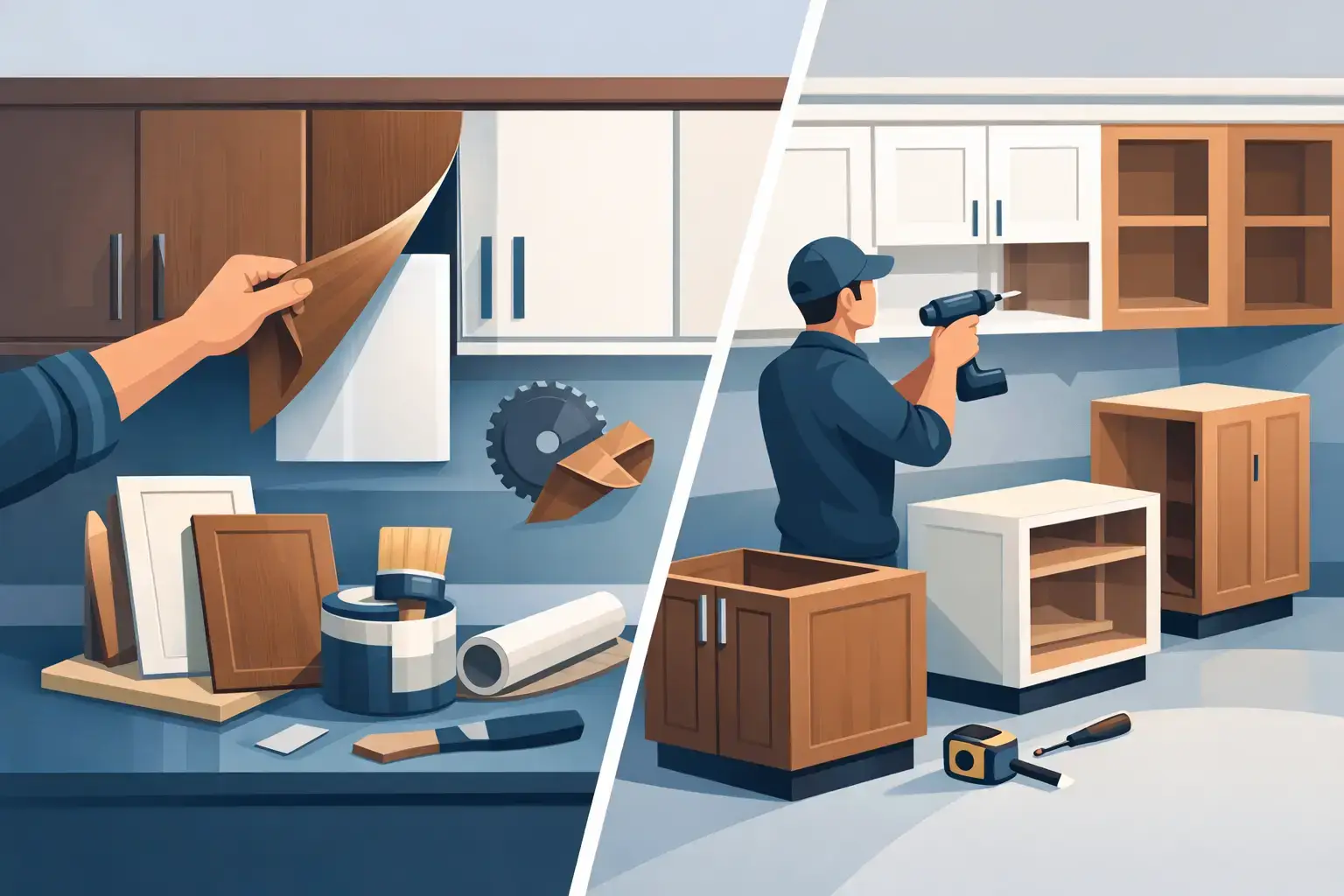
A kitchen can look tired long before it stops working. If your cabinet doors are scratched, faded, or stuck in a stain color that belonged to another decade, it may be time to refinish cabinets rather than tear out a layout that still serves your family well.
For many Northeast Ohio homeowners, the right answer is not a full kitchen replacement. Refinishing, refacing, and new cabinetry each have a place. The best choice comes down to the condition of the cabinet boxes, the look you want, and how much change your kitchen truly needs.
Can You Refinish Cabinets?
Cabinet refinishing means renewing the existing cabinet surfaces. Depending on the material and the desired result, that can involve cleaning, repairs, sanding, stripping the old finish, applying stain or paint, and protecting the completed work with a durable topcoat.
Solid wood cabinet doors are often strong candidates for refinishing. If the wood is in good shape and you like the door style, a new stain color or painted finish can give the kitchen a noticeably different feel without changing its basic layout. This can be a practical way to move from worn oak to a richer, cleaner look, or from dated dark wood to a brighter painted kitchen.
Not every cabinet can be refinished the same way. Thermofoil doors, laminate surfaces, and heavily damaged particleboard boxes require a closer look. Some can be carefully painted or repaired, but others may not hold up well enough to justify the cost. A good contractor should be honest about that before work begins.
What It Takes to Refinish Cabinets Well
Refinishing is often described as a simple cosmetic update. The final color may be the part everyone notices, but preparation determines whether the finish looks good next month and years from now.
Kitchen cabinets collect cooking grease, fingerprints, cleaning-product residue, and moisture. Those contaminants have to be removed before sanding or coating begins. Skipping this step can lead to peeling, rough spots, or a finish that does not bond properly.
After cleaning, the surfaces need to be repaired and prepared. Small dents, loose joints, damaged edges, and old hardware holes should be addressed before paint or stain goes on. Doors and drawer fronts may need to be removed so all visible surfaces can be finished consistently. Hardware is typically replaced or reinstalled only after the finish has had proper time to cure.
The right coating system also matters. A cabinet finish must stand up to daily use, steam, grease, and repeated cleaning. Wall paint is not a cabinet finish. Quality primers, durable coatings, and careful application create a smoother appearance and a tougher surface for a working kitchen.
When Refinishing Is a Smart Choice
Refinishing is usually worth considering when the cabinet boxes are sturdy, the doors are in decent shape, and the current layout still works for the way you use the room. It is especially practical when you want a fresh look without moving plumbing, replacing countertops, or changing the footprint of the kitchen.
Homeowners often choose refinishing because it allows them to direct their budget toward the parts of the kitchen that need attention most. You may keep functioning cabinets and use the savings for a new countertop, backsplash, lighting, flooring, or hardware. The result can feel like a much larger renovation without the cost and disruption of starting from scratch.
It is also a sensible option when the cabinet style is simple and timeless. Shaker-style doors, clean flat panels, and well-built traditional wood doors can take on a completely different personality with the right color. A warm stain can bring out wood grain, while a painted finish can make a darker kitchen feel more open and current.
When Cabinet Refacing May Be the Better Fit
Refinishing changes the finish you have. Refacing changes the visible exterior of the cabinetry. With cabinet refacing, the existing cabinet boxes remain in place, but the doors, drawer fronts, and exposed face frames receive a new finished look.
That difference matters when your cabinet boxes are sound but the door style is badly dated, damaged, or simply not what you want. If you have old raised-panel doors and want a cleaner Shaker look, refinishing alone will not change the profile of the door. Refacing can provide that style change while avoiding the expense of removing all the cabinetry.
Refacing can also make sense if you want to add useful upgrades while keeping the same basic layout. New drawer boxes, soft-close hardware, pull-out storage, or a modified cabinet section may be possible depending on the kitchen. It is a more involved project than refinishing, but it is still generally less disruptive than full cabinet replacement.
For homeowners who like their kitchen’s footprint but not its appearance, refacing often hits a practical middle ground. You get a new exterior, new doors and drawer fronts, and more design flexibility without paying for a complete tear-out.
When New Cabinets Are Worth Considering
There are times when refinishing or refacing would only cover up bigger issues. Water damage around the sink, cabinet boxes that are swollen or breaking down, major structural problems, and poor storage design can point toward replacement.
A full cabinet replacement is also worth considering when the layout is the real problem. If the kitchen lacks counter space, has cramped traffic flow, wastes corners, or cannot accommodate the appliances your household needs, a new plan may provide more value than improving the existing cabinets.
This does not mean replacement is automatically the best answer whenever a kitchen looks old. A well-built older cabinet can often outlast a lower-quality new one. The question is whether the existing structure can support the kitchen you want moving forward.
Choosing Colors and Finishes That Hold Up
Color should work with the parts of the kitchen that are staying. Countertops, flooring, backsplash, wall color, and natural light all affect how a cabinet color reads in the room. A bright white may look crisp in one kitchen and too stark in another. A soft white, warm greige, deep navy, or natural wood tone may better suit the home.
Practical use matters, too. Dark colors can look rich and dramatic, but they often show dust and fingerprints more readily. Very light finishes can brighten a room, though high-traffic areas may need regular cleaning. Mid-tone wood stains and softer painted neutrals can be forgiving choices for busy family kitchens.
Hardware can make a major difference without complicating the project. New pulls or knobs can update the look of refinished cabinets, but measurements must be planned first. Changing from a single-hole knob to a pull with two mounting holes may require filling and redrilling, which should be handled before the final finish is applied.
What to Expect During the Project
A professional cabinet refinishing project takes planning, not just paint. Your kitchen will need to be protected from dust and overspray, and the work area should be kept as clean and contained as possible. Doors and drawer fronts may be finished off-site or in a controlled work area, depending on the scope and coating method.
The timeline depends on the cabinet condition, the amount of repair needed, the number of doors and drawers, and the finish selected. Proper drying and curing time cannot be rushed without risking the durability of the final result. A finish may feel dry before it has reached its full hardness.
Ask clear questions before choosing a contractor. Find out what preparation is included, how damaged areas will be handled, what type of finish will be used, and who will perform the work. Homeowners deserve a straightforward answer on cost, timing, and what is realistically possible with their existing cabinets.
Kitchen Perfect has spent more than 25 years helping local homeowners make practical kitchen improvements without pushing every project toward a complete replacement. A careful evaluation can show whether refinishing, refacing, or new cabinetry makes the most sense for your home and budget.
If your cabinet boxes are solid and your kitchen layout still works, do not assume a full remodel is your only path forward. The right finish or refacing plan can give you a kitchen you enjoy coming home to, while keeping the project grounded in good workmanship and fair value.