A kitchen can feel tired long before it stops working. If your cabinet layout still serves your family well, cabinet painting may be a practical way to brighten the room, update the color, and avoid the cost and disruption of replacing everything. The key is knowing whether paint will solve the real problem – or simply cover it for a while.
For many Northeast Ohio homeowners, the cabinets are the biggest visual issue in an otherwise usable kitchen. Honey oak, dark stain, worn finishes, and dated colors can make the entire space look older than it is. A professional paint finish can change that. But good results depend on the condition of the cabinet boxes, doors, and hardware, along with the preparation work done before a drop of paint is applied.
When Cabinet Painting Makes Sense
Painting is often a good fit when your existing cabinets are structurally sound. The boxes should be solid, the doors should close properly, and the shelves should not be sagging from moisture damage or years of heavy use. If the layout works and you have enough storage, changing the finish can be a sensible way to get a newer look without tearing out a functional kitchen.
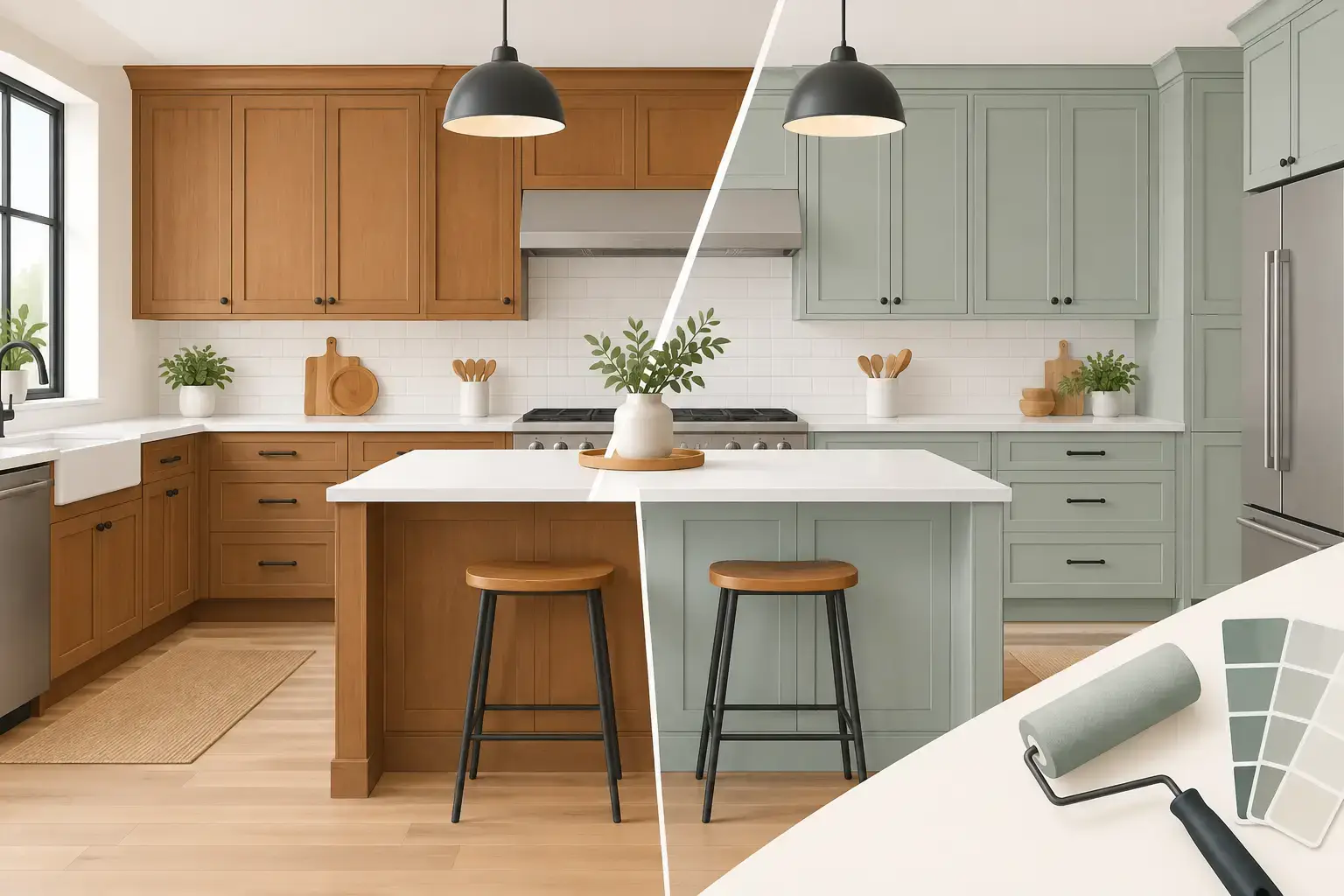
It is especially useful for homeowners who want a cleaner, lighter style. White, soft gray, warm greige, and deep blue or green accent islands remain popular because they can make an older kitchen feel more current without changing the room’s footprint. New knobs, pulls, lighting, and a backsplash can add to the effect, but the cabinet color usually does the heavy lifting.
Painting can also make sense when you are preparing to sell a home. Buyers notice kitchens quickly, and cabinets with a clean, consistent finish can improve the first impression of the space. That does not mean every kitchen needs to be white. It means the finish should look intentional, durable, and appropriate for the rest of the home.
There is a budget advantage as well. Full cabinet replacement can involve demolition, electrical changes, flooring repairs, countertop removal, and weeks of disruption. Painting is not a shortcut when it is done correctly, but it can be a more affordable path when the cabinet structure and layout are worth keeping.
What Good Cabinet Painting Requires
The difference between a finish that holds up and one that chips around the handles usually comes down to preparation. Kitchen cabinets are touched constantly. They collect cooking grease, fingerprints, moisture, and residue from household cleaners. Paint cannot bond reliably to a dirty or glossy surface.
A proper process begins with a close inspection. Doors and drawer fronts may need repairs before finishing. Loose joints, dents, damaged edges, and worn hinge areas should be addressed first. Hardware is removed, surfaces are thoroughly cleaned, and the existing finish is sanded or otherwise prepared so the primer can adhere.
Primer matters because cabinet materials are not all the same. Solid wood, veneer, MDF, laminate, and previously painted surfaces each require the right approach. Some materials accept a new finish well after proper preparation. Others may have peeling coatings, swelling, or damaged edges that need more than paint can provide.
The final coating should be chosen for a kitchen environment, not just because it looks good on a sample board. Cabinets need a finish that can stand up to regular cleaning and daily use. A skilled application also matters. Smooth doors, even coverage, clean edges, and proper drying time are what give painted cabinetry a finished look instead of a weekend-project appearance.
Homeowners sometimes ask whether cabinet doors can be painted in place. It can be done in certain situations, but removing doors and drawer fronts generally allows for better access and a more consistent finish. The right method depends on the kitchen, the work area, and how much control is needed to protect surrounding floors, counters, and walls.
When Paint Is Not the Best Answer
Cabinet painting is not the right answer for every kitchen. If the cabinet boxes have water damage, the shelves are failing, or doors are warped beyond repair, paint will not correct the underlying problem. The same is true when the layout itself no longer works for the way your family uses the room.
Maybe there is not enough storage. Maybe the refrigerator blocks a walkway, the sink base is damaged, or the wall cabinets are too shallow for everyday dishes. In those cases, putting money into paint may delay a needed improvement rather than provide lasting value.
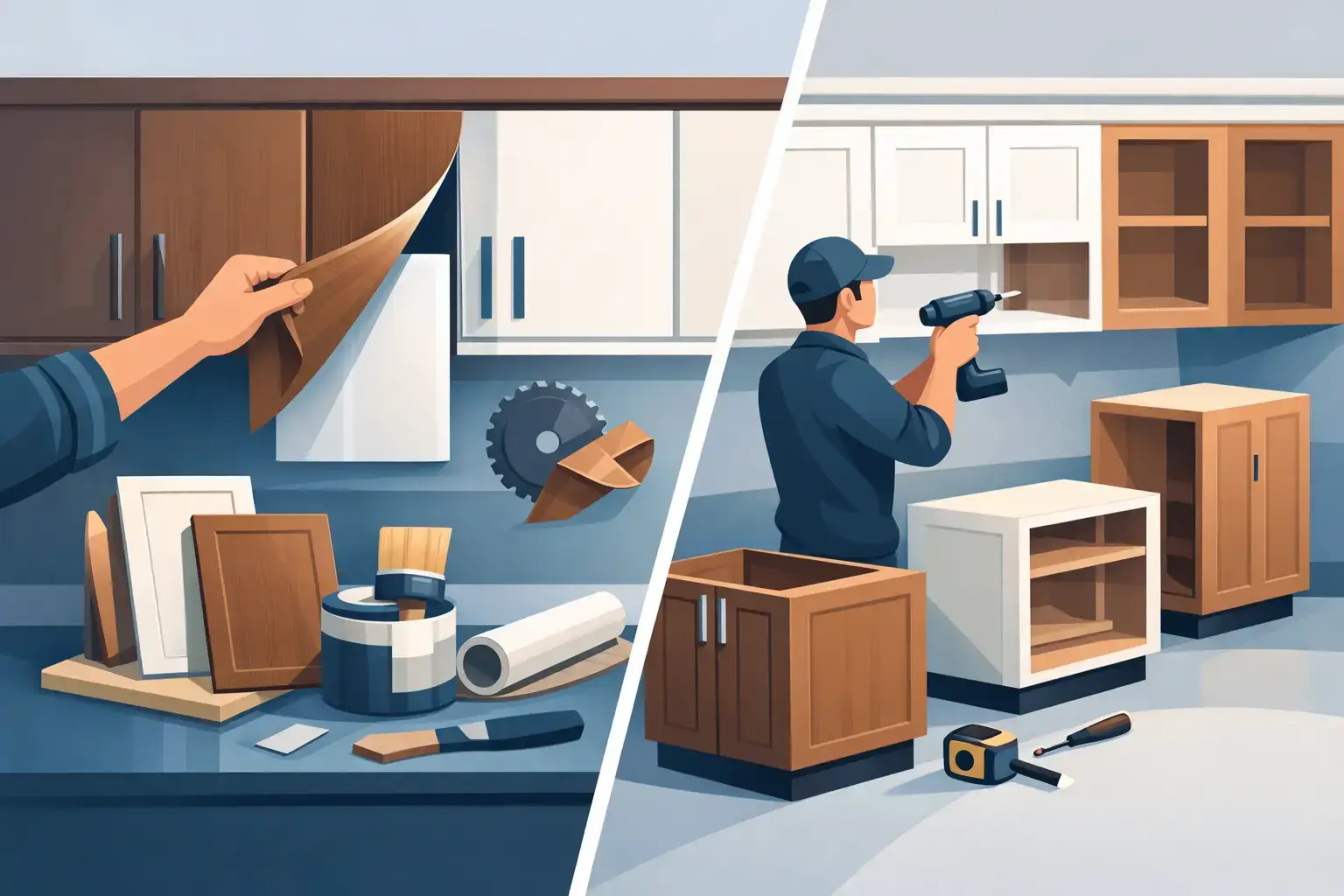
Certain door styles also deserve a careful look. Cabinets with deep grooves, heavy damage, failing thermofoil, or intricate routed details can be more difficult to finish evenly. A painted finish may still be possible, but the labor involved can change the value equation. It is worth comparing painting with cabinet refinishing, refacing, or selected new cabinetry before deciding.
Refinishing generally preserves the character of wood while renewing or changing the stain and protective finish. Refacing keeps the cabinet boxes but replaces visible doors, drawer fronts, and exterior surfaces. New cabinetry offers the most freedom to change layout, storage, and style, though it also carries the largest investment. There is no one right choice for every home. The best option is the one that improves the kitchen without paying for changes you do not need.
Questions to Ask Before You Commit
Before choosing a painted finish, take an honest look at what bothers you about the kitchen. If the answer is mainly color, visible wear, or an outdated door style that can be improved with paint, the project may be a strong fit. If the answer is poor storage, damaged cabinets, cramped work areas, or a layout that frustrates you every day, a broader solution may serve you better.
It also helps to think beyond the first week after the project is finished. A bright white kitchen can look sharp, but a busy household may prefer a softer tone that hides fingerprints more easily. Dark colors can add contrast and personality, yet they may show dust or scratches more readily in high-use areas. The best color is one you will still enjoy after the trend has passed.
Ask how the work area will be protected, whether doors and drawers will be removed, how repairs are handled, and what type of coating system will be used. A clear answer to these questions tells you a great deal about the care going into the job. Price matters, but the lowest estimate is not always the best value if important prep work has been left out.
For a kitchen that needs more than a new color, it is also wise to ask whether a company can handle related cabinet work directly. Kitchen Perfect has an in-house cabinet shop, which helps provide practical options when a project calls for repairs, refacing components, or new cabinetry instead of paint alone.
Plan for a Finish That Fits Your Home
A painted kitchen should make daily life feel better, not create another surface you worry about. Choose a finish that fits the condition of your cabinets, the way your household uses the room, and the budget you are comfortable spending. A straightforward, in-person evaluation can show whether your existing cabinets are good candidates and help you spend your remodeling dollars where they will make the most difference.