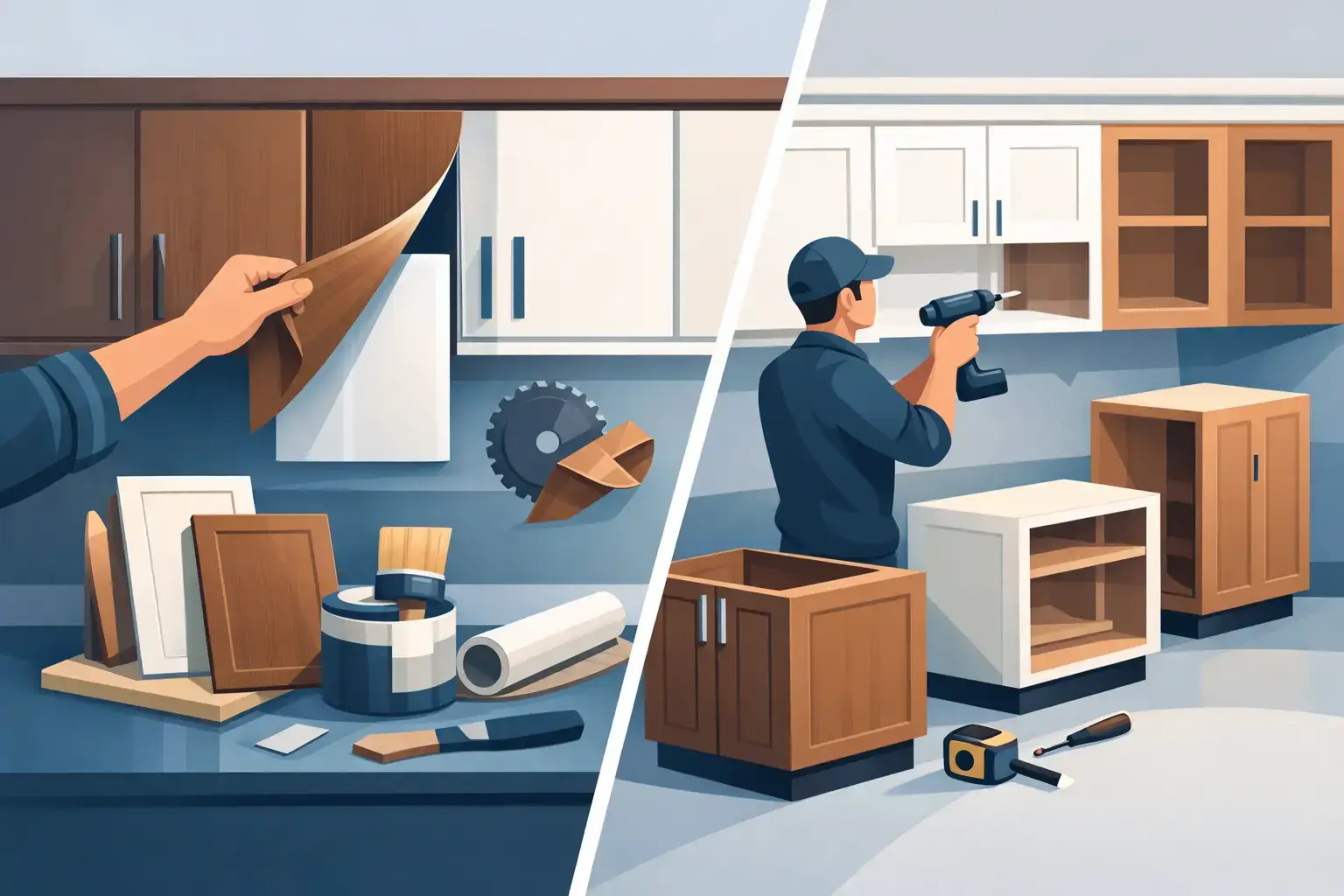
A kitchen can look dated while the cabinets underneath are still doing their job perfectly well. Before you spend money replacing everything, learn how to inspect cabinet boxes. A careful look inside, below, and behind the cabinets can tell you whether refacing is a smart value or whether deeper repairs are needed first.
For many Northeast Ohio homeowners, this is the decision that separates a practical kitchen update from an unnecessary full tear-out. New doors, drawer fronts, hardware, and finishes can make a major visual difference, but only when the cabinet structure is sound enough to support that work.
Start With the Cabinet Box Itself
A cabinet box is the basic structure behind the doors and drawer fronts. It includes the sides, bottom, back, shelves, face frame or front edge, and mounting points that hold the cabinet to the wall. It does not need to be beautiful. It does need to be solid, stable, and reasonably square.
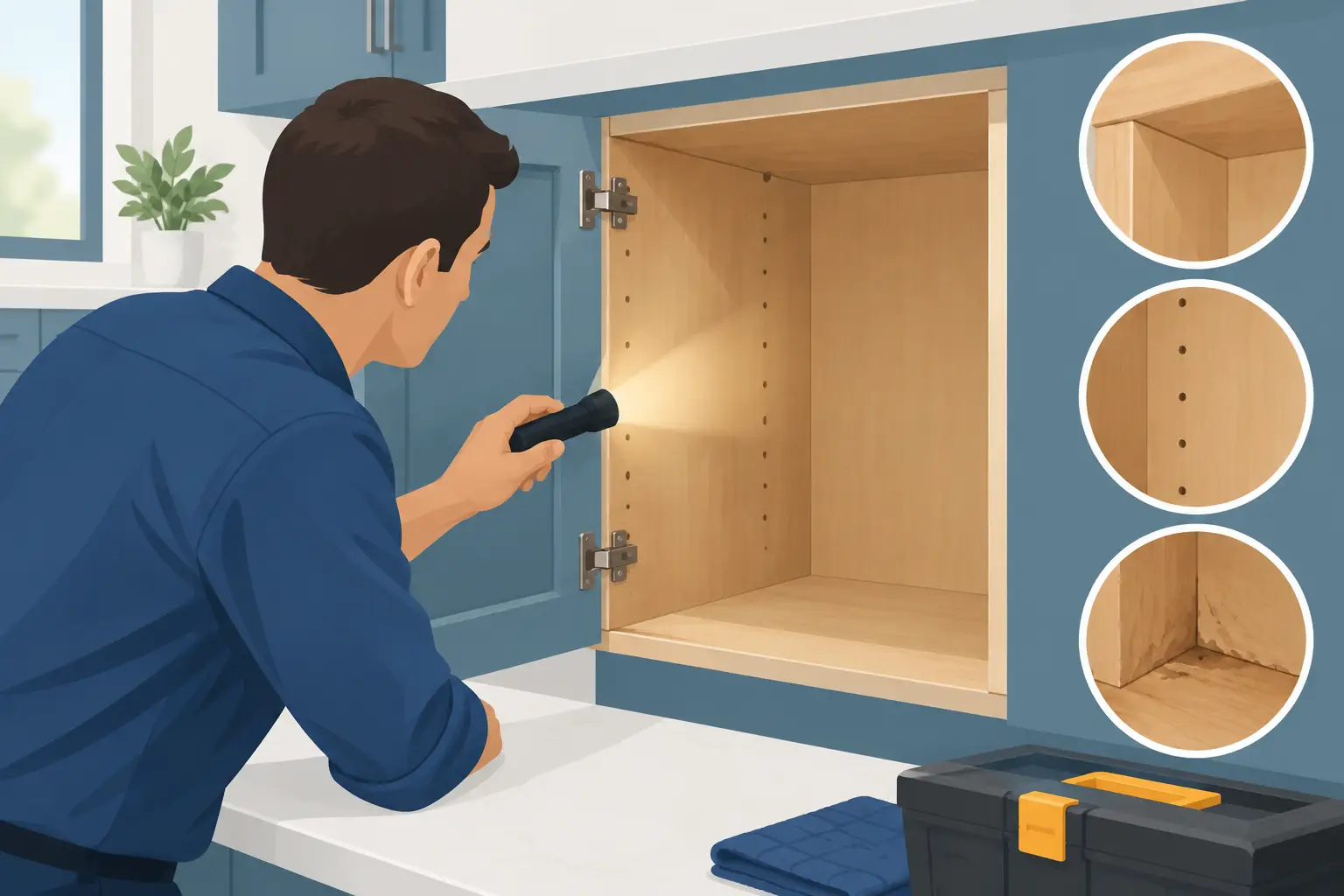
Start by emptying a few cabinets, especially the sink base, the cabinets near the dishwasher, and any lower cabinets along an exterior wall. These areas see the most moisture, weight, and wear. Use a flashlight and take your time. A clean interior with minor scuffs is usually no concern. Swollen material, soft spots, crumbling particleboard, or visible mold call for a closer look.
Cabinet boxes made from plywood or solid wood components often hold up very well. Older cabinets with sturdy face frames can be excellent candidates for refacing, even if the doors are worn out or the finish is tired. Particleboard or MDF boxes are not automatically a problem, but they are less forgiving after repeated water exposure.
How to Inspect Cabinet Boxes for Structural Problems
The most useful inspection is hands-on. Open the doors, pull the drawers out, press gently on cabinet bottoms, and look for movement where parts meet. You are trying to find out whether the cabinet is structurally sound or simply showing normal cosmetic age.
Check for Water Damage Around the Sink
The sink base deserves the closest inspection. Look at the cabinet floor, side panels, and back corners for dark stains, peeling laminate, swollen edges, or a musty smell. Run your hand along the bottom panel. It should feel firm, not spongy or flaky.
A small old water stain does not always mean the cabinet has failed. If a supply line or drain leaked years ago but the wood is now dry and solid, repairs may be limited. On the other hand, active leaks must be fixed before any cabinet refacing or refinishing work begins. Covering a moisture problem with new materials only delays the repair and can damage the finished work later.
Also look under nearby cabinets. Dishwashers, refrigerator water lines, and ice makers can create slow leaks that homeowners do not notice right away.
Look for Sagging, Separation, and Loose Joints
Open base cabinets and check whether shelves or bottoms are sagging under stored dishes, pots, or small appliances. A little bowing in a long shelf can often be reinforced. A cabinet bottom that has pulled away from the side panel is more serious, especially if it supports a countertop above.
Inspect the corners and seams. Gaps, loose staples, missing screws, or cracked joints may be repairable, depending on the cabinet’s material and overall condition. Solid, well-built cabinets can often be tightened, glued, reinforced, or repaired before refacing. If several boxes are coming apart, it may make more sense to consider selective replacement or new cabinetry.
Check upper cabinets as well. They should sit firmly against the wall with no noticeable movement when you apply light pressure. Do not hang from them or force them. If you see gaps along the wall, sagging at the bottom, or screws pulling loose, have a professional inspect the mounting and wall structure.
Test Doors, Drawers, and Cabinet Alignment
Doors and drawers are not the cabinet box, but they can reveal what is happening with the structure. Doors that rub, hang unevenly, or refuse to close may only need hinge adjustment. A drawer that sticks may need new slides or minor box repair.
But when several doors are out of alignment and drawers bind throughout the kitchen, check whether the cabinet boxes are level and square. Houses settle, floors shift, and older cabinets can move over time. Refacing can still be an excellent option in many of these kitchens, but the installer should address alignment issues before fitting new doors and drawer fronts.
Pay attention to the face frames on traditional cabinets. These are the solid front pieces where doors are attached. They should not be split, badly warped, or separating from the box. Small dents, worn finish, and old hardware holes are usually cosmetic issues and can often be handled during the update.
Check the Areas You Cannot See at First Glance
Some of the biggest clues are hidden behind drawers and near the floor. Remove a drawer and inspect the rails, supports, and back panel. Look for rodent damage, old plumbing leaks, loose connections, or excessive dust and debris that could point to a long-standing issue.
Get down low and inspect the toe kicks beneath the base cabinets. Swelling or discoloration near the floor may indicate past mopping damage, a dishwasher leak, or water coming in from another source. In Northeast Ohio, basements, exterior walls, and seasonal humidity can also contribute to moisture concerns, particularly in older homes.
Look inside cabinets near the range. Grease buildup is common and usually manageable. Heavy grease combined with peeling surfaces, burned material, or damaged cabinetry may require more extensive repair. Cabinets should also be checked for signs of insect activity, although that is less common than water-related damage in a kitchen.
Know What Is Cosmetic and What Is a Deal Breaker
Homeowners sometimes assume that worn cabinets must be replaced because they look rough. Often, the opposite is true. Scratched doors, faded stain, chipped finish, dated hardware, and old-fashioned door styles are exactly the kinds of problems a refacing or refinishing project can solve.
The condition becomes more concerning when the cabinet boxes have widespread water damage, major mold growth, severe warping, broken mounting points, or deteriorated material that will not hold screws. A kitchen with a poor layout may also be a better candidate for new cabinetry if you want to move appliances, add storage, or change the footprint significantly.
There is room between those two extremes. A kitchen may have one damaged sink base but otherwise solid boxes. In that case, replacing or repairing the problem area while refacing the rest can be more cost-effective than replacing every cabinet. The right answer depends on the condition of the boxes, your goals for the layout, and how long you plan to stay in the home.
When to Bring in a Professional
A homeowner can spot obvious concerns, but a professional can tell the difference between a repairable issue and a cabinet system that is nearing the end of its useful life. This matters before you select door styles, colors, countertops, or hardware.
An experienced cabinet specialist should inspect the box material, face frames, structural joints, wall attachment, moisture damage, drawer operation, and overall alignment. They should also be willing to explain what can be repaired and what should be replaced. Straight answers are especially valuable when you are trying to control the cost of a kitchen project.
Kitchen Perfect works with homeowners who want to improve the kitchen they have without paying for a full replacement they may not need. With an in-house cabinet shop and more than 25 years of experience, the focus is on practical recommendations and workmanship that holds up.
Before making a final decision, take a few photos of any stained, swollen, loose, or damaged areas. A clear inspection gives you a better starting point for a conversation and helps you spend your remodeling budget where it will make the biggest difference. If the boxes are solid, your existing kitchen may have far more potential than its old doors suggest.