
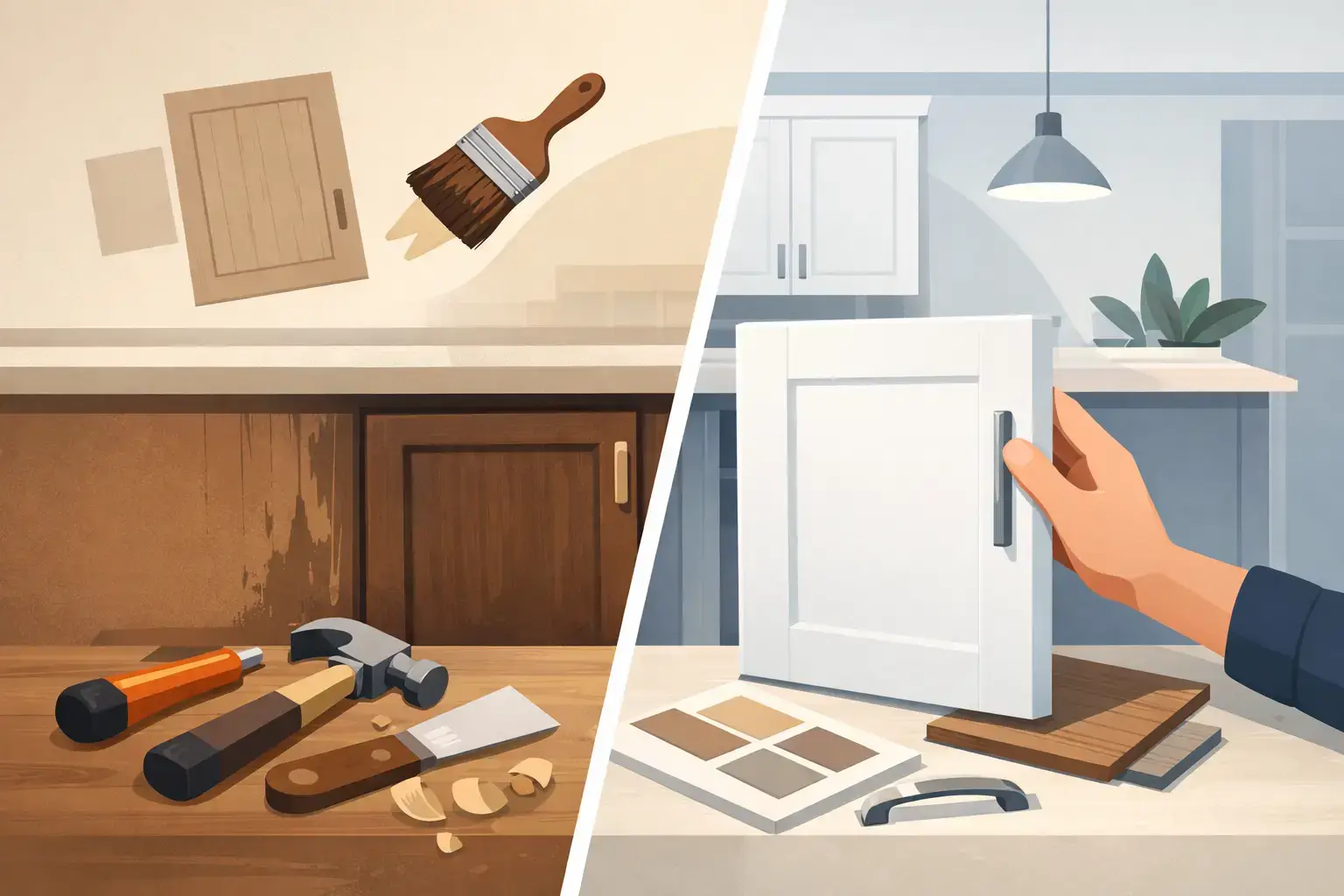
A kitchen can look tired long before it stops working. Maybe the doors are scratched, the finish has yellowed, or the style dates the whole room. The question many homeowners ask is, can old cabinets be refaced instead of replaced? In many cases, yes. Cabinet refacing can give an older kitchen a completely different look while keeping the cabinet boxes, layout, and much of the cost under control.
The key is not the age of the cabinets alone. What matters is their condition. A well-built cabinet from 25 or even 40 years ago can be a strong candidate for refacing. On the other hand, cabinets with major water damage, failing boxes, or serious layout problems may be better replaced.
Can Old Cabinets Be Refaced If They Are Still Solid?
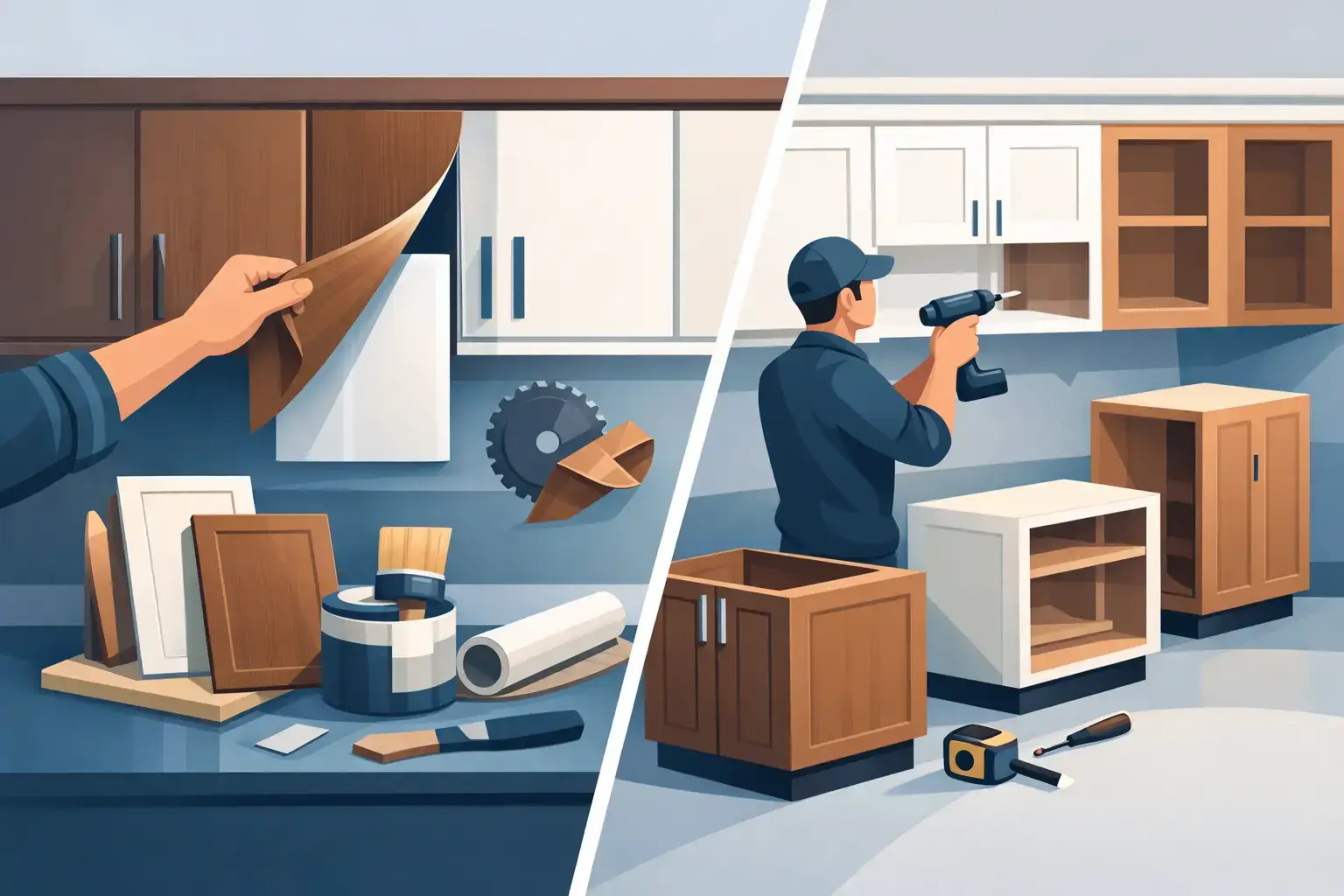
Cabinet refacing works by keeping the existing cabinet boxes in place and updating the parts everyone sees. The old doors and drawer fronts are removed. The exposed cabinet frames are covered with a new matching surface, and new doors, drawer fronts, hardware, and trim are installed.
That means old cabinets can be refaced when the basic structure is worth saving. Many older kitchens in North Royalton and throughout Northeast Ohio have sturdy cabinet boxes made from solid plywood or well-built materials. Their doors may be worn out, but the boxes themselves are often stronger than homeowners expect.
Age is not automatically a problem. A cabinet that has held up for decades may be a better candidate for refacing than a newer cabinet made with lighter materials. The practical question is simple: are the boxes level, secure, dry, and functional?
Signs Your Existing Cabinets May Be Good Candidates
A refacing project is usually worth considering when cabinet boxes are firmly attached to the wall, shelves are not sagging, drawers operate reasonably well, and there is no widespread moisture damage. Minor wear, dated door styles, faded finish, old hinges, and worn hardware are exactly the kind of problems refacing is designed to solve.
Homeowners are sometimes surprised by how much of a kitchen’s appearance comes from the door style and finish. Replacing raised-panel oak doors with clean shaker-style doors, for example, can make the room feel newer without tearing out cabinets that still do their job well.
A professional inspection is still the right first step. What looks fine from across the room may have damage near the sink, dishwasher, or floor. An honest estimate should include a clear assessment of whether refacing is a smart investment for your kitchen.
When Refacing Old Cabinets Is Not the Right Choice
Refacing is a practical alternative to replacement, but it is not a cure for every kitchen problem. If cabinet boxes are swollen from water exposure, badly cracked, pulling away from the wall, or damaged by pests, installing new doors will not fix the underlying issue.
The same is true when the layout no longer works for your family. If you need to move walls, relocate plumbing, add a large island, change appliance locations, or substantially increase storage, new cabinetry may make more sense. Refacing preserves the footprint of the existing kitchen. It updates the appearance very effectively, but it does not completely redesign the room.
There are also cases where only part of a kitchen needs attention. A damaged sink base, for example, may need replacement while the remaining solid cabinets can be refaced. A good remodeling company should explain those options rather than push every homeowner into the same solution.
Refacing, Refinishing, and Replacement Are Different Jobs
These terms are often used interchangeably, but they describe different levels of work.
Cabinet refinishing updates the existing surface. Depending on the material and condition, that may involve cleaning, repairing, sanding, staining, or painting the existing doors and cabinet faces. Refinishing can be a good choice when homeowners like the door style and want a color change or fresh finish.
Cabinet refacing replaces the doors and drawer fronts while covering the visible face frames with a new matching finish. It is a larger visual change than refinishing because it allows for a new door profile, color, wood look, hardware, and trim details.
Full cabinet replacement removes the existing cabinets and installs new ones. This provides the most flexibility for changing layout and storage, but it also brings more expense, more construction work, and often more disruption to the household.
For homeowners who like their current kitchen layout but not the way it looks, refacing often lands in the right middle ground. It is more substantial than a simple paint job and less involved than a full tear-out.
What Changes During a Cabinet Refacing Project?
A properly planned refacing job should make the kitchen feel intentional, not like a collection of cosmetic fixes. New doors and drawer fronts set the style. New hardware changes the feel of daily use. Updated trim can clean up gaps, finish the ends of cabinet runs, and give the room a more complete appearance.
Homeowners may also choose to add practical improvements while the work is underway. Soft-close hinges, better drawer hardware, pullout storage, updated molding, a new countertop, backsplash, or sink can all work well with refaced cabinets. The best choices depend on the budget and how much of the kitchen needs attention.
There are limits. Refacing cannot make a narrow cabinet box wider, create a deep drawer where there is no room, or correct a poor traffic pattern. But it can make a functional kitchen look like a very different kitchen, especially when paired with a coordinated countertop and updated lighting.
Why the Condition Behind the Doors Matters Most
The doors get the attention, but the cabinet boxes determine whether the project will last. Before refacing, an experienced contractor should look closely at the sink base, lower cabinets near appliances, wall cabinet mounting, shelf condition, and drawer openings.
Water is the biggest concern. Slow leaks under a sink can weaken particleboard and cause it to swell or crumble. Steam, dishwasher leaks, and repeated wet mopping can also damage lower cabinets over time. Small, isolated repairs may be possible. Widespread damage usually points toward replacement.
Cabinets also need to be structurally secure. If the boxes are loose, out of level, or badly separated at the joints, those issues must be corrected before new components are installed. Good workmanship starts with a sound foundation, not just attractive doors.
Cost and Disruption: Why Homeowners Consider Refacing
Full cabinet replacement can turn into a large renovation quickly. Removing cabinets may affect countertops, flooring, drywall, plumbing, electrical work, and appliance placement. Those added pieces can push both the budget and timeline higher.
Refacing avoids much of that demolition because the cabinet boxes stay in place. For homeowners who want a major visual improvement without rebuilding the entire kitchen, that can mean a more manageable project and less mess in the home.
The actual cost depends on kitchen size, door style, materials, repairs, hardware, countertops, and any added upgrades. A small kitchen with straightforward cabinet runs will be different from a large kitchen with tall pantry cabinets, an island, and custom trim. The most useful estimate is one that breaks down what is included and explains where the money is going.
Kitchen Perfect has more than 25 years of experience helping local homeowners weigh those choices. Because much of the work can be handled through its own cabinet shop and installation process, the focus stays on finished quality, fair pricing, and accountability from the estimate through completion.
How to Decide Whether to Reface or Replace
Start with how you use the kitchen, not just how it photographs. If you have enough cabinet space, like the location of the sink and appliances, and have solid boxes, refacing deserves serious consideration. If every meal feels cramped because of a poor layout or lack of storage, replacement may give you more long-term value.
Think about your plans for the home as well. Refacing can be an excellent choice for homeowners who want to enjoy a refreshed kitchen now, prepare a home for sale, or improve the room without taking on a full remodeling project. Replacement may be worth the larger investment when you expect to stay for many years and need the kitchen to function differently.
Do not let the word “old” make the decision for you. Solid cabinets are worth evaluating. A straightforward inspection can tell you whether the bones of your kitchen are good enough to keep – and whether a refacing project can give you the change you want without paying for work you do not need.
The right kitchen upgrade is the one that respects both your home and your budget. If the cabinet boxes are still doing their job, new faces may be all they need to make the room feel right again.

Pingback: How to Inspect Cabinet Boxes Before Refacing - Kitchen Perfect