

For more than 30 years, Kitchen Perfect has been helping Northeast Ohio homeowners transform outdated kitchens without the expense of a complete remodel. As a family-owned company, we believe every homeowner deserves a beautiful kitchen that combines lasting quality, expert craftsmanship, and exceptional value.
Whether you’re considering cabinet painting, cabinet refinishing, or cabinet refacing, our experienced team specializes in giving existing cabinets a durable, factory-quality finish that can completely change the look of your kitchen. The information below will help you make informed decisions and choose the best solution for your home.
Painting Cabinets vs Refinishing: What Is the Difference?
People sometimes use these terms interchangeably, but they can describe different levels of work.
Painting cabinets usually means changing the cabinet color with a painted coating. A proper cabinet painting job involves cleaning away grease, sanding or preparing the existing surface, making minor repairs, priming when needed, and applying a durable finish. It is more involved than painting a wall. Kitchen cabinets are touched constantly, exposed to cooking residue, and regularly wiped down, so the preparation and coating system matter as much as the final color.
Refinishing cabinets generally means restoring or changing the existing finish on wood cabinets. That may include removing or abrading the old finish, repairing scratches and wear, applying stain or paint, and adding a protective topcoat. Refinishing is often the better description when the goal is to bring real wood back to life, deepen its stain color, reduce visible wear, or make a lasting color change after more thorough surface work.
The overlap is real. Painting can be part of a refinishing project when cabinets are properly prepared and finished. The difference is usually the scope. Painting focuses on the new color. Refinishing focuses on restoring the cabinet surface and finish system before the final color or sheen is applied.
When Painting Cabinets Makes Good Sense
Painting is a practical choice when the cabinet doors are structurally sound, the layout works well, and you like the door style. It can make an oak kitchen feel lighter, give maple cabinets a more current look, or help an older kitchen coordinate with new counters, flooring, or backsplash.
It works especially well for solid wood doors and quality cabinet boxes that have held up over time. If your goal is a clean white, warm greige, soft green, navy, or another painted color, painting can deliver a major visual change without replacing the entire kitchen.
The key is not to judge the project by the first day it looks good. Cabinet paint needs to hold up around handles, drawer edges, sink bases, and frequently used doors. Thorough cleaning and surface preparation are what help prevent chipping, peeling, and a rough-looking finish later.
Painting may be less suitable when doors have deep grain that you expect to disappear completely. Oak, for example, can be painted, but its grain pattern may still show unless additional grain-filling work is done. That is not necessarily a problem, but it should be discussed before work begins so the final look matches your expectations.
When Refinishing Is the Better Choice
Refinishing is often the stronger option when you have real wood cabinets with good construction but a tired, scratched, faded, or yellowed finish. Many older kitchens in North Royalton, Brecksville, Middleburg Heights, and nearby communities have solid cabinets that were built to last. Their finish may be dated, but the cabinets themselves may be worth preserving.
A refinishing project can keep the warmth and character of wood while improving its color and consistency. Homeowners who like stained cabinetry may choose a lighter stain, a richer tone, or a cleaner low-sheen finish rather than covering the wood with paint. It is also a good path when worn areas around pulls, sink cabinets, and lower doors need more attention than a surface-level update can provide.
Refinishing takes skill because different woods, stains, sealers, and old finishes react differently. A cabinet that looks like stained wood may have layers of old coating, touch-up work, or discoloration underneath. Proper testing and preparation help avoid uneven color and adhesion problems.
If your cabinet doors are in good condition but you want a completely different style, refinishing alone may not be enough. A new color can modernize a kitchen, but it will not turn a raised-panel door into a shaker door or change an overly busy layout. In that situation, cabinet refacing can be a better middle ground between refinishing and full replacement.
Start With the Cabinet Material and Condition
Before choosing either option, look closely at the cabinet material. Solid wood and wood veneer cabinets are usually good candidates for professional refinishing or painting. Quality plywood boxes can often be updated successfully as well.
Thermofoil and laminate cabinets need a more careful evaluation. Thermofoil doors may peel near ovens, dishwashers, or areas exposed to heat and moisture. Paint can sometimes be applied with specialized preparation, but it will not solve a failing surface. If the covering is lifting or cracking, replacement doors or refacing may offer a more dependable result.
Water damage is another deciding factor. Swollen particleboard, soft sink bases, delaminating panels, and warped doors are not cosmetic issues. They should be repaired or replaced before money is spent on a finish. A good contractor will point out these problems directly rather than promising that paint will make them disappear.
Also consider how the kitchen functions. If you are happy with storage, traffic flow, and appliance locations, preserving the cabinet boxes can save a significant amount of money. If drawers are too shallow, cabinets are poorly arranged, or you need additional storage, it may be time to compare refinishing with refacing or new cabinetry.
Appearance, Durability, and Daily Maintenance
Painted cabinets offer the widest range of color choices. They can brighten a dark kitchen and create a more uniform look when cabinets contain mixed wood tones or older repairs. Painted finishes are also easy to coordinate with current design choices, although very trendy colors may feel dated faster than natural wood.
Refinished wood cabinets have a different appeal. They show the grain and variation that make wood feel warm and substantial. They can be forgiving in busy family kitchens because minor marks may blend into the natural character better than they would on a smooth, light painted door.
Neither option is maintenance-free. Painted cabinets can show chips, especially near hardware and high-use areas. Dark paint can show dust and fingerprints, while bright white may show cooking splatter. Refinished wood can still scratch and wear over time, particularly around handles. In both cases, gentle cleaning and avoiding harsh abrasives will help protect the finish.
The best finish is not always the one that looks best in a small sample. Think about who uses the kitchen, how often you cook, whether children or pets are hard on cabinets, and how much daylight the room receives. A practical finish that still looks good after daily use is a better investment than a dramatic color that becomes a constant maintenance concern.
Cost and Timeline: Look Beyond the Lowest Quote
Painting and refinishing generally cost less than full cabinet replacement because the existing cabinet boxes remain in place. The exact price depends on cabinet size, door count, material, repairs, finish choice, and how much prep work is needed. A kitchen with clean, solid doors will require less labor than one with damaged finishes, heavy grease buildup, or multiple repairs.
The lowest quote is not always the lowest overall cost. A shortcut job may skip proper cleaning, repairs, priming, or curing time. It can look acceptable at first, then develop peeling, chipping, or uneven wear that requires another round of work sooner than expected.
Ask what preparation is included, how doors and drawers are handled, whether hardware holes or damage will be repaired, and what finish is being used. You should also ask how the work area will be protected and how long the kitchen will be affected. Clear answers are usually a good sign that the work has been planned, not improvised.
When Cabinet Refacing May Be the Better Middle Option
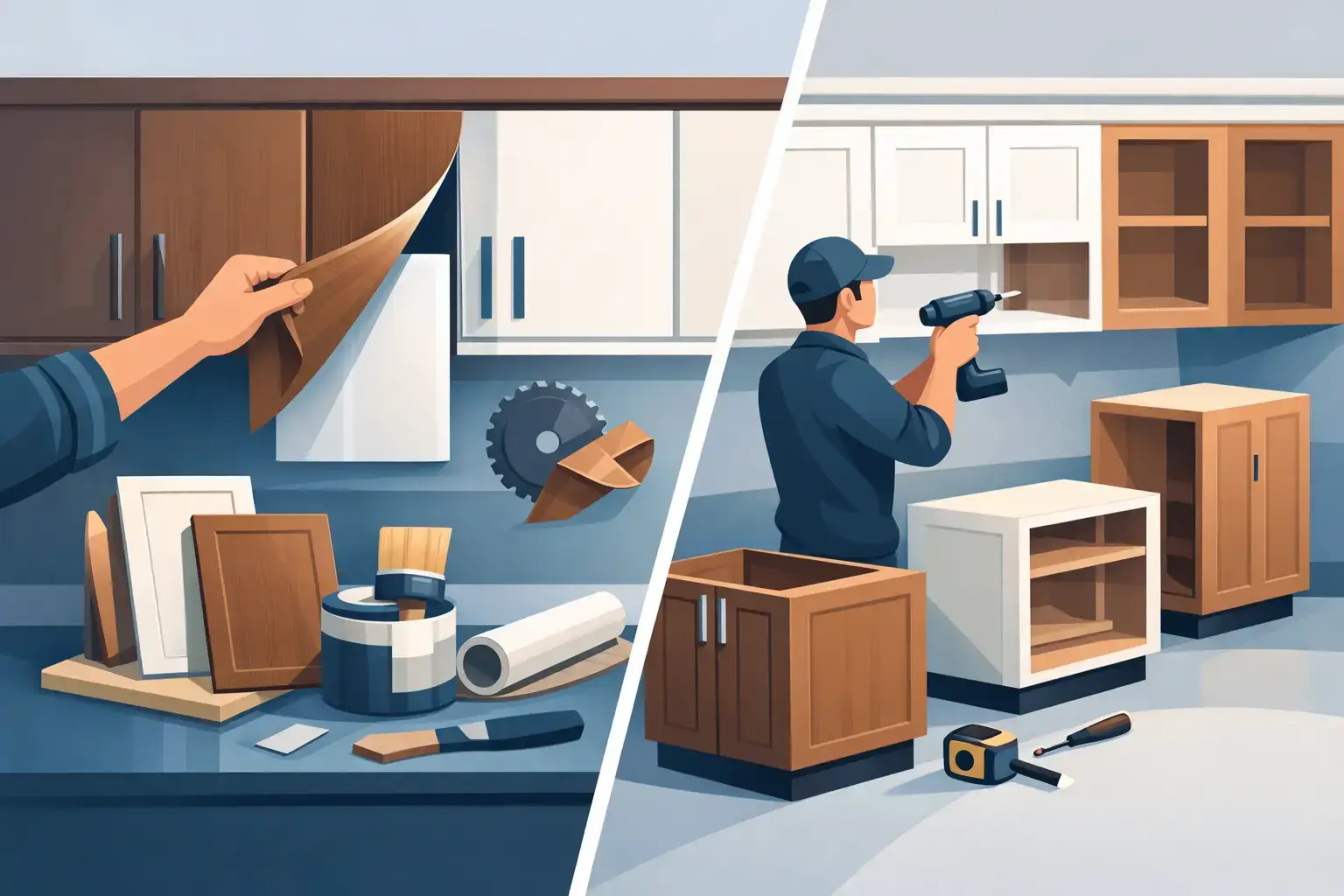
There is a point where painting or refinishing good doors is no longer the best value. If your cabinet boxes are sound but the doors are worn, damaged, or simply too dated for the look you want, refacing can provide a bigger transformation. Refacing keeps the existing cabinet boxes while installing new doors and drawer fronts, then covering visible cabinet surfaces to match.
This approach gives homeowners more freedom to change door style, add new hardware, and update the kitchen’s overall character without the cost and disruption of a complete tear-out. It can be especially useful for kitchens where the layout is functional but the old door style is the main thing holding the room back.
Kitchen Perfect has more than 25 years of experience helping local homeowners weigh these choices. Because much of the work is handled through an in-house cabinet shop, the focus can stay on fit, finish quality, and practical value rather than selling a full replacement when it is not needed.
A good cabinet update should leave you with more than a better-looking room. It should make the kitchen feel like a place you are glad to use every day, while keeping your budget focused on the changes that will matter most.
Ready to update your kitchen without the cost of a complete remodel? Kitchen Perfect has been serving Northeast Ohio homeowners for over 30 years with professional cabinet painting, cabinet refinishing, and cabinet refacing. Contact us today for a free estimate and discover how we can transform your existing cabinets into a kitchen you’ll love for years to come.

Pingback: Can Old Cabinets Be Refaced? Know Before Replacing - Kitchen Perfect