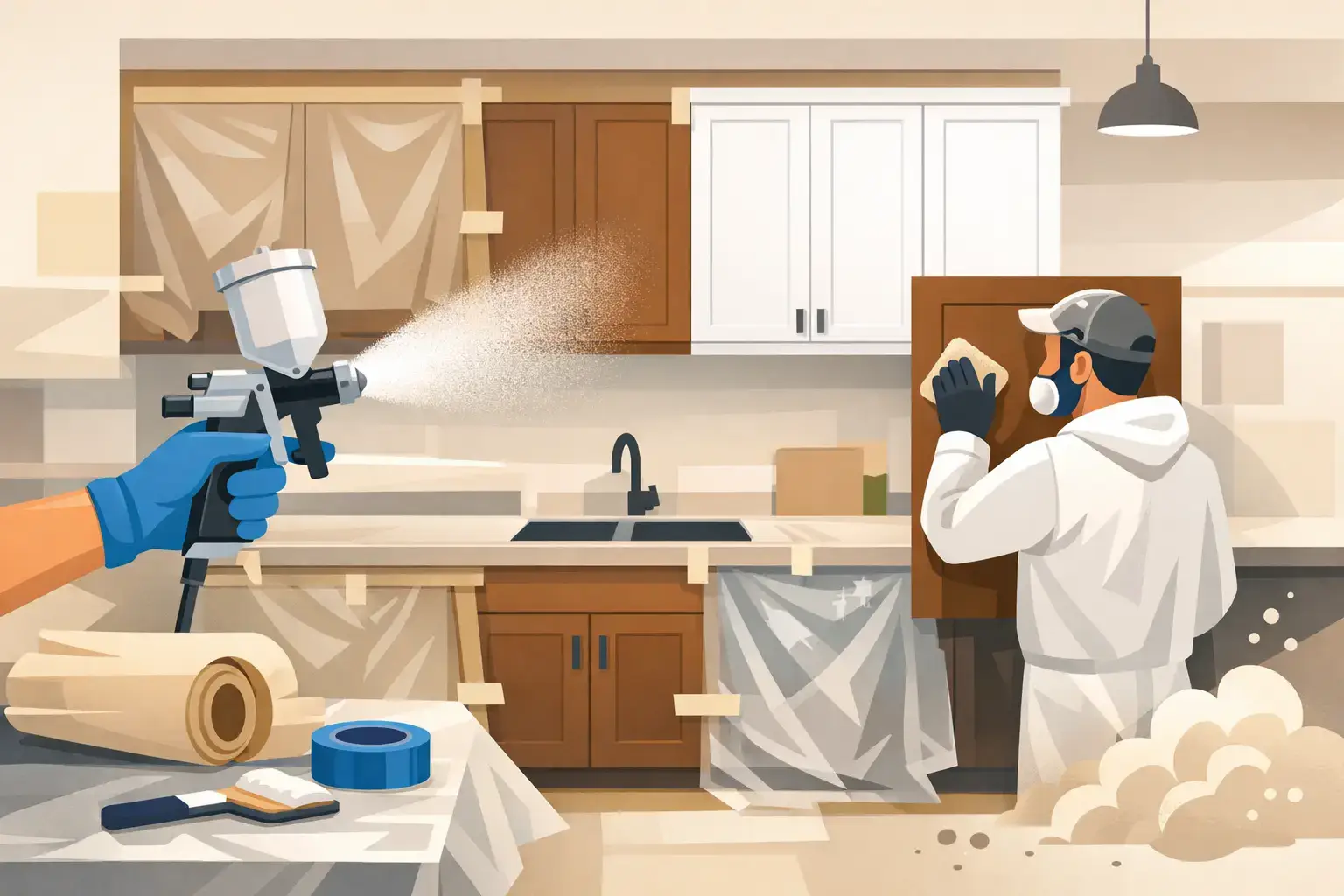
A kitchen can look tired long before it stops working. If your cabinet boxes are solid and the layout still makes sense, refinishing can be a practical way to get a major visual change without tearing out the room. But homeowners understandably ask, is cabinet refinishing messy? The honest answer is yes, it can be – but a properly managed refinishing project should not leave your house coated in dust or your kitchen unusable for weeks.
There is sanding, cleaning, surface preparation, and often paint or stain involved. Those steps create some disruption. The difference comes down to how carefully the work area is prepared, how the contractor contains dust and odors, and whether the cabinets are a good candidate for refinishing in the first place.
Is Cabinet Refinishing Messy During the Work?
Cabinet refinishing is not a no-mess project. Anyone who promises otherwise is setting the wrong expectation. Cabinets need to be cleaned thoroughly to remove cooking residue, then repaired and prepared so the new finish has a solid surface to bond to. Depending on the existing finish and the desired result, that preparation may include sanding, filling small dents, smoothing rough spots, and applying primer.
The mess is most noticeable in three areas: dust from surface preparation, odors from coatings, and the general inconvenience of having part of the kitchen protected off while work is underway. Professional refinishing is designed to control those issues, not pretend they do not exist.
For a typical project, cabinet doors and drawer fronts may be removed and finished separately. That keeps a large portion of the spraying, sanding, and handling away from the main kitchen. The cabinet frames remain in place, so they are carefully masked and finished on site. Counters, floors, appliances, walls, and nearby openings should be covered before work begins.
A well-run job feels organized. A poorly run job feels like a renovation has spilled into the rest of the house.
Sanding Dust Is Real, but It Should Be Contained
Sanding is usually necessary, especially when cabinets have worn finish, scratches, peeling areas, or years of grease buildup. The goal is not always to strip every cabinet down to bare wood. Often, the existing finish is cleaned, dulled, repaired, and prepared to accept a new coating. The exact process depends on the cabinet material and condition.
Dust control should include plastic barriers around the work area, floor protection, careful cleanup between stages, and professional sanding equipment when appropriate. Nearby rooms may need to stay closed off while the work is happening. Homeowners should also remove countertop items, wall decor near the cabinets, and food from cabinets before the project starts.
Some fine dust is a normal part of refinishing, but it should stay within the contained work area. You should not expect to find sanding residue throughout bedrooms, living spaces, or ventilation registers days later.
Paint and Stain Odors Need Planning
Odor is another concern, particularly for families with young children, pets, allergies, or respiratory sensitivities. Primers, paints, stains, and clear topcoats can all have an odor, even when lower-odor products are used. Ventilation and proper curing time make a real difference.
A contractor should explain what materials will be used and how the kitchen will be ventilated. In some cases, homeowners may prefer to spend less time in the home during active spraying or coating days. Pets should be kept away from the work zone, both for their comfort and to prevent dust or hair from getting into fresh finishes.
The strongest odor is generally temporary. Still, it is reasonable to ask how long coatings need before you can comfortably use the kitchen again. Dry to the touch and fully cured are not the same thing. Cabinet surfaces may look finished quickly but need additional time before they can handle regular wiping, cooking grease, and daily use.
What a Clean Cabinet Refinishing Job Looks Like
Clean work begins before the first cabinet door comes off. The contractor should walk through the kitchen, identify what needs to be protected, and give you clear instructions for preparing the space. A little advance planning prevents a lot of frustration.
Before refinishing begins, clear the counters and remove items from cabinets and drawers. Move small appliances, cookware, pantry items, and decorations out of the kitchen or well away from the work area. If there is an attached dining room or open-concept living area, ask how it will be separated and protected.
During the project, expect protective coverings over countertops, flooring, appliances, and nearby surfaces. Openings may be sealed with plastic to limit dust travel. Cabinet hardware is removed or protected, and hinges may be labeled so doors return to the correct locations.
After the finish work, the crew should remove masking carefully, clean the work area, reinstall doors and hardware, and inspect the cabinets with you. Minor touch-ups can be part of a careful finish process. What matters is that the final kitchen looks refreshed, functions properly, and does not come with a layer of construction debris.
How Long Will Your Kitchen Be Disrupted?
The level of disruption depends on the size of the kitchen, the cabinet condition, the finish being applied, and how much repair work is needed. A simple color change on cabinets in good shape is different from refinishing worn oak cabinets with damaged doors, loose veneer, or extensive grease buildup.
You may be able to keep using parts of the kitchen between work stages, but it is best to plan for limited access. Make coffee elsewhere, prepare a few easy meals ahead of time, and keep daily essentials out of the work zone. This is especially helpful for busy families who rely on the kitchen morning and evening.
Cabinet doors are often off the cabinets for part of the process, which means the kitchen will not look finished until reinstallation. That temporary inconvenience is usually far less disruptive than a complete cabinet replacement, where old cabinets are removed, walls may need repair, and plumbing or electrical work can become part of the job.
Refinishing vs. Refacing: Which Creates Less Mess?
Refinishing and refacing both update cabinets, but they are different services. Refinishing keeps the existing doors and cabinet boxes, changing the surface with paint, stain, or another finish. It works best when cabinet doors are in good condition and the style still fits the home.
Refacing keeps the cabinet boxes but replaces the doors and drawer fronts, then covers the visible exterior portions of the boxes with new material. It is often a better fit when homeowners want a more dramatic style change, newer door profiles, or a different wood look without paying for all-new cabinetry.
Neither option is completely mess-free. Refinishing involves more surface preparation and finishing work. Refacing involves removing old doors, preparing cabinet exteriors, and installing new components. Both are generally cleaner and less invasive than a full kitchen tear-out, particularly when the existing layout works and cabinet boxes remain structurally sound.
If cabinets have serious water damage, failing box construction, broken shelves, or a layout that no longer serves the family, new cabinetry may be the more sensible investment. A good contractor will not push refinishing simply because it is less expensive. The right answer should match the condition of the kitchen and what you want from it.
Questions to Ask Before You Schedule Cabinet Refinishing
The best way to avoid surprises is to discuss the work process before signing off on a project. Ask where doors and drawer fronts will be finished, how the kitchen will be contained, what surfaces will be protected, and how dust will be cleaned up each day. Ask about the coatings, expected odor, ventilation plan, and how long you should wait before putting items back into cabinets.
It also helps to ask who will actually perform the work. A local company that handles its own projects can maintain closer control over preparation, finish quality, scheduling, and cleanup. At Kitchen Perfect, our in-house cabinet shop and experienced team help us keep the work organized from the estimate through the final inspection.
A Better Kitchen Does Not Have to Mean a Bigger Mess
Cabinet refinishing asks for some patience, but it should not turn your home upside down. With proper containment, surface protection, cleanup, and realistic timing, it is a manageable upgrade for homeowners who want to improve an aging kitchen while keeping a functional layout and controlling costs.
If you are considering refinishing, start with a straightforward conversation about your cabinets, your household routine, and the cleanup process you expect. Clear answers before the work begins are the best sign that your kitchen will be treated with the care it deserves.