

A kitchen can look dated long before it stops working. If your cabinet boxes are solid, your doors close properly, and the layout still serves your family, refacing can make far more sense than tearing everything out. Choosing the best cabinet refacing materials is the part that determines whether that new look holds up to daily cooking, kids, pets, humidity, and years of use.
For homeowners in North Royalton and throughout Northeast Ohio, the right choice usually comes down to three things: the condition of the existing cabinets, the style you want, and how much maintenance you are willing to take on. There is no single material that is best for every kitchen. A hardworking family kitchen has different needs than a lightly used space where natural wood grain is the main priority.
What Cabinet Refacing Material Actually Covers
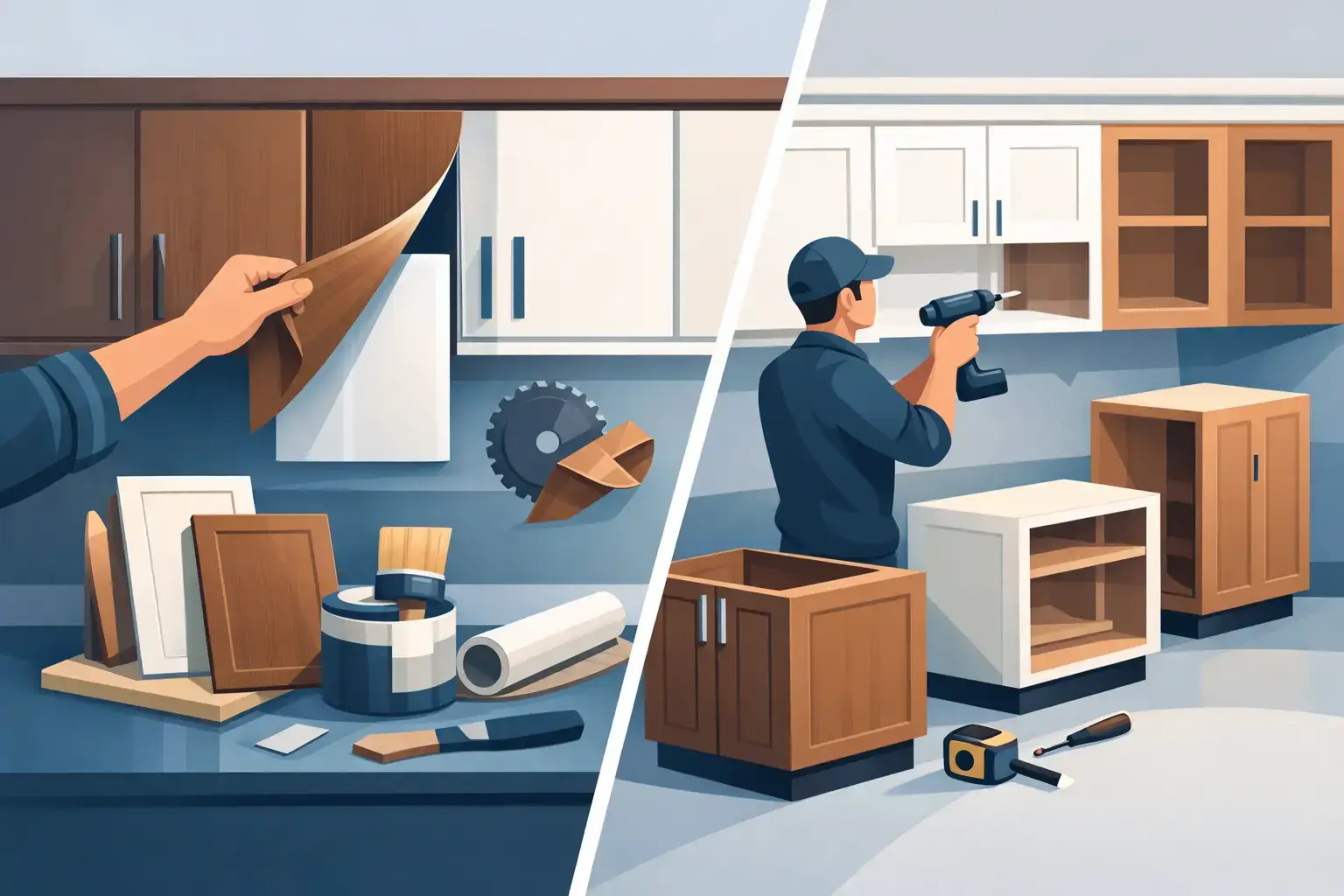
Cabinet refacing keeps the existing cabinet boxes in place. The visible exterior surfaces of those boxes are covered with a new finish material, while the doors and drawer fronts are replaced. New hardware, molding, trim, and accessories can complete the change.
That makes refacing a practical option when the cabinet structure is in good shape. It preserves a functional layout, avoids much of the demolition of full replacement, and can deliver a major visual update at a more manageable cost.
The material used on cabinet faces needs to look good, but it also needs to bond properly, resist everyday wear, and coordinate with the new doors. Good preparation and careful installation matter just as much as the material itself. A lower-priced material installed poorly will not deliver the value homeowners expect.
Best Cabinet Refacing Materials Compared
Wood veneer for a natural, long-lasting look
Wood veneer is a thin layer of real hardwood applied over a stable cabinet surface. It offers the warmth, character, and grain variation of genuine wood without requiring every visible cabinet surface to be solid lumber.
Veneer is a strong choice for homeowners who want stained cabinets, a traditional kitchen, or a natural finish that does not look manufactured. Oak, maple, cherry, hickory, and other species each create a different feel. Maple can look clean and refined, while oak brings out a more pronounced grain that works well in many classic Northeast Ohio homes.
The trade-off is that natural wood requires more care than synthetic surfaces. Prolonged water exposure, harsh cleaners, and deep scratches can affect the finish. Sunlight may also gradually change the color of some wood species. Still, quality veneer installed by experienced cabinet professionals is durable, repairable in many cases, and hard to match for authentic appearance.
Laminate for practical durability and value
Laminate is one of the most practical cabinet refacing materials for busy households. It is a manufactured surface available in a wide range of colors, wood looks, and textures. Modern laminate options can give a kitchen a clean painted appearance, a contemporary matte finish, or a convincing wood-grain look.
Its biggest advantages are durability and easy care. Laminate resists stains, wipes clean easily, and does not need regular refinishing. It is especially useful for families who want a fresh kitchen without worrying about every splash near the sink or every fingerprint on a cabinet door.
Not all laminate is the same. Lower-grade products can look flat or show wear at edges over time, while better-quality materials offer more realistic texture and improved resistance to moisture and scratches. The quality of the adhesive, edge treatment, and installation is critical. When material edges are finished properly, laminate can provide years of reliable service at a sensible price.
Rigid thermofoil for smooth painted-style cabinets
Rigid thermofoil, often called RTF, is a vinyl-like material heat-fused over an engineered wood door or drawer front. It is commonly selected for smooth white, cream, gray, and other painted-style cabinet finishes. Because it wraps around the face and edges of a door, it creates a clean, consistent look without visible seams on many door styles.
RTF is easy to clean and generally costs less than painted wood. It can be a good fit for a homeowner who wants a bright, updated kitchen and prefers low maintenance. It also works well for simple shaker-style doors and other clean-lined designs.
Heat is the main concern. Areas near ovens, ranges, and heat-producing appliances need proper protection and attention during planning. If the material is damaged or begins to separate after years of exposure, repairs can be more difficult than touching up a painted or wood surface. This does not make thermofoil a poor choice, but it does mean it should be selected with the kitchen’s layout and use in mind.
Painted wood for a custom, traditional finish
Painted wood doors paired with a compatible refaced cabinet exterior offer a classic look that remains popular for good reason. White kitchens continue to appeal to homeowners who want to brighten a room, while soft grays, greens, and deep blues can add personality without changing the entire layout.
A painted finish offers flexibility. It can work with traditional raised-panel doors, simple shaker doors, decorative molding, and built-in details. If you are updating an older home and want the cabinetry to feel original to the house, painted wood can be a strong choice.
The honest trade-off is maintenance. Paint can chip or show wear around high-touch areas, especially near handles and drawer pulls. A quality finish and careful use will help, but painted cabinets are not completely maintenance-free. For many homeowners, that is a worthwhile exchange for the look they want.
Choosing Materials Based on How You Use the Kitchen
The best material is not always the most expensive one. It is the one that fits the job.
If your kitchen sees daily meals, school mornings, holiday gatherings, and frequent cleanup, laminate may provide the best combination of durability, easy maintenance, and cost control. If you want a natural stained finish that adds warmth and supports the character of your home, wood veneer is often worth the added investment.
For a crisp, bright kitchen with smooth doors and a controlled budget, rigid thermofoil can be a sensible option. If the goal is a more tailored, furniture-like appearance with color choices beyond standard surface options, painted wood may be the better fit.
Also consider your cabinet style. Strong wood grain can compete with a busy countertop or patterned backsplash, while a smooth white or matte finish can calm down a space with more visual activity. On the other hand, a kitchen with plain flooring and simple counters may benefit from the texture of oak, maple, or another wood species.
The Cabinet Boxes Still Matter
Refacing materials can transform the outside of cabinets, but they cannot solve structural problems inside them. Before refacing begins, cabinet boxes should be checked for water damage, loose joints, sagging shelves, and poor layout function.
A cabinet near a leaking sink or dishwasher may need repair before any new material is applied. If your current layout creates a daily frustration, such as a blocked walkway or not enough usable storage, it is worth discussing whether selective cabinet replacement should be part of the project.
This is where an in-person assessment matters. An honest contractor should tell you when refacing is a good value and when replacement makes more sense. Kitchen Perfect has its own cabinet shop and handles its work directly, which helps keep the focus on fit, finished quality, and a solution that makes sense for the home rather than a one-size-fits-all package.
Details That Protect Your Investment
Cabinet faces get the attention, but the finishing details are what make a refacing project feel complete. New doors should align evenly. Edges should be clean. End panels, toe kicks, crown molding, and light rail should match the overall finish rather than look like afterthoughts.
Hardware deserves careful consideration as well. New pulls or knobs can change the appearance of the cabinetry, but they also protect the finish by giving hands a consistent place to open doors. Soft-close hinges and drawer glides are not required for every project, yet they can make an older kitchen feel noticeably more refined.
For cleaning, use a soft cloth and a mild cleaner recommended for the finish. Avoid abrasive pads, harsh solvents, and excessive water along seams and edges. These simple habits help every refacing material perform better.
A well-chosen cabinet refacing material should make your kitchen easier to enjoy, not harder to live with. Start with the condition of your cabinets, be realistic about how your household uses the room, and choose a finish that gives you lasting value every time you walk into the kitchen.

Pingback: Refacing Workmanship Review: What to Look For - Kitchen Perfect
Pingback: Kitchen Cabinet Paint Guide for Ohio Homes - Kitchen Perfect
Pingback: How to Choose Cabinet Veneers for Your Kitchen - Kitchen Perfect
Pingback: How to Compare Cabinet Quotes Without Surprises - Kitchen Perfect