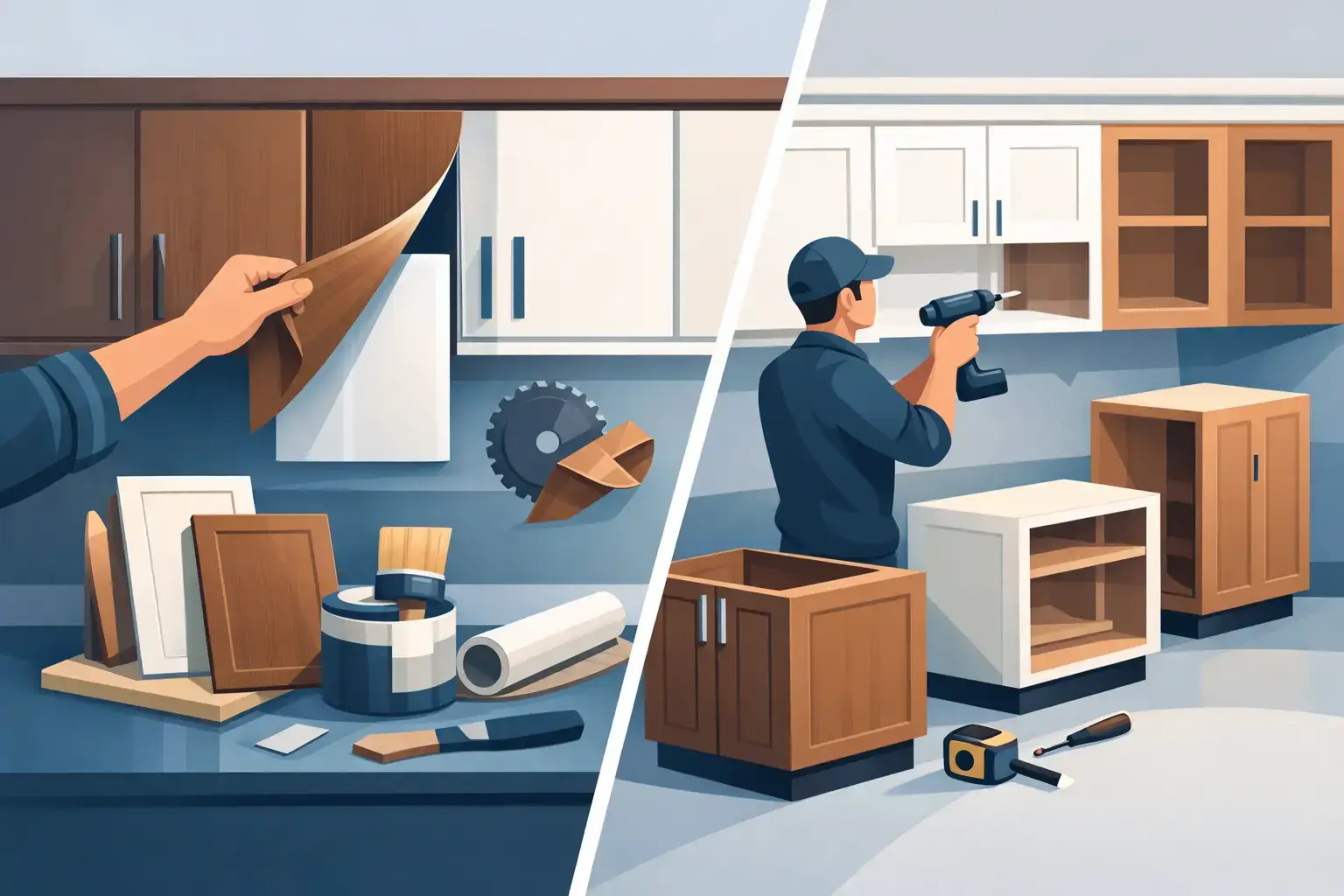
A refacing workmanship review should not begin and end with new doors that look good from across the room. Cabinet refacing is a smart way to update an aging kitchen without paying for a full replacement, but the result depends on the care taken with the cabinet boxes, face frames, finishes, hardware, and installation. The details are what make a refaced kitchen feel finished years later instead of looking like a quick cover-up.
For homeowners in North Royalton and throughout Northeast Ohio, the best value usually comes from preserving a functional layout while improving the surfaces that everyone sees and uses. That only works when the existing cabinets are sound and the company doing the work treats every step as a craft, not an assembly-line job.
What Good Cabinet Refacing Workmanship Looks Like
Quality refacing starts before a single door is removed. A contractor should inspect the cabinet boxes for water damage, loose joints, sagging shelves, broken drawer slides, and weak areas around the sink. Refacing is an excellent option for sturdy cabinets, but it is not the right answer for boxes that are badly damaged or poorly built. An honest recommendation may include repairing certain cabinets, replacing a problem section, or discussing new cabinetry if the structure will not support a lasting result.
Once the cabinets pass inspection, preparation matters. Doors, drawer fronts, hardware, and other removable pieces should come off carefully. The work area should be protected from dust and accidental damage, with flooring, countertops, and nearby rooms treated with respect. Kitchen remodeling is disruptive enough without leaving homeowners to deal with avoidable messes or scratched surfaces.
The face frames and visible cabinet ends need to be clean, solid, and properly prepared before new material is applied. Whether the project uses wood veneer, laminate, or another finish material, edges should lie flat and align cleanly. There should not be lifted corners, loose seams, bubbles, or rough transitions where one surface meets another. A good installer pays attention to the areas most people touch every day: around handles, along door openings, below drawers, and near the sink.
A Refacing Workmanship Review Should Look Beyond Doors
New doors are the most noticeable part of a refacing project, so it is easy to judge the whole job by their color and style. Appearance matters, but fit matters just as much. Doors should hang straight, maintain even spacing, and open without rubbing against one another or catching on adjacent cabinets. Drawer fronts should line up consistently, and drawers should move smoothly without wobbling or binding.
Look closely at the reveal, which is the visible gap between doors and drawer fronts. Small variations can happen in older homes where floors, walls, and existing cabinets are not perfectly level. Still, a skilled installer adjusts hinges and makes reasonable corrections so the finished kitchen looks balanced. Crooked doors and uneven gaps should not be dismissed as normal just because the cabinet boxes are older.
Hardware installation is another useful sign of care. Pulls and knobs should be positioned consistently, securely fastened, and comfortable to use. Hinges should be properly adjusted rather than forced into place. If soft-close hinges or drawer guides are included, they should operate as intended on every cabinet, not only on the most visible doors.
Check the corners, edges, and end panels
The close-up details often tell the real story. Stand at the end of a cabinet run and inspect the finished panels. They should fit the cabinet and surrounding wall cleanly, without wide gaps or awkward filler pieces. In corners, the materials should meet neatly and allow doors and drawers enough room to function.
Pay attention to exposed edges. A durable refacing job has finished edges that are smooth and secure, especially near the dishwasher, sink base, trash pullout, and other high-use areas. These are the places most likely to reveal shortcuts over time. Water-resistant care around the sink area is especially important because moisture can damage cabinet materials quickly when it gets behind an unfinished or poorly sealed edge.
Why Who Does the Work Matters
A low estimate can be tempting, but homeowners should ask who will actually complete the project. Some remodeling companies sell a job and pass much of the work to outside crews. That arrangement can work, but it adds another layer between the homeowner and the people responsible for the finished details.
A company that performs its own cabinet work has more direct control over measurements, fabrication, scheduling, and final adjustments. An in-house cabinet shop can also make it easier to create or modify components when a kitchen has an unusual opening, a damaged cabinet end, or a layout that needs a practical solution. That level of control is valuable because older Northeast Ohio homes often have rooms with walls and floors that are not perfectly square.
Kitchen Perfect has built its work around that hands-on approach for more than 25 years. As a family-owned local company, we do our own work and use our in-house shop to maintain control over the details that affect fit and finish. That helps keep costs practical without treating workmanship as an extra.
Questions to Ask Before You Sign
You do not need to be a cabinet maker to evaluate a refacing contractor. Clear questions can tell you a great deal about the work you can expect. Ask whether the existing cabinet boxes will be inspected before the project is approved and how damaged sections would be handled. Ask what materials will be used on face frames, cabinet ends, doors, and drawer fronts.
It is also reasonable to ask who will be in your home each day, whether the company uses subcontractors, and how the work area will be protected. Find out how long the project should take, what happens if an adjustment is needed after installation, and whether the estimate identifies the hardware, accessories, and finish details included in the price.
A dependable contractor should answer directly. There is no need for vague promises or pressure to make a fast decision. Cabinet refacing is a significant improvement to your home, and you deserve to understand what you are paying for.
Compare scope, not just the bottom-line price
Two estimates may both say “cabinet refacing,” yet include very different levels of work. One may cover new doors and a basic surface application, while another includes finished end panels, updated hinges, crown molding, new drawer fronts, modifications for appliances, and careful on-site adjustments. The lower price is not automatically a better value if important details are missing.
Ask for the scope in plain language. Know whether the quote includes removing and reinstalling trim, addressing cabinet repairs, installing hardware, or making changes for a new countertop. If you are also updating countertops, backsplash, or lighting, discuss the order of work so one project does not create unnecessary damage or delays for the next.
When Refacing Is the Right Choice
Refacing works best when you like your kitchen’s general layout and your cabinet boxes are still structurally sound. It can give the room a major visual change with less demolition, less disruption, and a lower cost than replacing every cabinet. It is especially practical when the kitchen functions well but looks dated, worn, or mismatched.
It may not be the best choice when you need to move plumbing, change walls, add significantly more storage, or correct cabinets that are failing from water damage. In those situations, replacement may offer more flexibility. A good remodeling company should help you weigh that trade-off honestly instead of trying to fit every kitchen into one service.
The Finished Kitchen Should Feel Solid
The day the work is completed, open every door and drawer. Look at the cabinets from several angles and run your hand along finished edges. Check that hardware is secure, surfaces are clean, and the space has been left orderly. A professional should be willing to walk through the job with you and address reasonable final adjustments.
The best refaced kitchen does more than photograph well. It feels solid when you make coffee in the morning, pack lunches, put away groceries, and gather with family. Choose workmanship you can see up close and service from people who will stand behind it.