For more than 30 years, Kitchen Perfect has been helping Northeast Ohio homeowners transform outdated kitchens without the expense of a complete remodel. As a family-owned company, we believe every homeowner deserves a beautiful kitchen that combines lasting quality, expert craftsmanship, and exceptional value.
Whether you’re considering cabinet painting, cabinet refinishing, or cabinet refacing, our experienced team specializes in giving existing cabinets a durable, factory-quality finish that can completely change the look of your kitchen. The information below will help you make informed decisions and choose the best solution for your home.
The short answer is that the installation portion of a typical cabinet refacing project often takes three to five working days. The full process, including choosing materials, measuring, fabrication, and scheduling, is longer. Every kitchen is different, so a good contractor should give you a realistic schedule based on your cabinet condition, door style, added upgrades, and material availability.
Cabinet Refacing Timeline Explained: The Big Picture
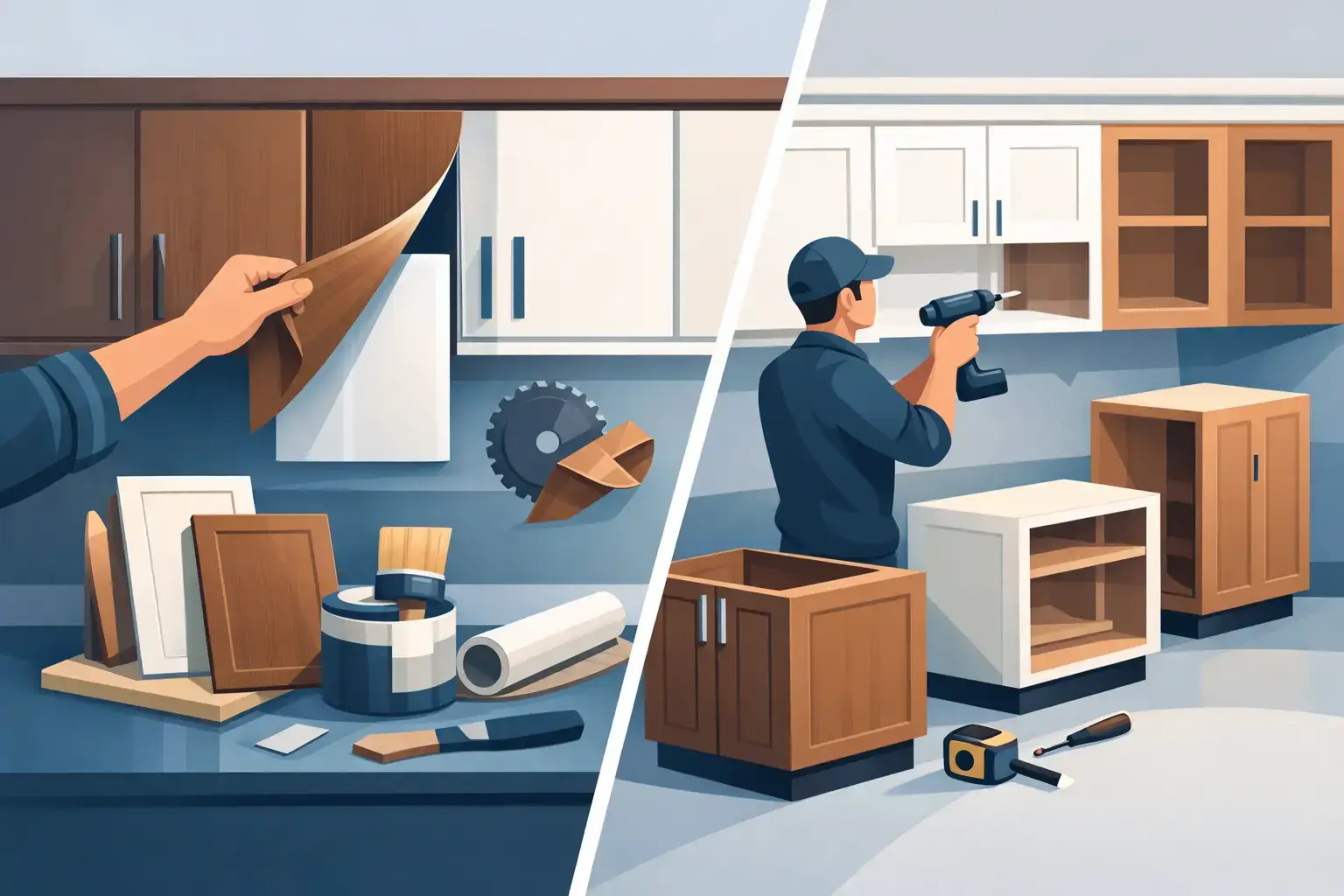
Cabinet refacing keeps the existing cabinet boxes in place. The visible exterior surfaces are covered with new material, and new doors, drawer fronts, hardware, and trim are installed. Since the cabinets are not being torn out and rebuilt from scratch, there is less demolition, less mess, and fewer moving parts than a full kitchen remodel.
For most homeowners, the timeline has two parts: planning and production before work begins, followed by the on-site installation. Planning can take several weeks, while the hands-on work inside your home is usually measured in days, not months.
A straightforward project with no layout changes may move quickly. A project that includes new countertops, a backsplash, lighting, cabinet modifications, or specialty storage may require more coordination. That does not make refacing a poor choice. It simply means the schedule should account for each trade and each material in the right order.
Step 1: The In-Home Estimate and Cabinet Evaluation
The first visit is about more than choosing a door color. A refacing professional needs to inspect the cabinet boxes, face frames, drawer operation, hinges, and overall layout. Refacing works best when the cabinet structure is sound and worth keeping.
During this visit, homeowners can discuss the look they want, whether they need more usable storage, and which parts of the kitchen frustrate them now. Perhaps the doors are dated but the cabinet layout works well. Maybe you want to replace a narrow base cabinet with pullout storage or add a new pantry unit. These details affect both price and timing.
A careful estimate also identifies concerns early. Water damage beneath a sink, badly warped boxes, weak drawer construction, or a planned wall removal may make full replacement or targeted cabinet repair the better route. Honest advice at this stage prevents surprises after the project starts.
Step 2: Design Choices, Measurements, and Final Approval
Once you decide to move forward, the next step is finalizing materials and details. That includes door and drawer-front style, finish or color, hardware, crown molding, valances, end panels, and any cabinet changes. If you are adding a countertop, sink, backsplash, or lighting, those choices should be discussed early as well.
This part of the process often takes one to three weeks, depending on how quickly decisions are made and whether samples need to be reviewed. There is no need to rush into a color or style you may regret. At the same time, prompt decisions help keep the job on schedule.
Accurate measurements are essential. Cabinet openings, appliance clearances, wall conditions, and corner details all matter. A professional measure helps ensure new doors and drawer fronts fit properly and that the finished trim looks intentional rather than added on as an afterthought.
Step 3: Fabrication and Ordering
After measurements and selections are approved, the doors, drawer fronts, and refacing materials are ordered or fabricated. This is often the longest part of the overall timeline because materials must be prepared before the crew arrives.
Kitchen Perfect’s in-house cabinet shop can be an advantage here. Making many project components directly gives the team better control over workmanship, fit, and scheduling than a company relying entirely on outside sources. Some specialty products, hardware, or countertop materials may still have their own lead times, so the final schedule depends on the full scope of work.
Homeowners should expect this pre-installation phase to take several weeks in many cases. Seasonal demand can also matter. Spring and fall are popular remodeling seasons in Northeast Ohio, and a reputable local company will be upfront about its current schedule rather than promising an unrealistic start date.
Step 4: Preparing Your Kitchen Before Installation
You do not normally have to move out of your home for cabinet refacing. That is one of the main advantages for families who want an updated kitchen without the disruption of a complete gut renovation. Still, a little preparation makes installation smoother.
Before the crew arrives, clear dishes, food, small appliances, and personal items from cabinets and drawers. Remove fragile items from nearby countertops and open shelving. Make arrangements for pets, and keep children away from the work area during active installation. If possible, set up a temporary coffee and meal station elsewhere in the home.
Your kitchen may be partially usable at points during the job, but it is wise to plan simple meals and avoid relying on the room as usual. If countertops or plumbing fixtures are also being replaced, the sink and range may be unavailable for part of the schedule.
Step 5: What Happens During Cabinet Refacing Installation
On the first day, the crew typically protects work areas, removes existing doors and drawer fronts, and begins preparing the cabinet faces. New matching material is applied to the visible frames and sides. Precision matters here. Clean lines around corners, end panels, and trim are what make refaced cabinets look like a finished kitchen rather than an update placed over old cabinetry.
New doors and drawer fronts are then installed, along with hinges, handles, knobs, and molding. Drawers are adjusted so they open and close properly. Depending on the scope, the crew may also install new cabinet accessories, make small modifications, or fit a replacement cabinet where it improves function.
A basic kitchen may be completed in about three days. Larger kitchens, detailed trim work, cabinet additions, or more involved modifications may take four or five days. Countertops are usually a separate part of the schedule. If a new countertop requires a template and fabrication, it may be installed after the cabinet work is complete. Plumbing reconnects after the countertop and sink are in place.
What Can Extend the Refacing Schedule?
Most delays are preventable when the project is planned carefully, but a few factors can add time. Material backorders are one possibility, especially with specialty hardware or selected finishes. Countertop fabrication, appliance delivery, and unexpected wall or cabinet damage can also affect the sequence.
Changes made after materials are ordered are another common reason a project takes longer. Switching a door style, changing hardware, adding a cabinet, or deciding to replace countertops late in the process can require new measurements or additional fabrication. It is better to take time during planning than to force last-minute changes once work is underway.
Home conditions matter too. Older homes can have uneven walls, previous repairs, or plumbing issues hidden behind base cabinets. Experienced installers know how to handle normal jobsite adjustments, but significant repairs should be addressed correctly instead of covered up just to maintain a fast schedule.
Refacing Versus Full Replacement: Why the Timeline Matters
Full cabinet replacement often involves removing old cabinets, possible flooring and drywall repairs, electrical changes, plumbing work, installation of new boxes, countertops, and finishing details. The project can stretch for weeks, particularly when layout changes are involved.
Refacing preserves the parts of the kitchen that are still doing their job. That can reduce labor, keep the job cleaner, and shorten the period your household has to live without a normal kitchen. It is not the right solution for every home, but it is often the sensible option when you want a major visual improvement without paying for a complete rebuild.
The best way to get an accurate timeline is to have your cabinets evaluated in person. A straightforward conversation about your kitchen, your budget, and how you use the space will tell you whether refacing can give you the update you want – without turning everyday life upside down.