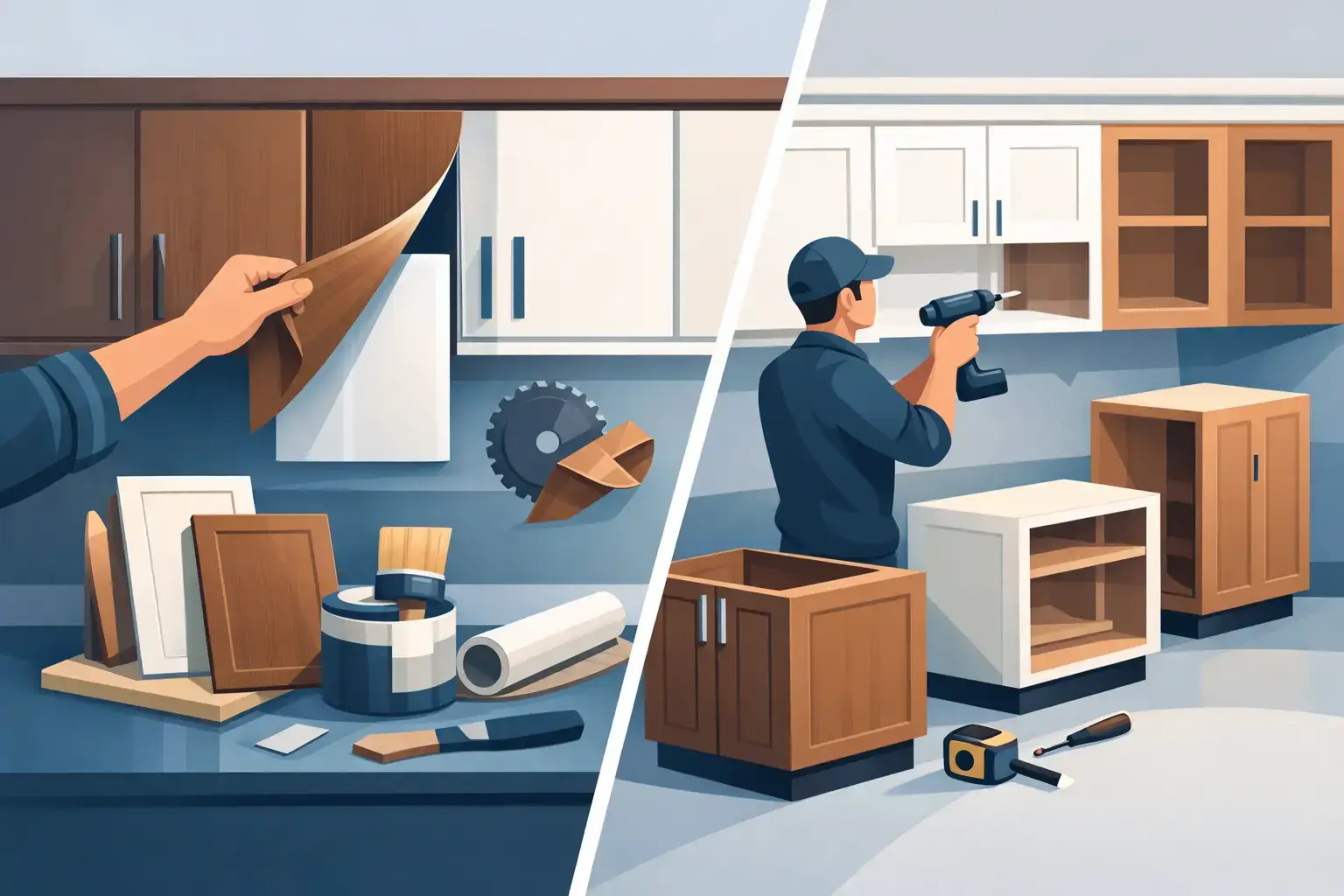
A kitchen can feel dated long before the cabinets stop working. If the boxes are solid, the layout still serves your family, and the doors close properly, cabinet refacing may be the practical answer. Knowing how to choose cabinet veneers helps you get the updated look you want without paying for a full cabinet replacement.
The right veneer is not simply the one that looks best on a small sample. It needs to suit your cabinet condition, the amount of daily use your kitchen gets, the lighting in the room, and the budget you want to keep. A good refacing project should make your kitchen look like it belongs in your home – not like a quick cover-up.
Start With the Condition of Your Existing Cabinets
Veneer works best when the cabinet boxes are structurally sound. Before thinking about wood species or stain colors, check whether your existing cabinets are worth refacing. The boxes should be level, firmly attached to the wall, and free from major water damage, swelling, or broken joints.
A few scratches, worn finish areas, or dated doors are normal reasons to reface. Those cosmetic problems do not mean you need all-new cabinetry. But if the cabinet sides are badly damaged, shelves are failing, or the layout no longer functions for your household, replacement or selective cabinet changes may make more sense.
This step matters because the veneer becomes the new finished face of the cabinet frames. It cannot correct a box that is loose, warped, or damaged underneath. An honest contractor should look at the cabinets first and explain what can reasonably be saved.
Understand the Main Cabinet Veneer Options
The word veneer can describe more than one material, so ask what is actually being installed. For cabinet refacing, the most common choices include real wood veneer, rigid thermofoil, and laminate-style surface materials. Each has a place, but they do not perform or look exactly alike.
Real Wood Veneer
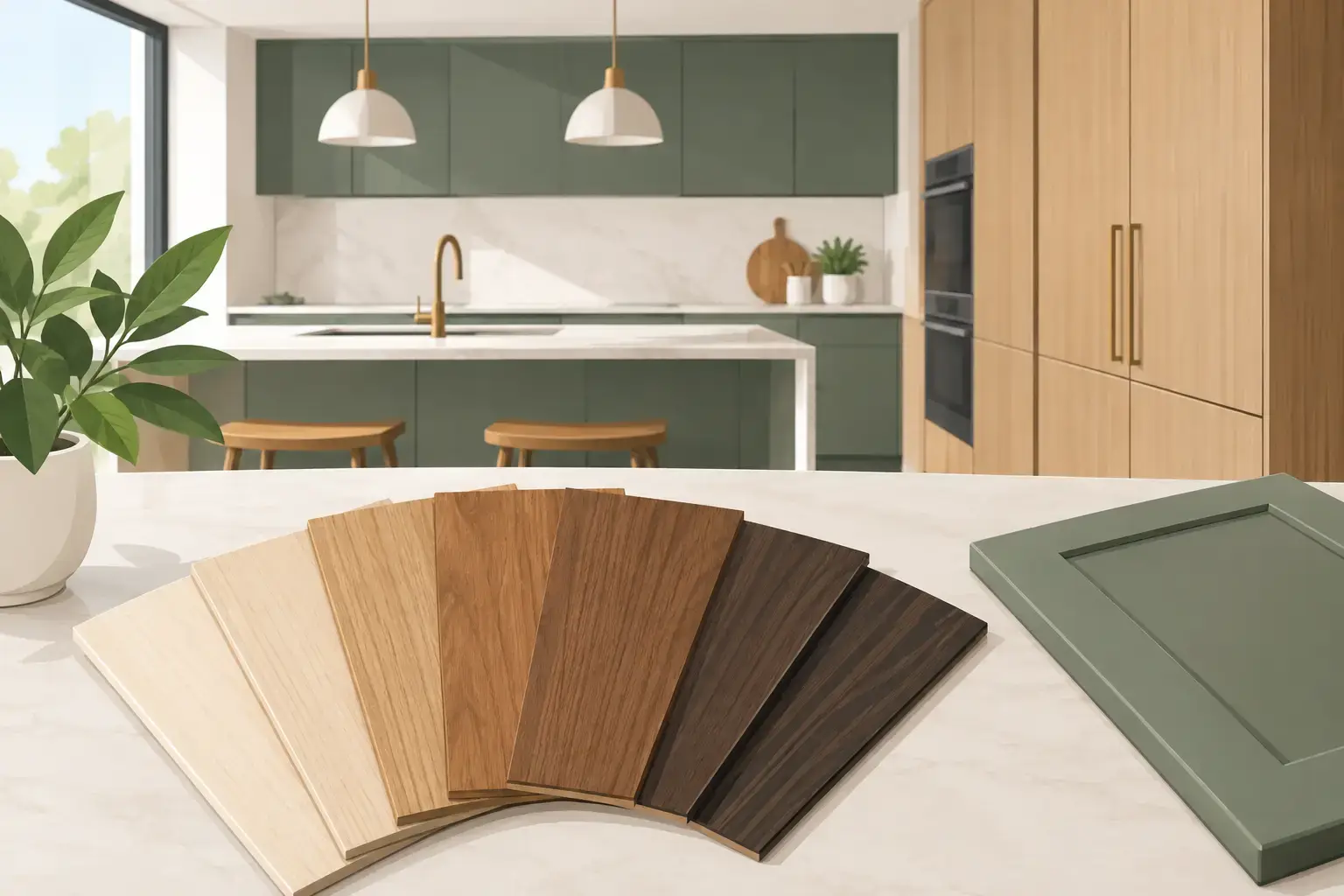
Real wood veneer is a thin layer of genuine wood applied to the cabinet face frames and finished to match the new doors. It gives you natural grain, warmth, and the variation people expect from wood. Oak, maple, cherry, and hickory are familiar choices, while painted wood finishes are popular for a cleaner, more current kitchen.
Wood veneer is a strong choice when you want the appearance of traditional cabinetry and the ability to select a stain or finish that fits the rest of your home. Keep in mind that natural grain varies. That is part of the appeal, but it also means one piece will not look perfectly identical to the next.
Thermofoil and Other Engineered Surfaces
Thermofoil is a vinyl surface formed over an engineered wood core. It can provide a smooth, consistent painted appearance and is often used for contemporary door styles. It is generally easy to clean and does not have the grain variation of real wood.
The trade-off is heat resistance. Areas near ovens, dishwashers, and poorly ventilated cooking zones need careful attention. Lower-quality thermofoil can eventually peel when exposed to heat or moisture over time. Material quality and proper installation make a real difference here.
Laminate surfaces can also be a practical option for homeowners who want a durable, uniform finish and close control of cost. They are not the same as real wood, but that is not automatically a drawback. The best choice depends on whether your priority is natural character, a painted look, easy upkeep, or the lowest practical price.
Match the Veneer to Your Kitchen Style
Cabinet veneer should work with the fixed parts of your kitchen, especially countertops, flooring, backsplash, and wall color. A sample that looks great under showroom lighting can look completely different next to your existing floor or in a kitchen with limited natural light.
Warm wood veneers can make a large or bright kitchen feel comfortable and inviting. They also work well in homes with traditional trim, hardwood floors, or a more classic style. Lighter woods and soft painted finishes can help a smaller Northeast Ohio kitchen feel more open. Deep stains, espresso tones, and very dark painted cabinets can look sharp, but they tend to show dust, fingerprints, and light-colored crumbs more easily.
If you are keeping your countertop, bring that color into the decision. Cool gray counters paired with a strongly orange wood tone can fight each other. Likewise, a bright white veneer may make older cream-colored tile look noticeably yellow. Looking at samples together in your own kitchen prevents many expensive regrets.
Choose a Finish That Fits Daily Life
The finish on cabinet veneer protects the surface and shapes how much maintenance the kitchen needs. A quality finish should stand up to normal cleaning, food splatters, hand traffic around handles, and the occasional bump from a chair or grocery bag.
For a busy family kitchen, a medium wood tone or a soft satin finish is often forgiving. High-gloss surfaces can create a dramatic modern look, but they reveal smudges and reflections more readily. Very dark finishes can do the same. If your kitchen sees constant use from kids, pets, or frequent cooking, practicality may matter more than a finish that only looks good in a photo.
Ask how the finished surfaces should be cleaned. Most refaced cabinets do well with a soft cloth, mild soap, and water. Harsh abrasives, strong solvents, and scouring pads can dull or damage finishes. A straightforward care routine helps the new look last.
Pay Attention to Grain Direction and Color Matching
This detail separates a careful cabinet refacing job from one that looks pieced together. With real wood veneer, grain direction should make sense across the cabinet frames, especially on long runs, end panels, and areas surrounding doors and drawers. The goal is a finished appearance that feels intentional.
Color matching also matters. Natural wood accepts stain differently depending on grain and species, so an exact match across every piece is not always realistic. What you want is a coordinated result with no distracting shifts from one cabinet section to another. New doors, drawer fronts, face frames, and visible side panels should all be planned as one system.
This is one reason local fabrication and hands-on quality control matter. When the people managing the job are responsible for the finished pieces, they can check fit, color, and consistency before the work is complete.
Do Not Choose by Price Alone
Budget should be part of the decision, but the cheapest veneer option is not always the best value. A lower initial price can become frustrating if the material is poorly bonded, does not handle heat well, or clashes with the doors and finishes you select.
Instead, compare the complete scope of work. Find out what material is going on the cabinet frames, what the new doors and drawer fronts are made from, whether exposed ends will be finished, and what hardware is included. A reface estimate should be clear enough that you understand where the money is going.
Cabinet refacing is often significantly less expensive than replacing the entire kitchen because it preserves usable cabinet boxes and avoids much of the demolition. That savings is most meaningful when the work is done carefully, with materials chosen for the way you actually live.
How to Choose Cabinet Veneers With Confidence
Start with a realistic look at the cabinet boxes, then narrow your options by style, durability, and maintenance. Do not rush the color decision. View samples in your kitchen at different times of day, beside the countertop and flooring you plan to keep. If possible, ask to see finished examples of the material rather than relying only on a small swatch.
Also consider who will do the work. Veneer installation requires accurate preparation, clean edges, proper adhesives, and careful finishing around corners, openings, and end panels. Those details affect both appearance and long-term durability.
For homeowners in North Royalton and nearby communities, Kitchen Perfect can help evaluate whether your current cabinets are good candidates for refacing and walk you through practical veneer choices. After more than 25 years of hands-on kitchen work, we know that the best material is the one that looks right, holds up to daily life, and keeps your project within a comfortable budget.
A well-chosen cabinet veneer should make you want to spend time in your kitchen again. Take the time to compare materials in the room where they will live, and let the condition of your cabinets and the way your family uses the space guide the final choice.