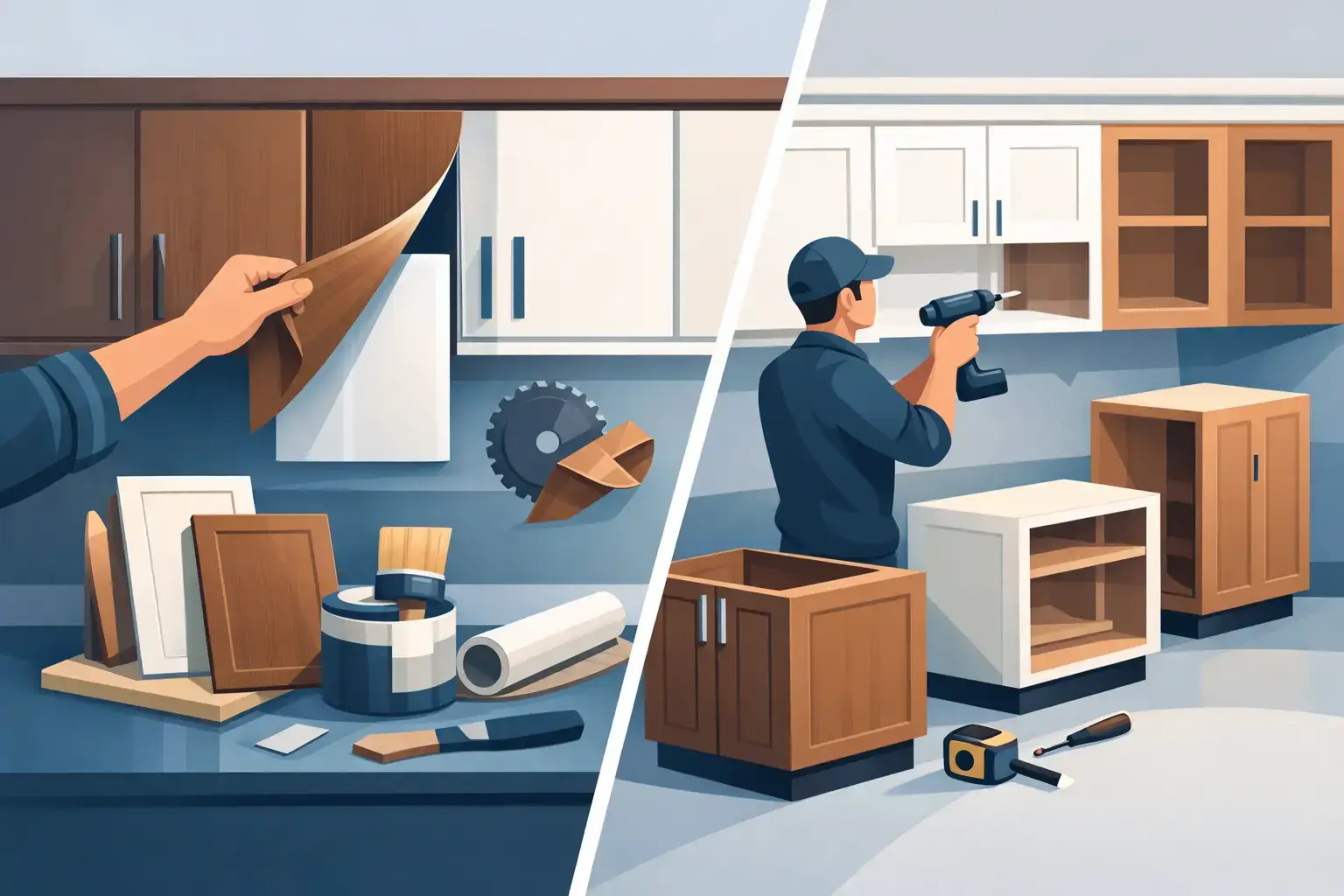
A cabinet door sample can look completely different on a showroom wall than it does in your kitchen at 7 a.m. on a cloudy Northeast Ohio morning. That is why knowing how to compare cabinet finishes matters before a refacing, refinishing, or new cabinet project begins. The right finish should fit more than a photo you saved online. It needs to work with your lighting, floor, counters, daily routine, and budget.
A finish can make an older kitchen feel clean and current without changing a layout that already works. But the wrong choice can make the room feel darker, show fingerprints constantly, or clash with features you plan to keep. Comparing finishes carefully upfront is one of the simplest ways to avoid second-guessing the final result.
How to Compare Cabinet Finishes in Your Own Kitchen
Start by looking at real samples in the actual room, not just on a phone screen or in a catalog. Hold samples upright near the cabinets, countertops, backsplash, flooring, and appliances. View them in daylight, then again at night with your regular overhead and under-cabinet lights on.
Natural light changes throughout the day, especially in kitchens with north-facing windows. A warm white may look inviting in one kitchen but slightly yellow in another. A gray finish may feel crisp in a bright room and cold in a space with limited daylight. The sample that looks best under store lighting is not always the one that will look best at home.
It also helps to look at the sample from a few feet away. Cabinet finishes are viewed as an entire wall of doors and drawer fronts, not as a small square in your hand. Ask whether the finish will make the room feel larger, warmer, cleaner, or more balanced. A dark finish can add depth and contrast, but it may visually shrink a small kitchen. A lighter finish usually reflects more light and can make a familiar kitchen feel more open.
Start With the Cabinet Material and Project Type
Not every finish works equally well on every cabinet material. Solid wood, wood veneer, laminate, and thermofoil cabinets all have different limitations. Before falling in love with a color or sheen, make sure the finish is appropriate for what you have.
Cabinet refinishing is often a good option when existing wood doors and cabinet boxes are structurally sound and the layout still meets your needs. Paint or stain can refresh the look while preserving a usable kitchen. However, heavy damage, peeling surfaces, or materials that do not accept a new coating well may call for cabinet refacing or replacement doors instead.
With cabinet refacing, the exposed cabinet boxes receive a new matching surface while new doors and drawer fronts provide the finished appearance. This gives homeowners more flexibility with door styles and finishes without the cost and disruption of tearing out functional cabinet boxes. New cabinetry makes the most sense when the layout, storage, or cabinet condition is no longer working for the household.
A good contractor should be straightforward about which path fits your kitchen. A less expensive finish is not a bargain if it is being applied to a surface that will not hold up.
Compare Paint, Stain, and Wood-Look Finishes
Painted finishes create a smooth, consistent color and work well in kitchens where homeowners want a brighter or more updated appearance. White, off-white, soft gray, greige, navy, and deep green remain popular because they can work with many countertop and flooring choices. Painted cabinets can make a dated kitchen feel dramatically different, particularly when paired with updated hardware.
The trade-off is that paint tends to show wear differently than stain. Chips or dings can be more noticeable, especially on dark colors and busy areas near trash pullouts, sink bases, and frequently used drawers. The quality of preparation and application makes a major difference in how painted cabinets look and perform over time.
Stained finishes allow wood grain to remain visible. They are a practical choice for homeowners who want warmth, texture, and a more traditional or natural look. Medium stains often hide small marks well, while very dark stains can show dust and fingerprints. Light stains can keep a kitchen feeling open but may not provide enough contrast against pale floors or counters.
Wood-look finishes can offer the character of wood in a more controlled, repeatable appearance. They are especially useful when the goal is to coordinate new doors or refaced surfaces across the kitchen. Look closely at the grain pattern and repeat in the sample. What feels subtle on one door can feel busy when repeated across a full kitchen.
Look Closely at Sheen and Texture
Color gets most of the attention, but sheen affects everyday maintenance just as much. Glossy finishes reflect more light and can make colors appear richer. They can also show fingerprints, water spots, and smudges more easily. For most family kitchens, a softer satin or low-sheen finish is a practical middle ground. It provides a finished look without turning every touch mark into a visible problem.
Matte finishes have a relaxed, current appearance and can hide minor surface imperfections well. They are not automatically maintenance-free, though. Grease splatter and handprints can still show, depending on the color and material. Ask how the finish should be cleaned before making a final selection. A finish that needs special cleaners or careful handling may not suit a kitchen used heavily every day.
Texture deserves the same attention. Smooth slab-style doors can feel clean and modern, while raised-panel or wood-grain finishes bring more visual detail. If your kitchen has patterned counters, a busy backsplash, or prominent flooring, a calmer cabinet finish often creates better balance. If the rest of the room is simple, a wood grain or deeper color can become the feature that gives the space personality.
Consider Durability Where Your Kitchen Works Hardest
Cabinets around the sink, range, dishwasher, and trash area take more abuse than upper cabinets across the room. When comparing finishes, think about where moisture, heat, grease, and repeated contact happen in your kitchen.
A durable finish is not just about resisting scratches. It should also be properly applied, fully cured, and suitable for the cabinet surface underneath. Edges, corners, and door profiles require careful workmanship because these are the spots that receive the most wear. This is one reason the installer and process matter as much as the finish name on a sample.
Ask practical questions during an estimate. How should the cabinets be cleaned? What happens if a door is damaged later? Will the new finish coordinate with future repairs or additions? Clear answers are more useful than broad promises about a finish being “the best.”
Kitchen Perfect handles its work directly and uses its own cabinet shop for many project components, which helps maintain control over fit and finished quality. For homeowners who want a major visual update without replacing every cabinet box, that hands-on approach can make the decision process more manageable.
Match the Finish to What You Are Keeping
A cabinet finish does not need to match every other surface exactly. In fact, exact matching can make a kitchen look flat. It does need to coordinate with the items you are keeping, especially countertops, flooring, backsplash, appliances, and wall color.
Bring home samples whenever possible. Place a cabinet sample beside the countertop rather than above it, since that is how the two surfaces will meet in the finished kitchen. If you are keeping warm-toned floors, a cool gray cabinet may create a contrast you like or a mismatch you regret. The answer depends on the undertones, not simply whether both choices are labeled gray, brown, or white.
Hardware is another useful test. Brushed nickel, black, brass, and bronze can each pull a cabinet color in a different direction. Before choosing hardware, hold a sample knob or pull against the finish. A small detail can make the final selection feel more traditional, more modern, or more polished.
Keep Cost and Long-Term Value in the Conversation
The lowest initial price is not always the best value, and the most expensive finish is not automatically right for your home. Compare the full scope of work: surface preparation, door and drawer condition, materials, installation, cleanup, and what is included in the estimate.
If your cabinet boxes are solid and your layout still works, refacing or refinishing may leave room in the budget for countertops, lighting, hardware, or a backsplash. Those updates can help the cabinet finish look intentional rather than like a single isolated change.
Choose a finish you will still be comfortable living with a few years from now. A bold color can be a great choice when it fits your home and style, but a classic neutral may offer more flexibility if you expect to sell in the near future. The best choice is usually the one that feels right for your household, not the one that happens to be trending.
Before you commit, take the samples home one more time, look at them in your everyday light, and picture the kitchen after a normal busy week. The finish that still looks good beside real dishes, real floors, and real life is usually the one worth choosing.