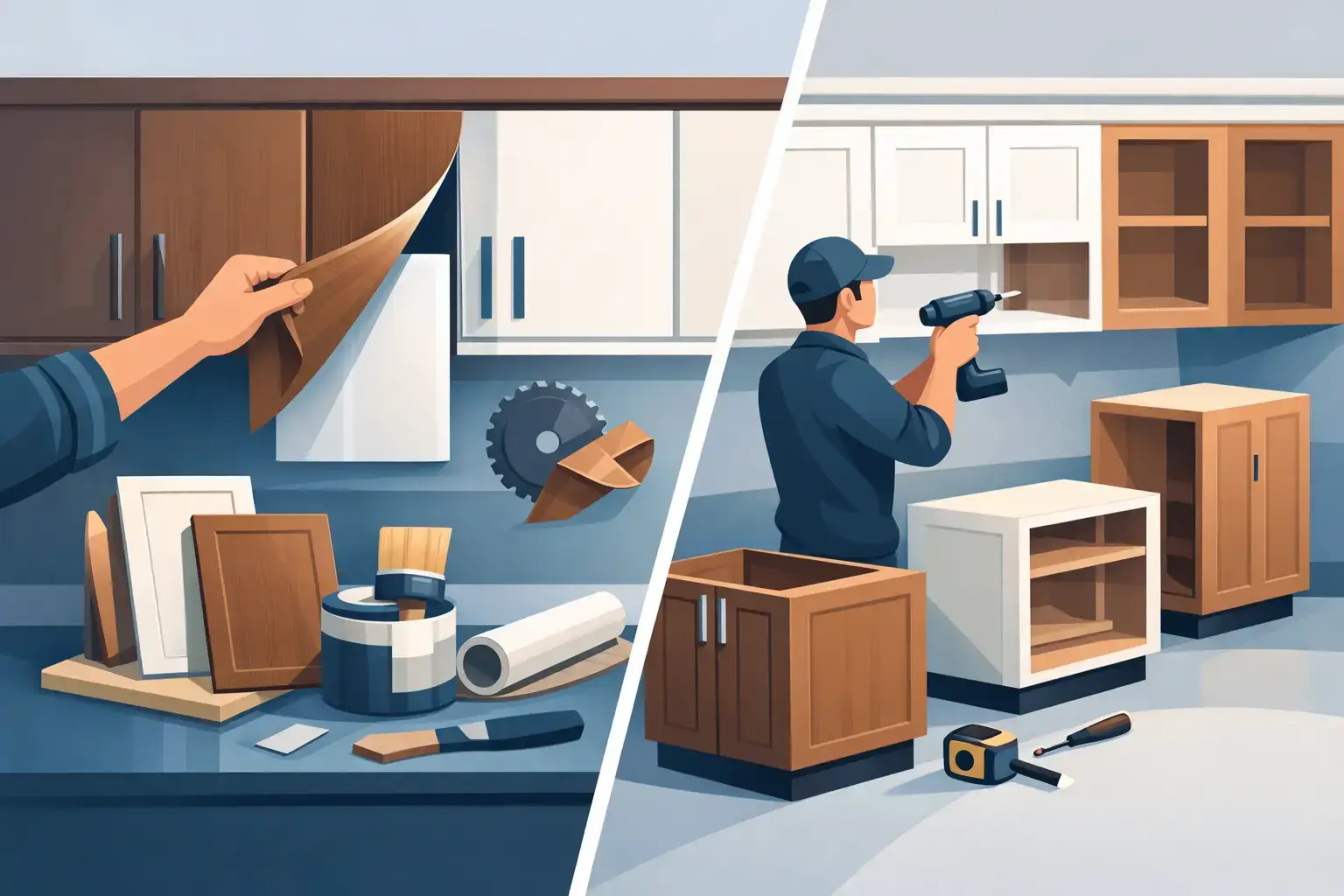
A cabinet door can be replaced in an afternoon. The box behind it is a different matter. When the cabinet boxes are swollen, loose, water-stained, or worn from decades of use, homeowners naturally ask: can cabinet boxes be repaired, or is a full replacement unavoidable? The honest answer is that many cabinet box problems can be repaired. The right choice depends on the cause of the damage, how far it has spread, and whether the cabinets still provide a solid foundation for your kitchen.
For many Northeast Ohio homeowners, repairing sound cabinet boxes and updating the visible surfaces can be a practical way to get a fresh kitchen without taking on the cost and disruption of a complete tear-out.
Can Cabinet Boxes Be Repaired After Water Damage?
Water is the issue that deserves the closest inspection. A small leak under a sink can leave staining, softened particleboard, peeling laminate, or a musty smell. Surface staining alone does not always mean the cabinet box has failed. If the material remains firm, the leak has been corrected, and the damage is limited to an accessible area, repairs may be possible.
The concern is swollen particleboard or MDF. Once those materials absorb enough water, they can expand and lose their holding strength. Screws may no longer grip. Bottom panels can sag. Side panels may crumble around hinges or plumbing openings. Painting over that damage will not restore the cabinet’s strength.
A repair may involve replacing a damaged sink base bottom, reinforcing a weakened side, rebuilding a toe kick, or installing a new panel inside the cabinet. The key is addressing the source of moisture first. A repaired cabinet will not stay repaired if a drain, dishwasher connection, refrigerator line, or exterior-wall condensation problem is still present.
When Cabinet Box Repairs Make Sense
Cabinet box repair is usually worth considering when the cabinet layout works for your household and the majority of the structure is still sound. Older cabinets often have sturdy plywood sides, solid wood face frames, and durable construction that can outlast their original doors and finishes by many years.
Repairs tend to make sense when damage is isolated rather than widespread. A loose face frame, cracked drawer rail, damaged shelf, broken corner brace, or failed sink cabinet floor can often be corrected without removing every cabinet. Hinges can be relocated or reinforced, drawers can be repaired or replaced, and worn interior hardware can be updated.
This approach is especially appealing when you like the current placement of your sink, appliances, and work areas. Keeping the existing layout avoids the added cost of moving plumbing, electrical connections, flooring, and countertops. It also means less disruption in a room that most families use every day.
A careful inspection should look beyond the obvious cosmetic issue. The cabinet needs to sit level, remain securely attached to the wall, and hold fasteners properly. Doors and drawers should have a reasonable chance of operating correctly once they are adjusted or replaced. If those basics are in place, repair and refacing may offer real value.
Common Repairs That Can Extend Cabinet Life
Many worn cabinets do not need to be discarded because of one broken part. A skilled cabinet professional can often correct problems such as a sagging shelf, a separated joint, loose wall cabinet mounting, damaged drawer guides, worn hinge mounting areas, or a cracked face frame.
Cabinet bottoms under sinks are another frequent repair. Depending on the construction, a new floor panel or reinforcement can provide a clean, stable surface. Areas where cabinets meet the floor can also sometimes be rebuilt after minor water exposure or damage from cleaning products.
These repairs are not simply cosmetic patches. Done correctly, they restore support where the cabinet needs it most. That makes the cabinet suitable for new doors, drawer fronts, hardware, and finished surfaces.
When Repair Is Not the Smart Investment
There are times when putting money into existing boxes is more expensive in the long run. Cabinets with widespread water damage, active mold concerns, major pest damage, severe warping, or failing wall attachment may be beyond practical repair. The same is true when several boxes are breaking down at once or when the material is too weak to hold screws and hardware.
Replacement may also be the better choice if the kitchen layout is the real problem. If you need more storage, want to add an island, need deeper drawers, or want to relocate appliances for better function, preserving every existing cabinet can limit the project. Repairing boxes will not solve a cramped work triangle or make a poorly planned kitchen easier to use.
Homeowners should also be cautious about cabinets that have been repeatedly repaired over the years. One solid repair is different from trying to hold together a cabinet that has failing sides, patched bottoms, and loose joints in several places. At that point, new cabinetry may offer better value and greater peace of mind.
The best decision is not always the lowest initial price. It is the option that gives you a kitchen that looks right, works properly, and holds up over time.
Repair, Refacing, Refinishing, or Replacing?
These terms are often used interchangeably, but they describe different solutions. Understanding the difference can help you avoid paying for work that does not address the actual condition of your cabinets.
Repair focuses on fixing structural or functional issues. It may include rebuilding a damaged area, reinforcing a box, repairing drawer systems, or correcting loose components. Repair can be a stand-alone service, but it is often part of a larger cabinet update.
Cabinet refacing is a good fit when cabinet boxes are structurally sound but the doors, drawer fronts, and exterior finish are dated or worn. The visible cabinet surfaces are updated, usually with new doors and drawer fronts, while the existing boxes remain in place. It can give the kitchen a major visual change while avoiding the cost of full cabinet replacement.
Cabinet refinishing changes the finish on existing surfaces. It can work well for cabinets that are in good shape and simply need a new color or a refreshed appearance. Refinishing will not correct swelling, broken construction, or weak mounting points.
Full replacement removes the old cabinetry and starts over. It provides the most freedom for layout changes, storage improvements, and new construction, but it is generally the most involved and costly option. Countertops, backsplash, flooring, and wall repairs may also be affected once old cabinets come out.
What a Professional Inspection Should Cover
Before choosing a direction, have the cabinets evaluated with the doors open and the drawers removed. A proper inspection should include the sink base, cabinet interiors, back panels, wall attachment points, face frames, corners, shelves, and areas around dishwashers and refrigerators.
The inspector should check for softness in the material, swelling along edges, signs of leaks, odor, mold, sagging, and gaps where joints have separated. They should also look at how the doors and drawers operate. A crooked door may only need an adjustment, but it can also point to a cabinet box that has shifted or weakened.
Ask direct questions: Is the damage isolated? Will the repaired area hold up under normal use? Can these boxes support refacing? What work is needed before new doors or finishes are installed? A contractor who gives clear answers about both the possibilities and the limitations is helping you make a sound decision.
A Practical Path for an Aging Kitchen
If your kitchen is dated but the basic layout still works, do not assume that old cabinets must be replaced. Sound boxes can often be repaired, cleaned up, and used as the foundation for a far more current look. That can preserve the parts of your kitchen that still have value while putting your budget toward the features you see and use every day.
At Kitchen Perfect, the goal is to give homeowners an honest answer about what their cabinets can support. With more than 25 years of experience and an in-house cabinet shop, the focus is on practical workmanship, not pushing a full replacement when a repair, refacing, or refinishing project makes better sense. A close look at the cabinet boxes is the first step toward a kitchen update you can feel good about for years to come.