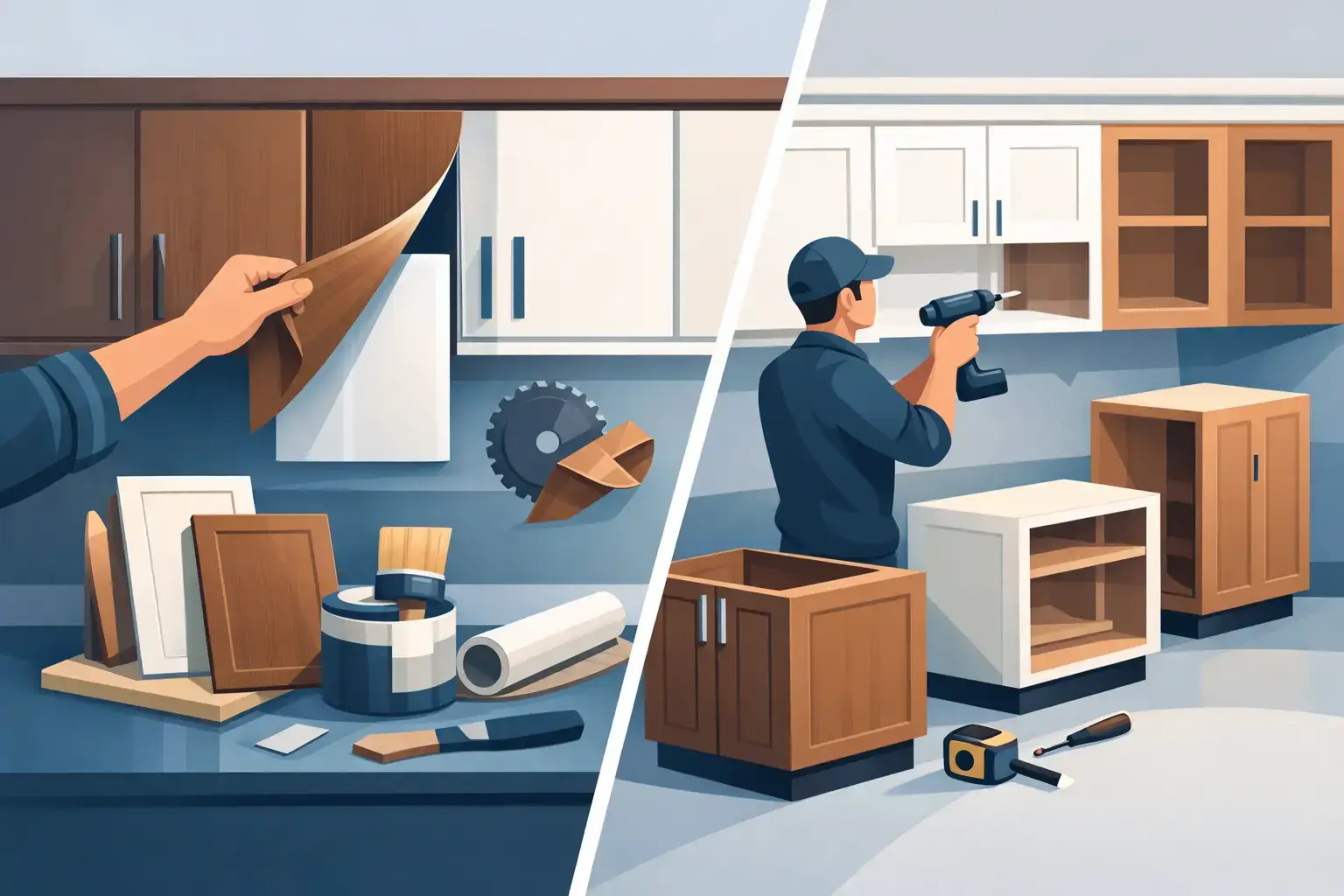
A cabinet reface can make an older kitchen look completely different without tearing out cabinet boxes that still do their job. The veneer options for cabinet refacing matter because the material on the cabinet frames sets the visual foundation for the whole project. It needs to look right beside the new doors and drawer fronts, stand up to daily use, and fit the budget you had in mind.
For many Northeast Ohio homeowners, the best choice is not simply the least expensive material or the trendiest color. It is the option that matches the condition of the existing cabinets, the style of the home, and how the kitchen is actually used. A busy family kitchen needs practical durability. A long-term home may justify a more natural wood look. Either way, a good refacing job starts with honest answers about the materials.
What Veneer Does in Cabinet Refacing
During cabinet refacing, the existing cabinet boxes stay in place while the visible exterior surfaces are renewed. New doors and drawer fronts are installed, and the face frames, end panels, and other exposed cabinet areas receive a matching finish material. Veneer is often the material used to cover those existing cabinet faces.
A quality veneer is a thin, durable surface layer bonded to a properly prepared cabinet frame. It allows the finished cabinets to have a consistent appearance without the cost, demolition, and disruption of replacing every cabinet box. The result can be a major kitchen update while preserving a layout that already works.
The word “veneer” can mean different things in casual conversation. Some homeowners use it to describe any thin cabinet covering. In refacing, however, it is helpful to separate real wood veneer from laminate and vinyl-based materials. They can all create attractive kitchens, but they do not perform, feel, or cost the same.
Real Wood Veneer for a Natural Cabinet Finish
Real wood veneer is made from thin slices of actual hardwood. It brings the grain, variation, and warm character people expect from wood cabinets. When paired with matching wood doors and drawer fronts, it can give a kitchen the appearance of all-new hardwood cabinetry at a more manageable cost.
Oak Veneer
Oak remains a practical choice for homeowners who like visible grain and a traditional, durable look. Red oak has a stronger, warmer grain pattern, while white oak generally has a cleaner, more current appearance. White oak can work especially well in natural finishes, medium stains, and lighter modern-rustic kitchens.
Because oak grain is pronounced, it is not the best fit for someone who wants a perfectly smooth painted finish. It is a better choice when the goal is to celebrate the wood rather than hide it.
Maple Veneer
Maple has a finer, smoother grain than oak. It works well for homeowners who want a cleaner look with less visual movement in the wood. Maple can be stained, although stain colors may appear differently than they do on oak, and it is often selected for clear or lighter finishes.
Maple is also commonly considered when a kitchen design calls for a refined, less traditional appearance. The trade-off is that its subtle grain does not provide the same texture as oak, which some homeowners prefer in a larger kitchen.
Cherry and Other Premium Wood Looks
Cherry, walnut, and specialty wood species offer deeper color and a more upscale furniture-style appearance. These options can be beautiful in formal kitchens, historic homes, or spaces where the cabinetry is meant to be a major design feature.
They also tend to cost more, and natural wood changes somewhat over time with light exposure. That is not a defect. It is part of the character of real wood. Still, it is worth discussing before choosing a species based only on a small sample.
Painted Veneer Options for Cabinet Refacing
Painted cabinets remain one of the most requested looks because they can brighten a dark kitchen and make a familiar layout feel more current. White, soft gray, warm greige, navy, and deep green are all popular depending on the home and the amount of natural light in the room.
For a painted reface, the key question is not just the paint color. It is the surface beneath it and the quality of the preparation. Cabinet frames need to be sound, clean, smooth, and properly finished so the new surface looks consistent beside the doors and drawer fronts.
Painted finishes are a strong choice for homeowners who want a clean, uniform look without emphasizing wood grain. They can also help blend cabinets with new countertops, backsplash tile, or updated flooring. Keep in mind that painted cabinet finishes, like any painted surface in a working kitchen, can eventually show wear at high-contact edges. Careful installation and normal cleaning habits make a real difference.
Laminate and Thermofoil: A Different Kind of Surface
Laminate is not real wood veneer, but it is often part of the conversation when homeowners compare cabinet refacing materials. High-pressure laminate is a durable decorative surface available in many solid colors, wood patterns, and textured finishes. It can be a good fit for a budget-conscious project or a sleek, contemporary design.
Its main advantage is consistency. A laminate wood pattern will not vary from cabinet to cabinet the way natural wood does, and many laminate surfaces are easy to clean. The feel is different from real wood, though, and edge detailing may be more limited depending on the product and door style.
Thermofoil doors are another common option. They are made by applying a vinyl-like surface over an engineered wood core. Thermofoil can create smooth white or colored cabinet doors at an accessible price point. It works best when the material is high quality and the kitchen is not subjected to excessive heat or moisture near problem areas.
Neither laminate nor thermofoil should be treated as automatically better or worse than wood veneer. They serve different needs. A homeowner focused on low maintenance and a uniform finish may prefer them. A homeowner who values genuine wood grain and the ability to coordinate natural materials may be happier with real wood veneer.
How to Choose Between Veneer Options for Cabinet Refacing
The right material usually becomes clearer after looking at the kitchen as a whole. Start with the cabinet boxes. Refacing makes sense when they are structurally sound, securely installed, and arranged in a layout that still serves your family. If boxes have serious water damage, failing construction, or a layout that creates daily frustration, replacement may be the smarter investment.
Next, consider the style of the house and the finishes you plan to keep. A natural wood veneer can look right at home with hardwood floors, warm-toned countertops, and traditional trim. A painted finish may better suit a lighter kitchen with updated hardware and simple door profiles. Laminate can be a practical match for a modern look or a project where cost control is the priority.
Also think about maintenance honestly. Wood veneer and painted finishes should be cleaned with mild products and soft cloths. Avoid harsh abrasives, soaking cabinet edges, and slamming doors. Laminate is generally forgiving for everyday cleanup, but it still benefits from care at seams and edges.
Budget matters, but it should be considered over the life of the project. A lower initial price is valuable only if the selected material gives you the look and performance you expect. The best refacing value comes from pairing a suitable veneer with well-built doors, accurate installation, and workmanship that holds up after the installers leave.
Why Material Matching Matters
Cabinet refacing is not simply putting new doors on old boxes. The visible cabinet frames, finished ends, trim, doors, and drawer fronts all need to work together. A close match in color is not always enough. Sheen, grain direction, edge profile, and texture affect whether the finished kitchen looks intentional.
This is where working with a company that handles the details directly can help. An in-house cabinet shop provides greater control over components and fit, rather than relying on a chain of outside suppliers and installers. Kitchen Perfect has spent more than 25 years helping local homeowners make practical decisions about cabinet upgrades, with a focus on craftsmanship and fair pricing.
A sample can guide the conversation, but it should not be the only decision-maker. Look at it under your kitchen lighting. Place it near the countertop, backsplash, flooring, and appliances. Natural wood can look warmer or cooler depending on the room, while paint colors often shift noticeably between daylight and evening lighting.
A Better Finish Starts With an Honest Assessment
The most attractive veneer will not make up for cabinet boxes that need repair or a kitchen plan that no longer works. On the other hand, solid existing cabinets do not need to be discarded simply because their doors look dated. Refacing gives homeowners a practical middle path: keep what is working, replace what is visible, and put the budget where it will make the greatest difference.
Before choosing a veneer, ask to see material samples, discuss the condition of your cabinet boxes, and compare the look of real wood, painted finishes, and laminate in your own kitchen. The right choice should feel good every time you walk into the room, not just on installation day.