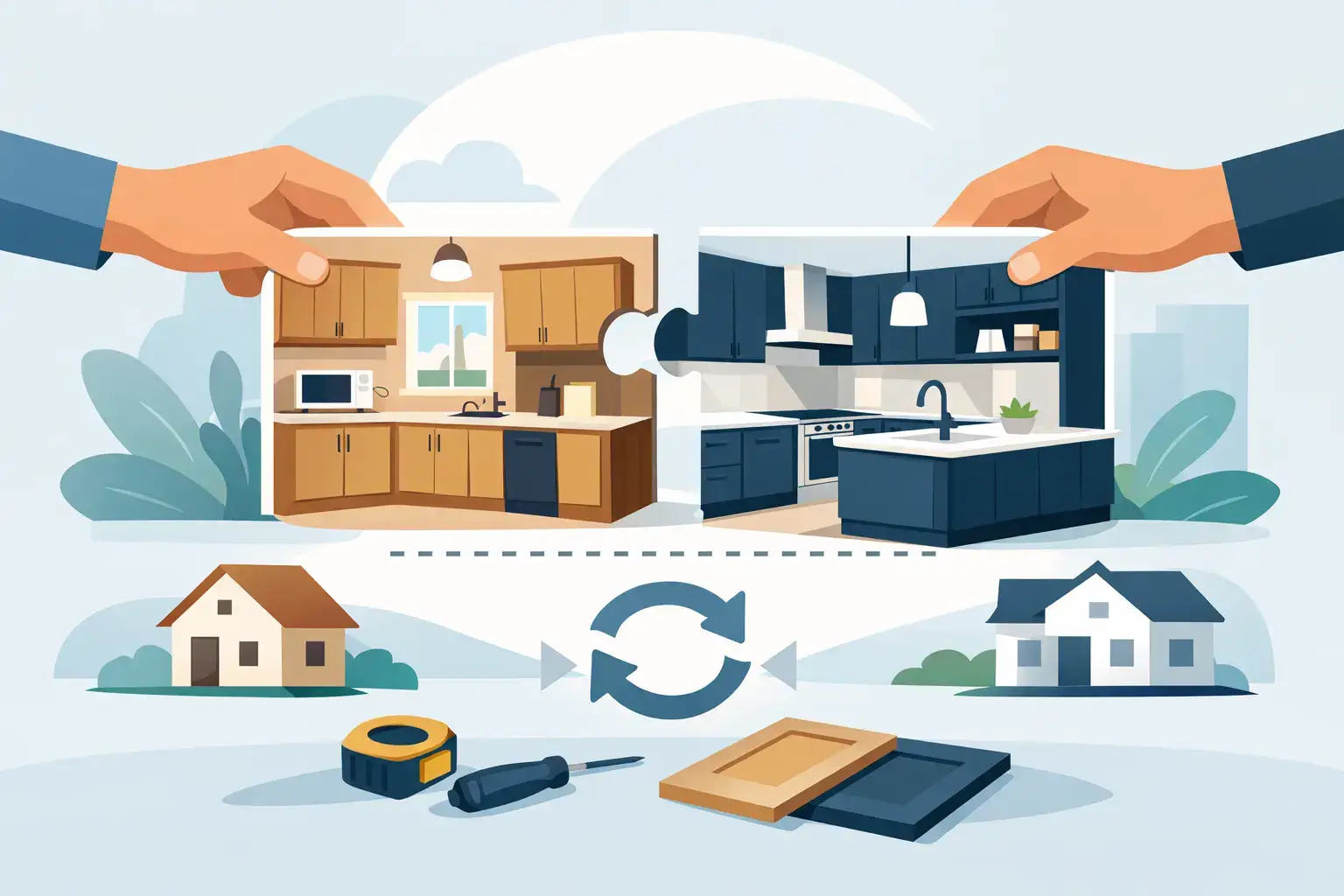
A kitchen can look twenty years newer without moving a single cabinet. For many homeowners, the real question is: can cabinets retain existing layouts while still delivering a meaningful update? In many cases, yes. If your kitchen works well, the cabinet boxes are sound, and you are not trying to relocate plumbing or appliances, keeping the layout can be one of the smartest ways to control remodeling costs.
That does not mean every older kitchen is a fit for refacing or refinishing. The condition of the cabinets, the way your family uses the room, and your goals for storage all matter. But if you like where the sink, stove, refrigerator, and work areas are located, there may be no good reason to tear out functional cabinetry just to get a fresh appearance.
Can Cabinets Retain Existing Layouts During a Remodel?
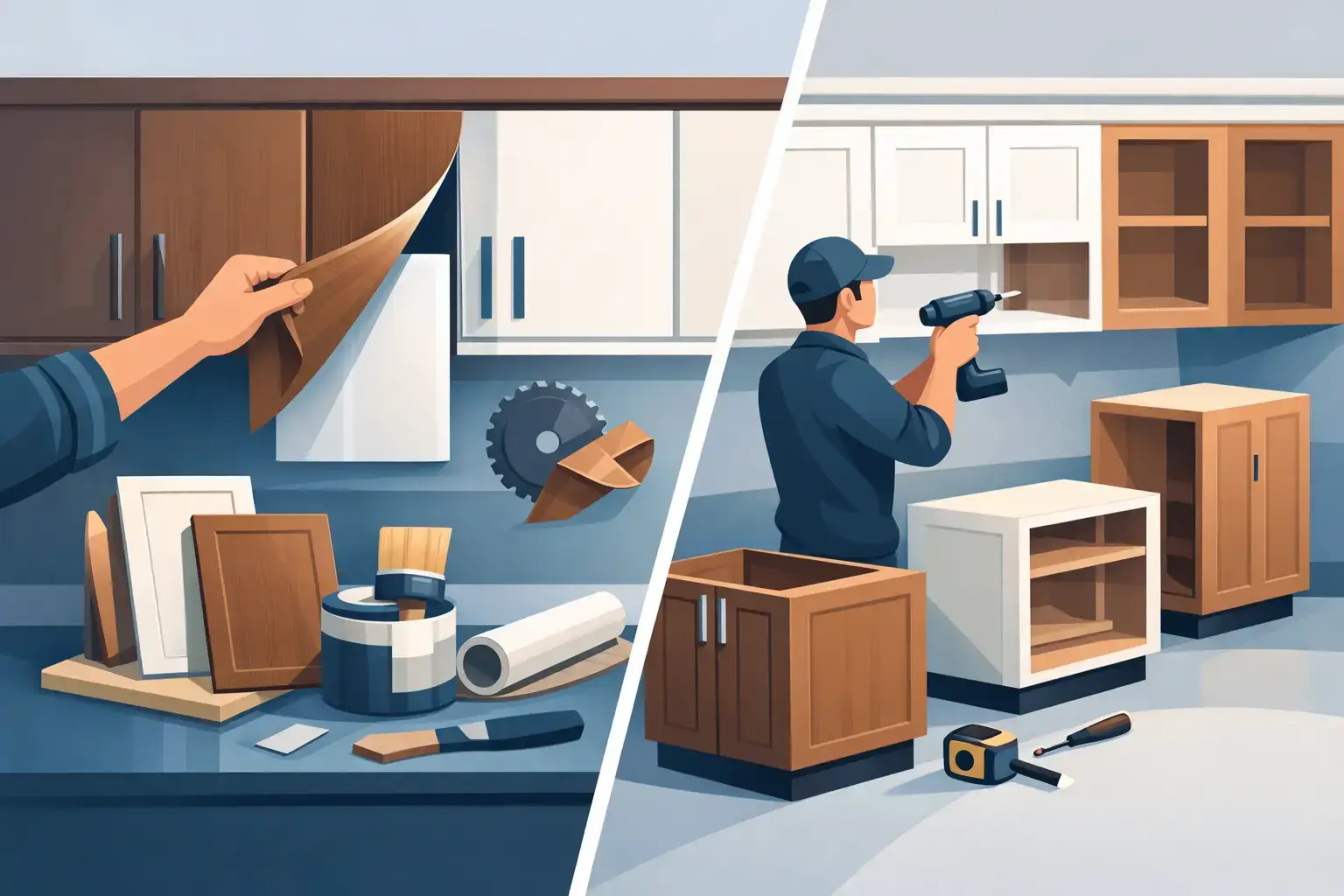
Yes. Cabinet refacing and cabinet refinishing are specifically suited to kitchens where the existing footprint still makes sense. Rather than removing all cabinet boxes and rebuilding the room from scratch, the work focuses on improving what is already there.
With cabinet refacing, the visible exterior surfaces of the cabinet boxes are covered with new material, and the doors and drawer fronts are replaced. You can choose a different door style, color, and hardware, giving the kitchen a completely different character while keeping the cabinets in their current locations.
Cabinet refinishing takes a different approach. If existing doors and drawer fronts are in good condition and have a style worth keeping, they may be cleaned, repaired, sanded, and finished in a new paint or stain color. This can be a practical choice for solid wood cabinetry that does not need a major style change.
Both options preserve the basic layout. That means less demolition, fewer surprises behind the walls, and less time without a working kitchen than a full replacement project usually requires.
When Keeping the Layout Makes Good Sense
The best candidates are kitchens that are dated in appearance but still functional in daily life. Maybe your oak cabinets are solid but feel dark. Maybe the doors are worn, the hardware is tired, and the kitchen has not changed since the 1990s. Those are appearance issues, not necessarily layout issues.
Keeping the layout often makes sense when the work triangle is convenient. If the refrigerator, sink, and cooktop are positioned so you can prepare meals without constantly crossing the room, your layout is doing its job. A fresh cabinet finish, new doors, updated countertops, backsplash, lighting, and hardware can make that familiar room feel much more current.
It also makes sense when major utilities are where they need to be. Moving a sink can involve plumbing changes. Moving a range may require electrical, gas, ventilation, or flooring work. Those changes can be worthwhile when the layout is truly poor, but they add cost and disruption quickly.
For many Northeast Ohio homes, especially those with a separate kitchen rather than an open-concept great room, preserving the basic cabinet arrangement is a sensible value decision. You can put your budget toward the parts of the kitchen you see and use every day instead of paying to move cabinets that are still serving their purpose.
The Cabinet Boxes Have to Be Worth Saving
A good-looking new door cannot fix a cabinet box that is failing. Before recommending refacing or refinishing, a qualified contractor should look closely at the condition of the existing cabinetry.
Solid cabinet boxes should be firmly attached to the wall, reasonably level, and free of major water damage. Drawer openings should be intact, shelves should not be badly sagging, and the wood or engineered material should not be swollen or crumbling. A little wear is normal. Loose hinges, scratched finishes, outdated doors, and worn drawer slides can often be addressed. Structural damage is another matter.
Water exposure under the sink deserves special attention. A small old leak may leave a stain without causing serious problems, while years of unnoticed leakage can weaken the cabinet floor and adjacent sides. This does not automatically mean the entire kitchen must be replaced, but damaged sections may need repair before cosmetic work begins.
Honest advice matters here. A lower-cost option only makes sense when it is built on a sound foundation. At Kitchen Perfect, the goal is not to push homeowners into more work than they need. It is to help them make a practical decision based on the kitchen they actually have.
What You Can Change Without Moving Cabinets
Retaining the layout does not mean accepting every limitation of the old kitchen. There are often useful improvements that can be made within the existing footprint.
You may be able to add roll-out trays, pull-out trash storage, drawer organizers, soft-close hinges, or updated drawer slides. A cabinet above the refrigerator may be adjusted for better use, and some smaller openings can be modified to accommodate a microwave, trash pullout, or other feature. Decorative panels, crown molding, new end panels, and updated hardware can also make cabinetry look more built-in and intentional.
Countertops and backsplashes can change the feel of the entire room without affecting cabinet placement. Better lighting matters, too. Under-cabinet lighting can brighten work areas, while a new ceiling fixture or recessed lights can make a kitchen feel cleaner and more open.
There are limits. You cannot create a large pantry cabinet where there is no floor space, and a narrow galley kitchen will still be a narrow galley kitchen. But thoughtful upgrades can improve storage and everyday convenience without turning a manageable project into a full renovation.
When a New Layout Is the Better Investment
There are times when retaining existing cabinet layouts is not the right answer. If traffic through the kitchen is constantly blocked, there is not enough counter space near the cooking area, or more than one person cannot comfortably work in the room, a layout change may be worth considering.
A full cabinet replacement can also make more sense when the existing boxes are badly damaged, poorly constructed, or too limited for your household’s needs. Homeowners who want to remove a wall, add an island, build a larger pantry, or shift appliances to create a more open room will usually need new cabinetry designed around the new plan.
Think about the long term as well. If you plan to stay in the home for years and the current layout frustrates you every day, simply making it prettier may not solve the real problem. On the other hand, if you enjoy the way the kitchen functions and mainly want it to look better, preserving the layout can leave room in the budget for quality finishes and workmanship.
Refacing, Refinishing, or Replacing: How to Decide
The decision usually comes down to condition, goals, and budget. Refinishing may be a strong option if you have solid wood cabinets with doors you like but a finish you do not. Refacing is often a better choice when you want a noticeably different door style while the cabinet boxes remain sound. New cabinetry is the right path when the layout, structure, or storage capacity needs a major change.
Be cautious about choosing solely by the lowest initial price. A quick paint job over grease, worn finishes, or damaged surfaces may not hold up. Likewise, full replacement is not automatically the best value if it means removing durable cabinetry that could have been updated properly. The right solution should fit the condition of the kitchen and the way you live in it.
An in-home estimate is the best time to discuss the details: cabinet condition, available door styles, storage improvements, timeline, and what work can stay within your current layout. A contractor who handles the work directly can give clearer answers about what is realistic and where your money will make the biggest difference.
A Fresh Kitchen Does Not Always Need a Fresh Floor Plan
Homeowners often assume an updated kitchen requires a major teardown. Usually, that idea comes from seeing dramatic before-and-after projects online, where walls disappear and islands appear. Those transformations can be great, but they are not the only way to improve a kitchen.
If your current cabinet layout supports the way you cook, gather, and move through the room, keeping it can be a confident choice rather than a compromise. Start with an honest look at what works, what does not, and what can be improved without moving everything. A well-built kitchen that functions for your family is worth preserving – and a careful update can make it a room you are proud to use every day.