A cabinet door with a few scratches is one thing. A sink-base cabinet with a soft floor, swollen sides, or a musty smell is another. So, can you reface damaged cabinets? Often, yes – but only when the damage is limited and the cabinet boxes are still solid enough to support a long-lasting update.
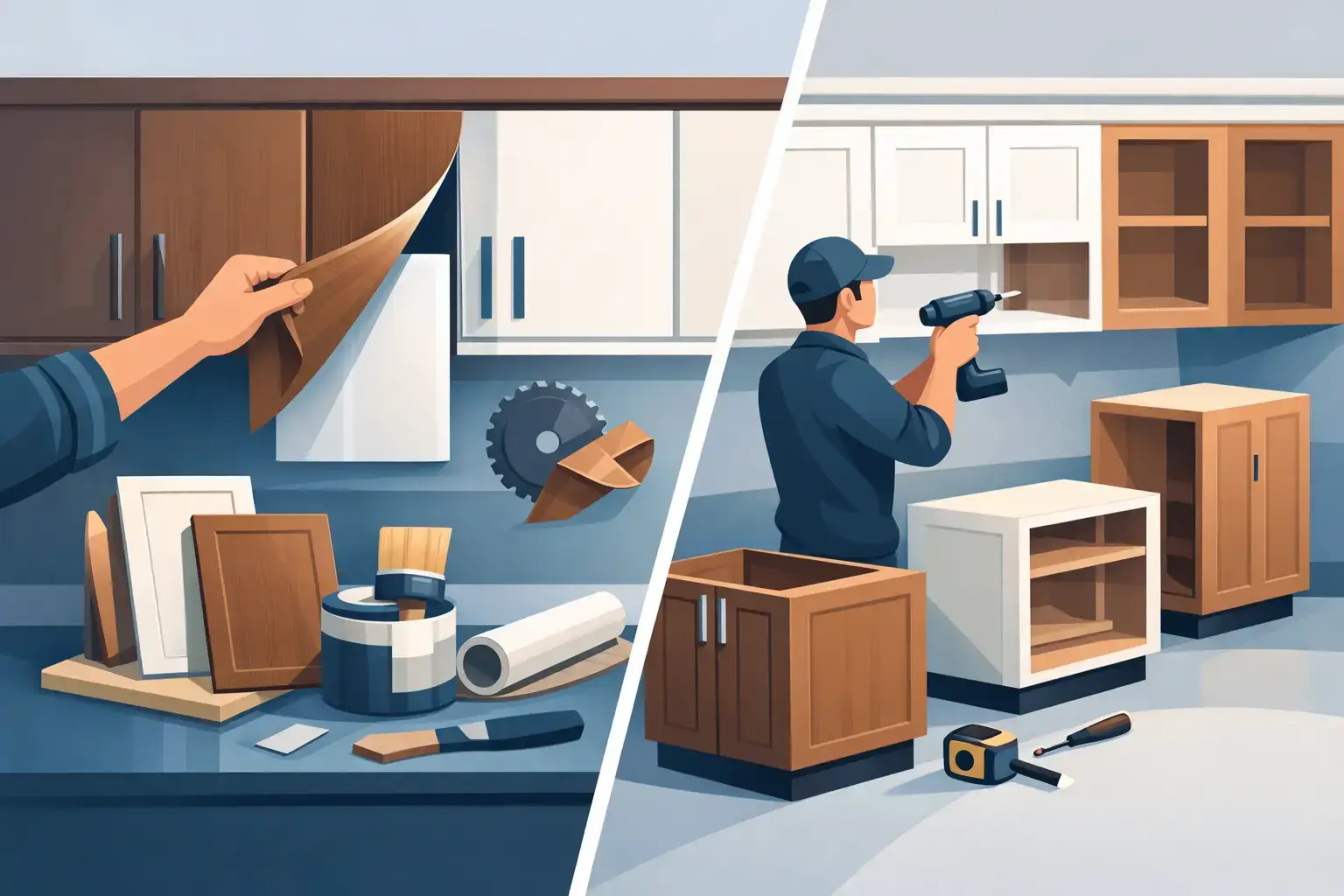
Cabinet refacing gives existing cabinets a new face: new doors and drawer fronts, new veneer or finished surfaces on the visible cabinet frames, and updated hardware. It is a practical way to change the look of a kitchen while keeping a layout that already works. But refacing is not a cover-up for major water damage, failed construction, or structural problems. A good contractor should tell you the difference before work begins.
When Damaged Cabinets Can Be Refaced
The key question is not whether every surface looks perfect today. It is whether the cabinet structure can be repaired and remain dependable after the refacing work is complete.
Minor cosmetic damage is usually a good candidate. Peeling finish, worn edges, faded color, small scratches, outdated doors, and old-fashioned hardware do not mean the cabinets need to be replaced. If the boxes are square, firmly attached, and made from sound material, refacing can give the kitchen a major visual improvement without the cost and disruption of tearing everything out.
Small, isolated repairs may also make refacing possible. For example, a damaged toe kick can often be replaced. A loose hinge mounting area may be repaired or reinforced. A drawer that no longer glides properly might need new hardware or a rebuilt drawer box. Minor cabinet-frame damage around an old pull or knob can usually be fixed before the new finish is installed.
A cabinet professional should inspect the damage in person. What appears to be a surface problem can sometimes be a sign of an old plumbing leak or a weak cabinet base. The goal is not simply to make cabinets look better on installation day. It is to make sure they will still perform well years later.
Cosmetic wear is different from structural failure
Age alone is not a reason to replace cabinets. Many older kitchens in North Royalton and nearby communities have cabinet boxes that were built sturdily and can be excellent candidates for refacing. The doors may be dated, the finish may be worn, and the drawer slides may be tired, but the main cabinet structure can still be sound.
Structural failure is different. If you can press on a cabinet side and feel it flex, see sagging shelves, or find joints pulling apart, refacing may not be the right investment without more extensive repair. The same is true when particleboard has broken down after repeated moisture exposure.
Can You Reface Damaged Cabinets After Water Damage?
Water damage deserves extra attention because kitchens have several common leak points: sink plumbing, dishwasher connections, refrigerator water lines, and exterior walls. Northeast Ohio’s seasonal humidity and cold-weather plumbing concerns can add to the problem, especially in older homes.
A small leak that was found and corrected quickly may leave only a stained or slightly damaged area. If the cabinet material remains hard, dry, and stable, a contractor may be able to repair the affected section and proceed with refacing. Replacing the floor of a sink base or rebuilding part of a damaged panel can be more sensible than replacing an entire run of otherwise solid cabinetry.
However, cabinets with ongoing moisture problems should not be refaced until the source is fixed. New doors and finishes will not stop a leaking supply line. They also will not correct swollen particleboard, mold growth, or wood that has become soft and crumbly. Covering that damage can lead to a disappointing result and a larger repair later.
Look closely under the kitchen sink. Warning signs include dark staining, a warped cabinet bottom, peeling laminate, a mildew odor, rusted plumbing connections, or swelling near the back corners. If you see these issues, mention them during your estimate rather than assuming they are only cosmetic.
Signs Refacing May Not Be the Smart Choice
Refacing works best when your kitchen layout is functional and the existing cabinet boxes have good bones. Replacement may be the better value when the structure, layout, or storage needs are working against you.
Consider replacement, or at least a more substantial cabinet rebuild, when you find several of the following conditions:
- Multiple cabinet boxes are water damaged, swollen, soft, or unstable.
- Cabinets are pulling away from the wall or have widespread broken joints.
- The layout creates daily problems, such as unusable corners, too little storage, or poor appliance placement.
- You plan to move walls, relocate plumbing, or make major changes to the kitchen footprint.
- Cabinet boxes are too shallow, too poorly built, or too damaged to accept quality new doors and finishes.
There is also a middle ground. A kitchen does not always require an all-or-nothing decision. Sometimes a homeowner can reface the solid cabinet runs while replacing a badly damaged sink base, adding a new pantry cabinet, or rebuilding a section that cannot be saved. This approach can preserve value where it makes sense while addressing the areas that need more than a cosmetic update.
What a Proper Cabinet Inspection Should Cover
A refacing estimate should start with more than choosing door styles and colors. The contractor should check cabinet attachment, box condition, doors and drawers, level surfaces, and areas around plumbing. They should also ask how the kitchen functions for your household.
Cabinets need to be securely fastened to the wall and each other. Base cabinets should sit level enough to support countertops properly. Drawer openings should be reasonably square. Shelves should not be sagging from water exposure or excessive weight. These details affect how well new doors align and how the finished kitchen looks.
It is also wise to discuss any planned countertop, backsplash, flooring, or appliance changes before committing to refacing. A new countertop can be an excellent companion to cabinet refacing, but measurements and sequencing matter. If you are replacing a large range, adding a dishwasher, or changing refrigerator placement, those decisions may affect cabinet modifications.
Repair First, Then Reface for a Better Result
When cabinets are basically solid, preparing damaged areas correctly is what separates a short-term facelift from a finished kitchen you can enjoy. Repairs should be completed before visible frame surfaces are refinished and before new doors and drawer fronts are installed.
That may include stabilizing loose cabinet boxes, replacing damaged trim, repairing a sink base, adjusting drawers, or correcting hinge areas. Once the foundation is right, the refacing process can create a consistent appearance across the kitchen. New door and drawer styles can change the room from dated oak to a clean painted look, a warm wood tone, or another style that better fits the home.
This is where working with a company that handles its own work matters. Cabinet repairs and refacing are connected. The person evaluating the cabinet condition should understand how the repair will affect the finished faces, door alignment, and daily use. Kitchen Perfect’s in-house cabinet shop helps keep that work under closer control, rather than passing important details through several layers of subcontractors.
A Practical Way to Decide
Before assuming damaged cabinets must be replaced, separate the visible wear from the condition of the cabinet boxes. Open the doors, pull out the drawers, look beneath the sink, and check for movement, swelling, or moisture. Then have the kitchen evaluated by a refacing professional who will be direct about what can be repaired and what should be replaced.
The best choice is the one that gives you a kitchen you can rely on without paying for work you do not need. If your cabinet boxes are sound, repairing a few trouble spots and refacing the rest can be a smart, affordable way to make the kitchen feel new again.