A cabinet door can look worn out long before the cabinet box itself has reached the end of its life. If you are asking, “Should I stain my cabinets?” you are probably trying to get a better-looking kitchen without taking on the cost, mess, and downtime of a complete replacement. That is a practical question, especially in homes around North Royalton where many kitchens still have solid, usable layouts but dated finishes.
Staining can be a good answer, but it is not a cure-all. The right choice depends on what your cabinets are made of, how much damage they have, whether you like the door style, and what you want the finished kitchen to look like. In some cases, refinishing existing wood is a smart, budget-conscious improvement. In others, cabinet refacing gives you a much bigger visual change while keeping the cabinet boxes in place.
Before You Stain My Cabinets, Check What You Have
The first question is not color. It is construction. Stain works best on real wood doors, drawer fronts, and face frames. Oak, maple, cherry, birch, and similar hardwoods can often be cleaned, repaired, sanded, and refinished successfully.
Many older kitchens have solid wood cabinet parts that are worth preserving. If the doors close properly, the drawers still operate well, and the boxes are sturdy, a new finish can make the kitchen feel cared for again. Small scratches, faded areas near windows, grease buildup, and ordinary wear are all problems that refinishing may address.
Cabinets with laminate, thermofoil, vinyl wrap, or heavily printed wood-grain surfaces are different. These materials do not absorb stain like wood. Trying to stain them usually leads to uneven color, peeling, or a finish that does not hold up to daily kitchen use. Veneer can sometimes be refinished, but it requires care because the wood layer is thin and can be sanded through.
A close inspection matters. Look on the edge of a door, inside a cabinet, and behind a hinge. If you are not sure whether you have solid wood, veneer, or laminate, it is better to find out before buying supplies or committing to a finish.
When Staining Cabinets Makes Good Sense
Staining is usually a good option when you already like the style of your cabinet doors and want the natural wood grain to remain visible. It can warm up a kitchen, reduce the orange or yellow cast common in older oak finishes, or deepen a faded color for a more traditional look.
It also makes sense when the work is mainly cosmetic. A well-built cabinet with a dated stain color is not necessarily a bad cabinet. Restoring that surface can be far less expensive than removing everything and starting over.
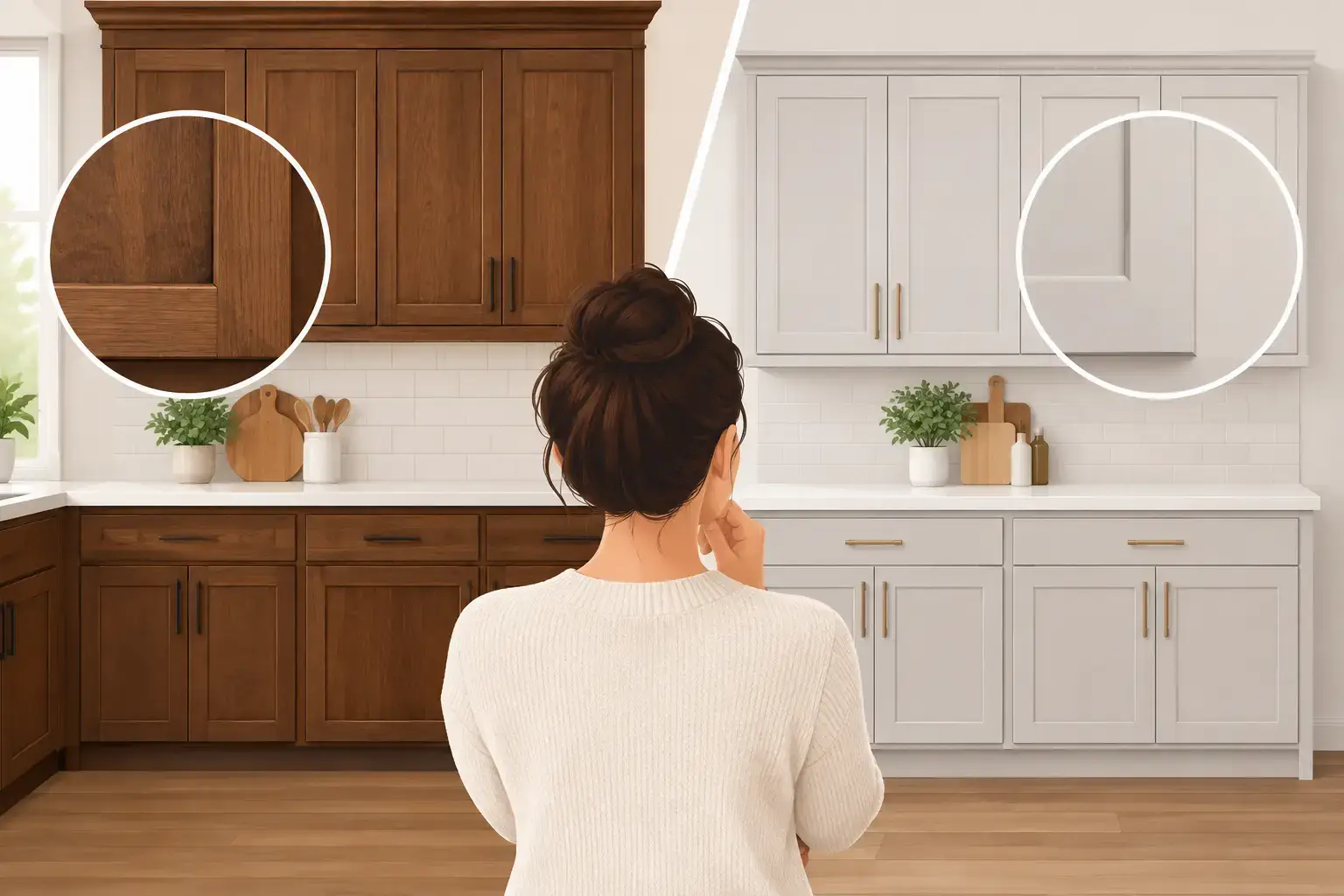
Homeowners should keep their expectations realistic, though. Stain enhances the wood that is there. It does not hide grain patterns, deep dents, water damage, or mismatched repairs the way paint can. Oak will still look like oak after staining, including its prominent grain. Maple can take color differently from one door to another. A professional sample is the safest way to see how the final color may look in your kitchen lighting.
Dark stains deserve special caution. They can look rich and attractive, but they also make dust, fingerprints, and worn edges easier to notice. Going lighter can brighten a kitchen, yet light stain may not fully cover an old dark finish without substantial stripping and preparation. The more dramatic the color change, the more labor the project generally requires.
Solid Wood and Veneer Need Different Care
Solid wood doors provide the most room for refinishing because they can usually tolerate careful sanding. Veneered doors need a lighter touch. A thin veneer may be refinished if it is firmly attached and in good condition, but bubbling, chipped edges, or previous damage can limit the results.
This is one reason a quick do-it-yourself sanding job can become costly. Once veneer is sanded through, there is no simple way to restore a natural wood appearance. The cabinet may then need a new door, a new veneer, or a different finish altogether.
When I Should Not Stain My Cabinets
If your cabinets are structurally tired, staining may only make the weaknesses stand out. Doors that are warped, cracked, badly chipped, or hanging on worn-out hinges will still have those problems after the finish dries. The same is true for drawer boxes that sag, cabinet frames with water damage, and boxes that are loose from the wall.
Door style is another deciding factor. A 1980s or 1990s raised-panel door can be beautifully refinished, but staining it will not make it look like a clean-lined shaker door. If the layout works but the door design is what makes the kitchen feel dated, refacing is often the better investment.
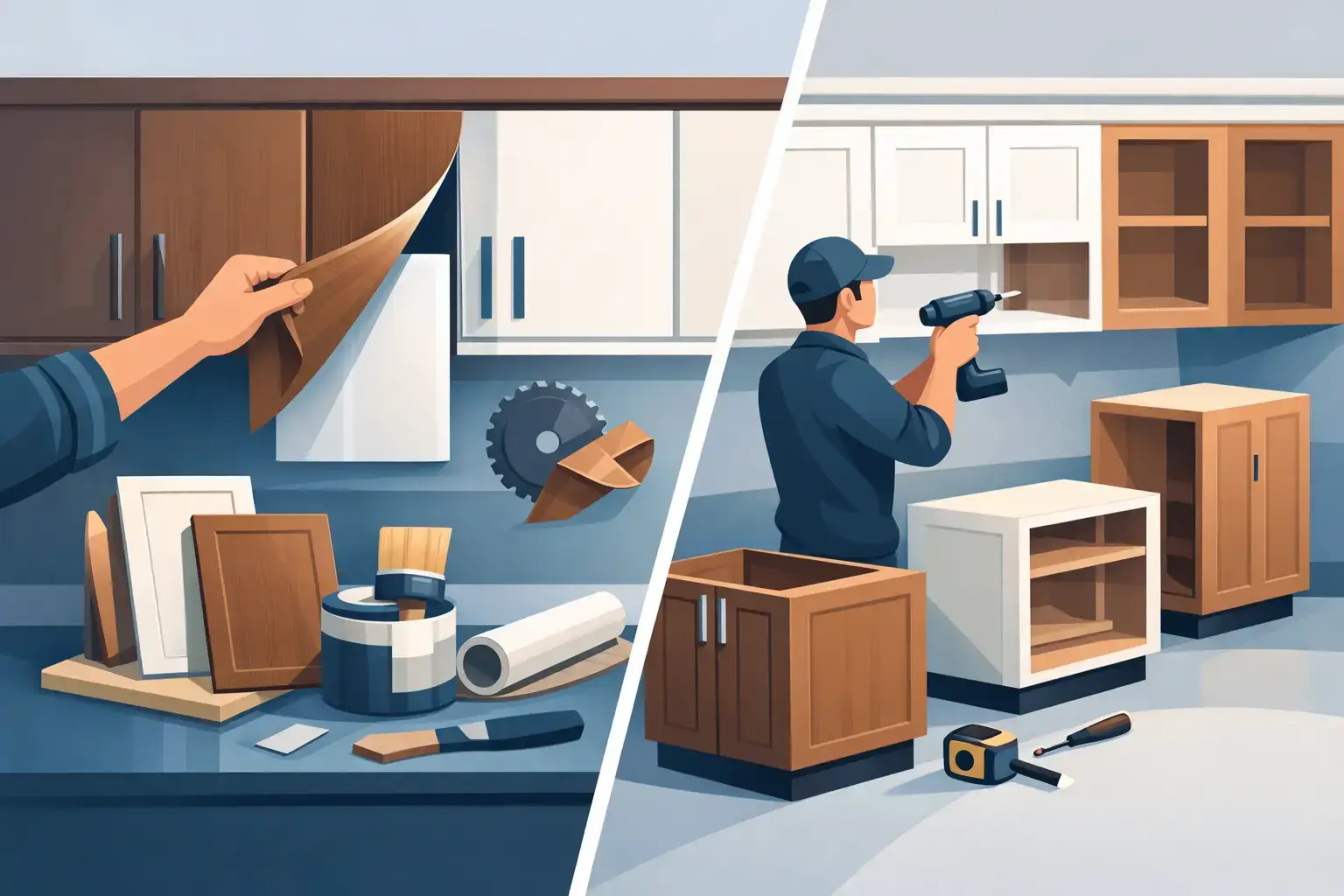
Refacing keeps the existing cabinet boxes and replaces the visible doors and drawer fronts. The exposed cabinet frames receive a matching finish, creating a more complete change than stain alone can deliver. It is a practical middle ground for homeowners who do not need a total kitchen rebuild but want a fresh style, not simply a refreshed surface.
Stain also may not be the best choice when the goal is a light, smooth, uniform finish. Wood naturally varies in color and grain. If you want a soft white, gray, or painted look with fewer visible variations, cabinet painting or refacing may be a better fit. There is no wrong preference here. The goal is to choose a finish that suits the kitchen and will still feel right a few years from now.
The Work Behind a Durable Cabinet Stain
A lasting cabinet finish is mostly preparation. Kitchen cabinets collect cooking residue, hand oils, cleaning-product buildup, and moisture over the years. If that contamination is not thoroughly removed, a new stain or protective coating may fail early.
The usual process includes removing doors and drawer fronts, cleaning the surfaces, making needed repairs, sanding carefully, applying stain as appropriate, and protecting the finished wood with a durable topcoat. Hardware should also be considered. New hinges, handles, or pulls can improve function and give refinished cabinets a more finished appearance.
The work can be disruptive, particularly if it is done in place. Dust control, surface protection, and a clean work area matter in a busy home. A quality result is not just about how the doors look on installation day. It is about whether the finish stands up to steam, spills, frequent cleaning, and everyday family use.
Staining Versus Refacing: Think Beyond the Price Tag
Staining is generally the more affordable option when the cabinets are truly good candidates and the desired change is modest. It preserves your existing doors, keeps waste down, and can give quality wood a second life.
Refacing usually costs more than refinishing, but it can offer more visual impact. New doors and drawer fronts let you change the style, color, and hardware while avoiding much of the demolition involved in full cabinet replacement. For a kitchen with sound cabinet boxes and an outdated appearance, that value can be hard to beat.
Full replacement is worth considering when the layout no longer works, storage is seriously lacking, or the cabinet boxes have extensive damage. If you want to move walls, relocate plumbing, add an island, or change the kitchen footprint, new cabinetry may be the more sensible path. Otherwise, preserving what is working can protect your budget.
At Kitchen Perfect, the focus is on helping local homeowners choose the level of change that makes sense for their kitchen, not pushing replacement when a better value is available. With an in-house cabinet shop and more than 25 years of experience, the goal is straightforward workmanship and a finish that fits the home.
Choose the Change You Will Be Happy Living With
Start with the condition of the cabinets, then consider the look you want and the budget you want to protect. If you have solid wood doors in a style you still enjoy, staining or refinishing may be a smart way to bring them back. If you want a different door profile, a major color change, or a more current appearance, refacing can deliver a stronger transformation without starting from scratch.
A kitchen should work hard without looking tired every time you walk into it. Before you commit to stain, paint, reface, or replacement, have the cabinet materials and condition evaluated honestly. A clear answer at the beginning can save money, prevent surprises, and help you make an upgrade you will enjoy for years.