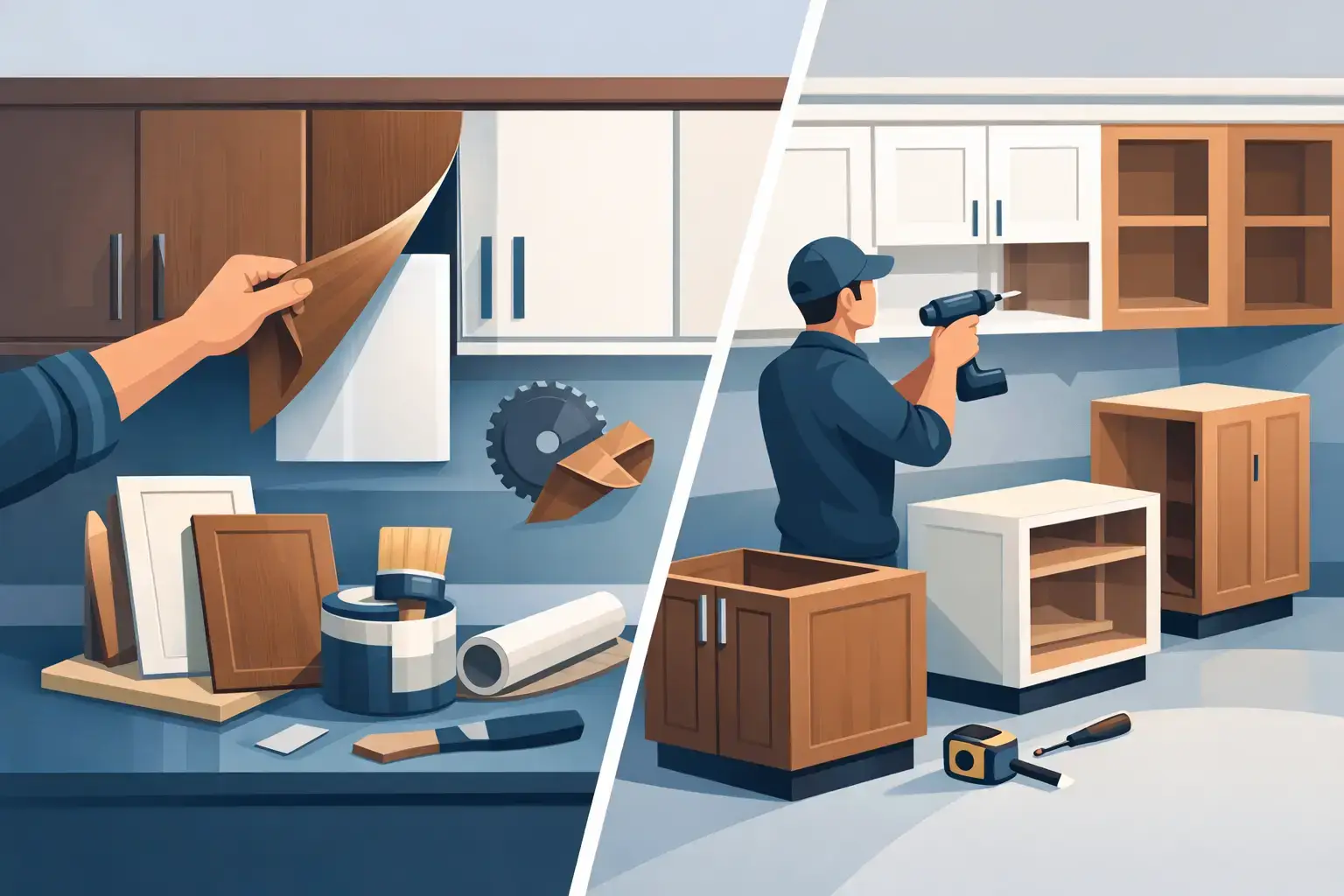
A kitchen can feel dated long before it stops working. If your cabinet boxes are solid, the layout still serves your family, and the problem is mostly color or worn finishes, it makes sense to ask whether you should paint cabinets instead of replacing them. The answer depends on what your cabinets are made of, how much wear they have taken, and what you expect from the finished kitchen.
Painting can be a practical update in the right situation. But it is not always the best answer, especially when doors are damaged, styles are outdated, or a painted finish will not hold up to the way your household uses the kitchen. A good decision starts with an honest look at the cabinets already in your home.
When It Makes Sense to Paint Cabinets
Painting works best when the cabinet doors and drawer fronts are in good physical condition. Solid wood cabinets, or quality wood veneer cabinets with sound surfaces, can often be prepared and painted successfully. The boxes should be sturdy, the doors should close properly, and there should not be major water damage around the sink or dishwasher.
For homeowners who like their existing door style and layout, paint can provide a fresh look without changing the whole kitchen. White, warm off-white, soft gray, navy, and muted green remain popular choices because they can make an older kitchen feel cleaner and more current. New hardware, updated lighting, and a new countertop can make the result feel even more complete.
Paint is also worth considering when the budget is tight and the goal is to improve appearance rather than redesign the room. Keeping the existing cabinet layout avoids the cost of moving plumbing, altering walls, or replacing usable storage. That can be a sensible path for a family that wants a better kitchen without taking on a full remodel.
Still, a painted kitchen is only as good as the preparation underneath it. A quick coat of paint may look acceptable for a short time, but kitchen cabinets deal with grease, moisture, fingerprints, steam, and constant contact. The finish has to be built for real life, not just for a good first impression.
Why Cabinet Painting Is More Than a Weekend Project
Many homeowners have painted walls, trim, or furniture and assume cabinets are much the same. Cabinets are different. They have moving parts, detailed edges, hinges, high-touch areas, and surfaces that need to stand up to cleaning. Skipping steps can lead to peeling around handles, chipping near doors, visible brush marks, and paint that stays soft long after the project is finished.
Proper preparation usually includes removing doors and drawer fronts, labeling every piece, cleaning away grease, repairing dents, sanding or deglossing the surface, and applying the right primer. The coating itself needs to be suitable for cabinetry, not simply leftover wall paint. Once the finish is applied, it must cure before the cabinets can take normal daily use.
That process takes time and creates disruption. A kitchen may be partly out of service while doors are removed and finishes cure. There is also the practical question of where the work is being done. Spraying doors in a controlled shop setting generally produces a smoother result than trying to finish everything inside a busy home, but not every painting contractor has that capability.
Cabinet Material Changes the Answer
Before you decide to paint cabinets, find out what you are actually working with. The material makes a major difference in preparation, durability, and final appearance.
Solid wood is generally the most forgiving option. It can be sanded, repaired, and refinished when needed. Wood veneer can also be painted if it is firmly attached and not badly chipped or swollen. The work requires care because aggressive sanding can cut through the thin wood surface.
Laminate and thermofoil cabinets require more caution. These materials can sometimes be painted, but adhesion is the main concern. If laminate is peeling or thermofoil is separating from the door, paint will not solve the underlying problem. The finish may fail right along with the material below it. In those cases, replacing the doors or refacing the cabinets often gives homeowners a more reliable result.
Particleboard cabinet boxes with swelling, crumbling edges, or water damage are another warning sign. A new color cannot restore material that has lost its strength. It is better to address the damage before spending money on a cosmetic update.
When Refacing Is the Better Investment
Cabinet refacing keeps your existing cabinet boxes but replaces the visible doors and drawer fronts. The exterior surfaces of the boxes are covered to match, and new hardware can be installed. It is a strong option when the cabinet layout works but the old door style is the real problem.
For example, a kitchen with solid boxes and dated oak raised-panel doors may not need full replacement. Painting can change the color, but it will not change the profile of the doors. If you want a cleaner Shaker look, updated drawer fronts, or a more dramatic change in style, refacing can make more sense.
Refacing also avoids some of the risks that come with painting worn doors. Rather than trying to repair years of dents, deep scratches, peeling finishes, or tired thermofoil, you start with new finished components. The finished kitchen can look much closer to a full cabinet replacement while preserving the cabinet boxes and the existing layout.
This option is not right for every kitchen. If the boxes are damaged, storage is poorly planned, or you want to significantly alter the layout, new cabinetry may be the better long-term choice. But for many Northeast Ohio homes with well-built older cabinets, refacing offers a practical middle ground between paint and replacement.
Ask These Questions Before Choosing
A clear answer usually comes from a few straightforward questions. Are your cabinet boxes structurally sound? Do you still like the kitchen layout? Are the doors in good shape, or are they worn, peeling, or outdated? Do you want a new color, or do you want an entirely different door style?
Also consider how hard your kitchen works. A lightly used kitchen may be a better candidate for a painted finish than a kitchen that handles daily family meals, pets, busy mornings, and constant cleanup. There is nothing wrong with choosing paint, but the finish should match the level of use and the condition of the cabinets.
It helps to think beyond the next year, too. The least expensive option on day one is not always the best value if it needs touch-ups or replacement sooner than expected. A well-planned refacing or refinishing project can cost more upfront than a basic paint job, yet provide a more durable result and greater satisfaction over time.
Get an Honest Look at Your Kitchen
At Kitchen Perfect, the goal is not to push every homeowner toward the same service. Some cabinets are good candidates for refinishing. Some are better suited for refacing. Others need new cabinetry because the boxes, layout, or storage no longer meet the needs of the home.
An experienced local professional can look at the door material, cabinet condition, water damage, hardware, and layout before recommending a direction. That kind of evaluation matters because the best kitchen update is not just one that photographs well. It is one that fits your budget, holds up to everyday life, and gives you a kitchen you are glad to walk into each morning.
If you are considering paint cabinets in North Royalton or a nearby community, start with the condition of what you have. A clear, practical assessment can help you spend wisely and choose an update that feels right for your home.