An aging kitchen can make the whole house feel dated, even when the layout still works well. Learning how to budget upgrades starts with separating what truly needs to change from what simply needs a fresh look. For many Northeast Ohio homeowners, the smartest plan is not tearing everything out. It is putting money into the improvements you will see, use, and appreciate every day.
A good kitchen budget is less about picking one big number and more about making practical choices in the right order. Cabinets, counters, lighting, hardware, and finishes all affect the final cost. The goal is to build a plan that improves your kitchen without paying for work that does not add enough value to your home or daily life.
Start With the Kitchen You Already Have
Before setting a budget, take an honest look at the condition of the room. Ask whether your kitchen has a functional layout, cabinets with solid boxes, and enough storage for the way your family lives. If the answer is yes, a full replacement may not be necessary.
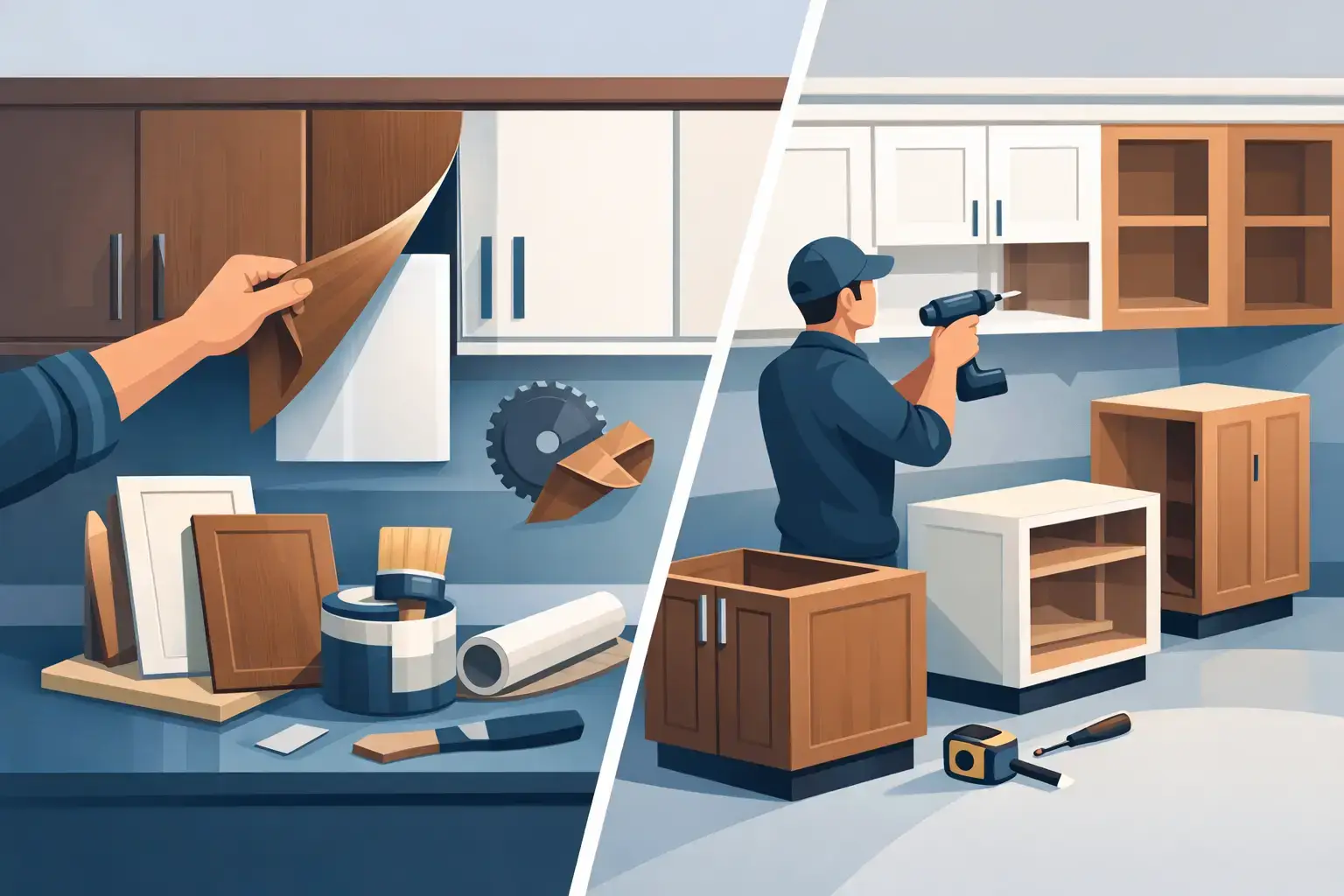
Cabinet doors may be worn, the finish may be dated, or the style may no longer fit the rest of the home. Those are real concerns, but they do not always require removing usable cabinetry. Cabinet refacing or cabinet refinishing can change the appearance of the kitchen while preserving the cabinet boxes and the existing layout.
That distinction matters because moving walls, plumbing, gas lines, and electrical service adds cost quickly. So does removing cabinets that are structurally sound just to replace them with new ones. If your layout works, keeping it is often one of the strongest budget decisions you can make.
There are times when new cabinetry is the right answer. Water damage, failing cabinet boxes, poor storage, or a layout that creates daily frustration may justify a more involved project. The point is to spend based on the actual condition of the kitchen, not the assumption that every upgrade must become a full renovation.
How to Budget Upgrades by Priority
Most homeowners have a wish list longer than their budget. That is normal. The key is putting that list in order before selecting finishes or approving a project.
Start with the items that affect function and long-term use. If cabinet doors are broken, drawers stick, or storage is inadequate, address those problems first. Next, focus on major visual surfaces such as cabinet fronts, countertops, backsplash, and flooring. Decorative extras should come after the pieces that make the room work better.
It helps to divide your spending into three simple categories: must-have repairs, high-impact improvements, and nice-to-have details. This keeps a minor feature from taking money away from a more meaningful improvement. For example, updated cabinet hardware is a worthwhile finishing touch, but it should not force you to settle for a cabinet finish you do not like.
A practical priority order often looks like this:
- Cabinet condition, storage, and layout concerns
- Cabinet refacing, refinishing, or replacement
- Countertops and backsplash
- Lighting, sink, faucet, and hardware
- Paint, decorative details, and accessories
Your order may vary. A homeowner who cooks every night may place countertops and a better sink higher on the list. Someone preparing to sell may focus on visual updates that make the room feel cleaner, brighter, and more current. A good budget reflects how you use the kitchen, not just what is popular at the moment.
Set a Number That Includes the Real Costs
A kitchen budget should include more than the price of the visible materials. Installation, removal, finishing work, minor repairs, and unexpected issues all deserve a place in the plan. Homeowners often get into trouble when they budget only for cabinets or countertops and leave nothing for the work around them.
Set a comfortable maximum before shopping. Then hold back a contingency amount for surprises, especially in older homes. Once work begins, an installer may find damaged drywall, uneven walls, old plumbing connections, or other conditions that could not be fully seen beforehand. A reserve helps you make a sound decision without having to cut a key part of the project at the last minute.
Be clear about what an estimate includes. Ask whether materials, labor, removal, finishing, hardware, and cleanup are part of the price. A lower number is not always a better value if major parts of the job are left out. A detailed estimate makes it easier to compare options fairly and prevents unpleasant surprises later.
Spend More Where You Touch the Kitchen Every Day
Not every upgrade carries the same weight. Cabinet doors, drawer fronts, countertop surfaces, and faucets are used constantly. They are worth choosing carefully because they affect both appearance and daily comfort.
Cabinets are usually the visual center of the room. When the boxes are in good condition, refacing can be a cost-conscious way to get updated doors, drawer fronts, and finishes without the cost and disruption of a complete cabinet tear-out. Refinishing can also make sense when the existing door style works and the main need is a cleaner, more current color or finish.
Countertops can make a major difference, but material choices should fit your household. Some homeowners want the look and performance of stone. Others prefer a durable, lower-cost surface that leaves more room in the budget for cabinets or lighting. There is no single right material. The better choice is the one that balances maintenance, appearance, and cost for your family.
Do not overlook lighting. A brighter ceiling fixture, under-cabinet lighting, or better task lighting over the work area can make an older kitchen feel more usable right away. It is often a smaller investment than replacing a major surface, yet it changes how the room looks at every hour of the day.
Avoid Paying for Changes You Do Not Need
A modest kitchen upgrade can become expensive when the scope keeps growing. Once a project begins, it is easy to add extra cabinets, move appliances, choose premium finishes in every category, or make structural changes that were not part of the original goal.
That does not mean you should never make changes. It means each change should solve a clear problem. If relocating the refrigerator improves traffic flow and storage, it may be worth considering. If it only creates a small style difference while requiring electrical and flooring work, keeping it where it is may be the wiser choice.
Try to make your major decisions before work starts. Select cabinet style, finish, countertop direction, hardware, and any new fixtures early. This reduces change orders, keeps the schedule more predictable, and helps protect your budget.
It also pays to think beyond the first price. A bargain material that chips easily or a rushed installation that needs correction later is not a savings. Good workmanship and materials suited to the job can cost more upfront, but they help the kitchen continue looking good after the project is finished.
Choose a Contractor Who Can Explain Your Options
Your contractor should be willing to talk through more than one path. A homeowner may benefit from refinishing, refacing, or new cabinetry depending on the condition of the kitchen and the desired result. There is value in working with a company that can explain the trade-offs plainly instead of pushing every project toward the most expensive option.
Ask who will perform the work and how quality is handled from estimate through installation. Companies that do their own work and control key parts of the process can offer more consistency than a project passed through several outside crews. For a kitchen upgrade, that accountability matters. Cabinets are a focal point of the home, and details such as fit, finish, alignment, and cleanup make a difference.
Kitchen Perfect has helped local homeowners make these choices for more than 25 years, with practical options designed around the kitchen they have and the budget they want to protect. The right recommendation should feel clear, not pressured.
A well-planned kitchen upgrade does not need to replace everything to feel like a major change. Start with what works, fix what does not, and put your money into improvements you will enjoy every time you walk into the room.