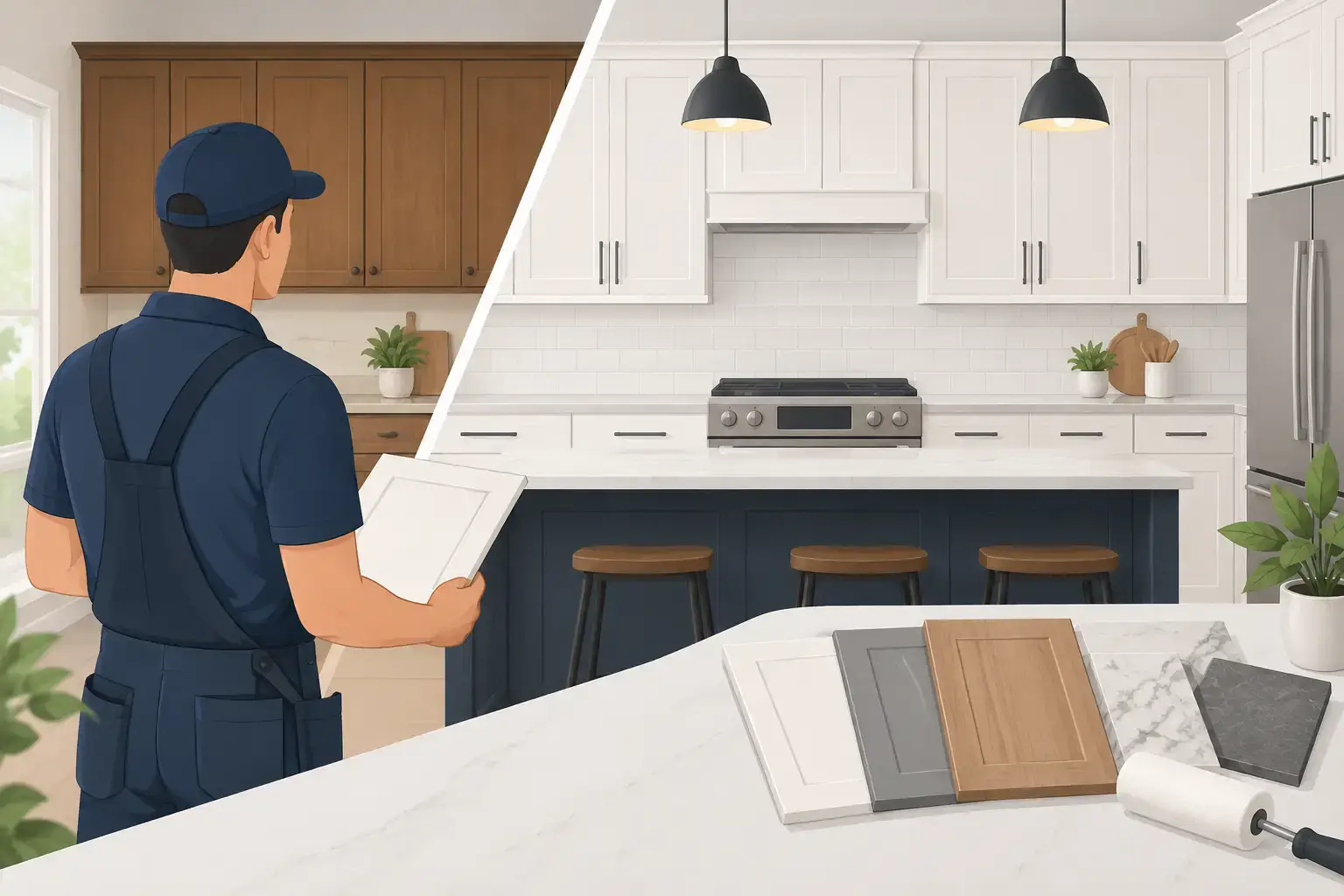
A North Royalton refacing project is often the right answer when a kitchen feels dated but still works the way it should. If the cabinet boxes are solid, the layout makes sense, and storage is generally doing its job, there is no reason to tear everything out just to get a fresh look. Cabinet refacing replaces the visible cabinet surfaces while preserving the structure that is already serving your home.
For many local homeowners, that means a major change in appearance without the cost, waste, and longer disruption of full cabinet replacement. The key is making an honest assessment before work begins. Refacing is a smart value when the existing cabinets are worth saving. It is not a shortcut for cabinets with serious water damage, failing construction, or a kitchen layout that needs to change completely.
Is Cabinet Refacing Right for Your Kitchen?
The best refacing candidates usually have sturdy cabinet boxes, doors that are worn or outdated, and a layout the homeowner wants to keep. Maybe the kitchen has oak cabinets from the 1990s, dark doors that make the room feel closed in, or a finish that has taken years of daily use. Those cabinets may look tired, but their basic construction can still be sound.
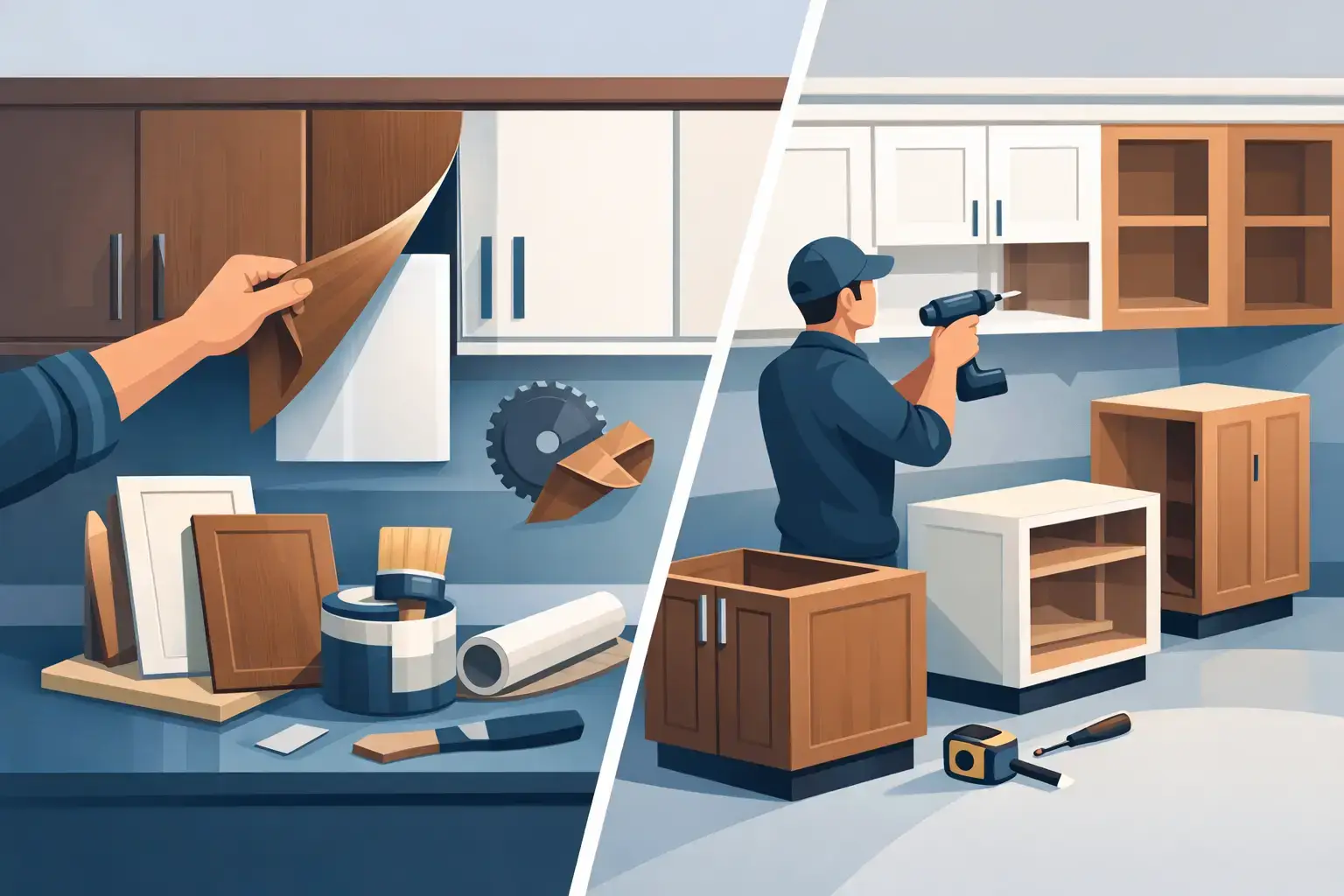
Refacing gives those cabinets a new face. The old doors and drawer fronts are removed. Exposed cabinet frames are covered to match the new finish, and new doors, drawer fronts, hinges, and hardware are installed. The result is a more current kitchen without removing every cabinet box from the room.
This approach works especially well for homeowners who like where their sink, refrigerator, and cooking area are located. Keeping the layout avoids many of the expenses that can push a remodel higher, including moving plumbing, electrical connections, flooring, and wall finishes.
There are times when replacement makes more sense. Cabinets with swollen particleboard, deep water damage under the sink, structural weakness, or poor storage design may not be good refacing candidates. The same is true when a homeowner wants to open walls, add a large island, relocate appliances, or substantially change the footprint of the kitchen. A reliable contractor should be direct about that before recommending a path forward.
What Happens During a North Royalton Refacing Project
A well-planned project starts with a close look at the cabinets already in the home. The condition of the boxes matters as much as the appearance of the doors. Measurements are taken carefully, and the homeowner can discuss door styles, finishes, hardware, and practical upgrades that fit the budget.
Once the design is selected, materials are prepared for the specific kitchen. At Kitchen Perfect, much of that work is supported by an in-house cabinet shop. That matters because direct control over fabrication helps keep quality consistent and avoids the extra layers of cost that can come with outsourcing every part of a job.
Installation begins with protecting the work area and removing the existing doors and drawer fronts. The cabinet frames are prepared and finished to coordinate with the new components. Then the new doors and drawers are installed, aligned, and adjusted so they open and close properly. Details such as hinges, pulls, knobs, and trim are handled at the end, when the kitchen starts to take on its finished look.
The timeline depends on the size of the kitchen, the materials selected, and whether other work is being done at the same time. Refacing is generally less disruptive than a full tear-out because the cabinet boxes remain in place. Homeowners can avoid the dust, demolition, and extended downtime that often come with replacing an entire kitchen.
The Choices That Change the Finished Look
Door style has a major effect on whether the kitchen feels traditional, transitional, or more modern. Raised-panel doors can suit a classic home, while shaker-style doors offer a clean, flexible look that works with many North Royalton kitchens. A simple slab door can be a good fit for a more contemporary design.
Color and finish are equally important. White and light neutral finishes can brighten a kitchen with limited natural light. Warm wood tones can bring character to a space that feels too plain. Darker finishes can look sharp, but they may make a smaller room feel more enclosed and can show dust more easily. The best choice depends on the room, nearby flooring, countertop color, and how much daily maintenance feels realistic for the household.
Hardware is a smaller detail with a noticeable impact. Replacing dated knobs with simple pulls or adding brushed nickel, matte black, or bronze hardware can help tie the new cabinet faces into the rest of the kitchen. It is also one of the easier ways to give the room a more personal finish without changing the project scope.
Practical Upgrades Worth Considering
A refacing project is a good time to improve a few everyday frustrations inside the cabinets. Since the doors and drawer fronts are already being updated, homeowners can consider better drawer organization, pull-out shelving, or soft-close hardware where it makes sense.
These upgrades should be chosen for how the kitchen is actually used, not because they are trendy. A family that cooks every night may get real value from better access to pots, pans, and pantry items. A homeowner who wants to age in place may appreciate easier-to-reach storage. On the other hand, loading a project with every available accessory can take it out of the affordable range that made refacing attractive in the first place.
Countertops, backsplashes, lighting, and paint can also be coordinated with refaced cabinets. Some homeowners complete all of that at once for a more dramatic result. Others start with the cabinets and plan the remaining updates over time. Both approaches can work. The right choice comes down to budget, schedule, and whether existing surfaces still fit the new cabinet style.
Understanding Value Beyond the Initial Price
Cabinet refacing is commonly more affordable than full replacement because it keeps usable cabinet boxes in place. It also reduces material waste and avoids much of the labor involved in demolition and reconstruction. That does not mean every refacing project costs the same. Kitchen size, door material, finish, trim, hardware, cabinet repairs, and added storage features all affect the final price.
The lowest quote is not always the best value. Ask who is doing the work, whether the company handles fabrication and installation directly, what materials are being used, and how the finished details will be addressed. A project can look good from across the room while still showing poor alignment, uneven finish work, or gaps around doors up close.
Good workmanship shows in the everyday details: doors that line up, drawer fronts that sit evenly, hinges that work smoothly, and frame finishes that match the new faces. Those details are what make the kitchen feel finished rather than merely updated.
How to Prepare for the Work
Before installation begins, clear the countertop areas and remove items from the cabinets that will be worked on. Set aside a temporary spot for everyday dishes, coffee supplies, medications, and pet items. A little preparation makes the workday easier for everyone and helps keep the kitchen usable as much as possible.
It also helps to make major design decisions before materials are ordered. Changing a door style, finish, or hardware selection late in the process can affect timing and cost. Bring samples of flooring, paint, or countertop material into the discussion if those elements are staying. Cabinet colors can look different under a showroom light than they do in your own kitchen.
A straightforward conversation at the beginning prevents surprises later. Homeowners should feel comfortable asking what is included, what is not included, how the work area will be protected, and how long the project is expected to take. Clear answers are part of a job done right.
When your cabinet boxes are still solid, refacing can put the focus back where it belongs: creating a kitchen you enjoy using every day, without paying for replacement work your home does not need.