A kitchen can feel tired long before it stops working. Faded doors, worn finishes, dated hardware, and a color that belongs in another decade can make the whole room feel smaller and less inviting. The good news is that kitchen cabinetry does not always need to be torn out and replaced to make a major difference.
For many Northeast Ohio homeowners, the best answer is not a full remodel. It is choosing the right level of cabinet work for the condition of the existing kitchen, the budget, and the way the family uses the space. Cabinet refacing, cabinet refinishing, and new cabinetry each have their place. The key is being honest about what your cabinets need and what they do not.
Start With What Is Behind the Doors
Cabinet doors get most of the attention, but the cabinet boxes are the real starting point. If the boxes are solid, level, and securely attached to the walls, there may be no reason to remove them. Older cabinets were often built with sturdy materials, and keeping those boxes in place can save a substantial amount of money and disruption.
Open the doors and look closely. Check for water damage under the sink, swollen particleboard, sagging shelves, loose joints, mold, or cabinet boxes pulling away from the wall. Also consider whether the current layout works. If you have enough storage, your appliances fit properly, and the work areas make sense, preserving the layout is usually a smart way to control costs.
On the other hand, cabinets that are badly damaged or a layout that creates daily frustration may justify replacement. There is no benefit in putting a fresh face on cabinetry that is failing underneath or keeping a kitchen plan that simply does not work for your household.
When Cabinet Refacing Makes Sense
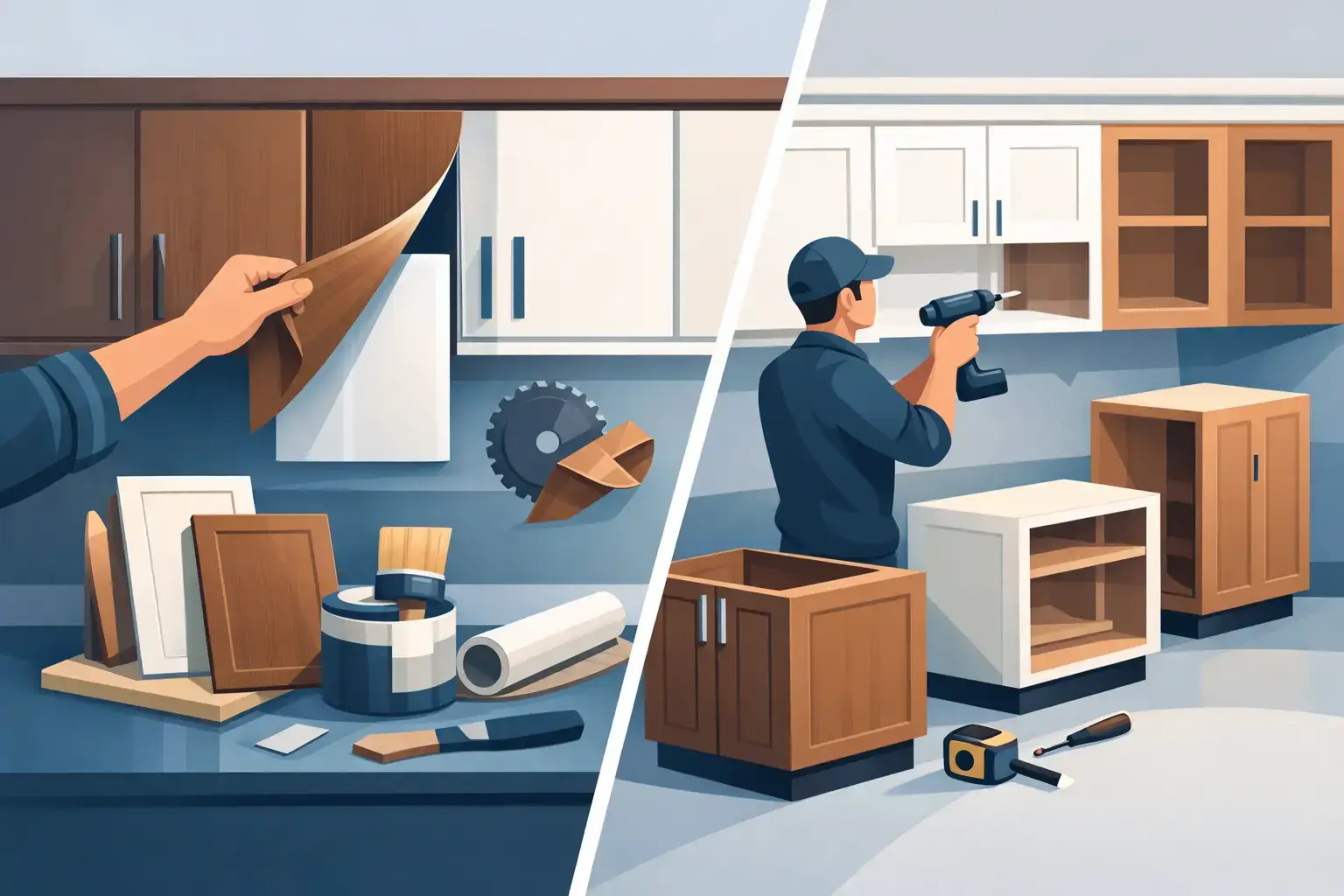
Cabinet refacing is a practical middle ground between a light cosmetic update and full replacement. The existing cabinet boxes remain in place. Their visible surfaces are covered with a new matching material, while new doors, drawer fronts, and hardware are installed. The finished result can give the kitchen a completely different appearance without the expense of removing every cabinet.
Refacing is often a strong choice when homeowners like the footprint of their kitchen but want a more current style. A dated oak kitchen, for example, can be updated with clean-lined doors, a different wood tone, a painted finish, or new hardware that changes the character of the room.
This approach can also reduce the disruption that comes with a full cabinet tear-out. Your kitchen still needs to be prepared for the work, but there is less demolition and less time spent rebuilding a layout that was already functional. That matters for busy families who want an improvement without turning daily life upside down for weeks.
Refacing does have limits. It cannot correct severe cabinet-box damage, and it will not make a cramped or poorly planned kitchen larger. Small adjustments may be possible, but a major layout change usually requires new cabinetry. A good contractor should explain those limits clearly instead of pushing refacing when replacement is the better long-term answer.
When Refinishing Is the Better Value
Cabinet refinishing works best when the door style is still appealing and the cabinets are structurally sound, but the finish looks worn, faded, scratched, or simply outdated. Refinishing can restore wood cabinetry, change its color, or give cabinets a fresh painted look, depending on the material and condition of the existing surfaces.
For homeowners who like their current raised-panel doors or traditional cabinet design, refinishing can be one of the most cost-effective ways to improve the room. It allows the kitchen to keep its character while removing the signs of age that have built up over years of cooking, cleaning, and everyday use.
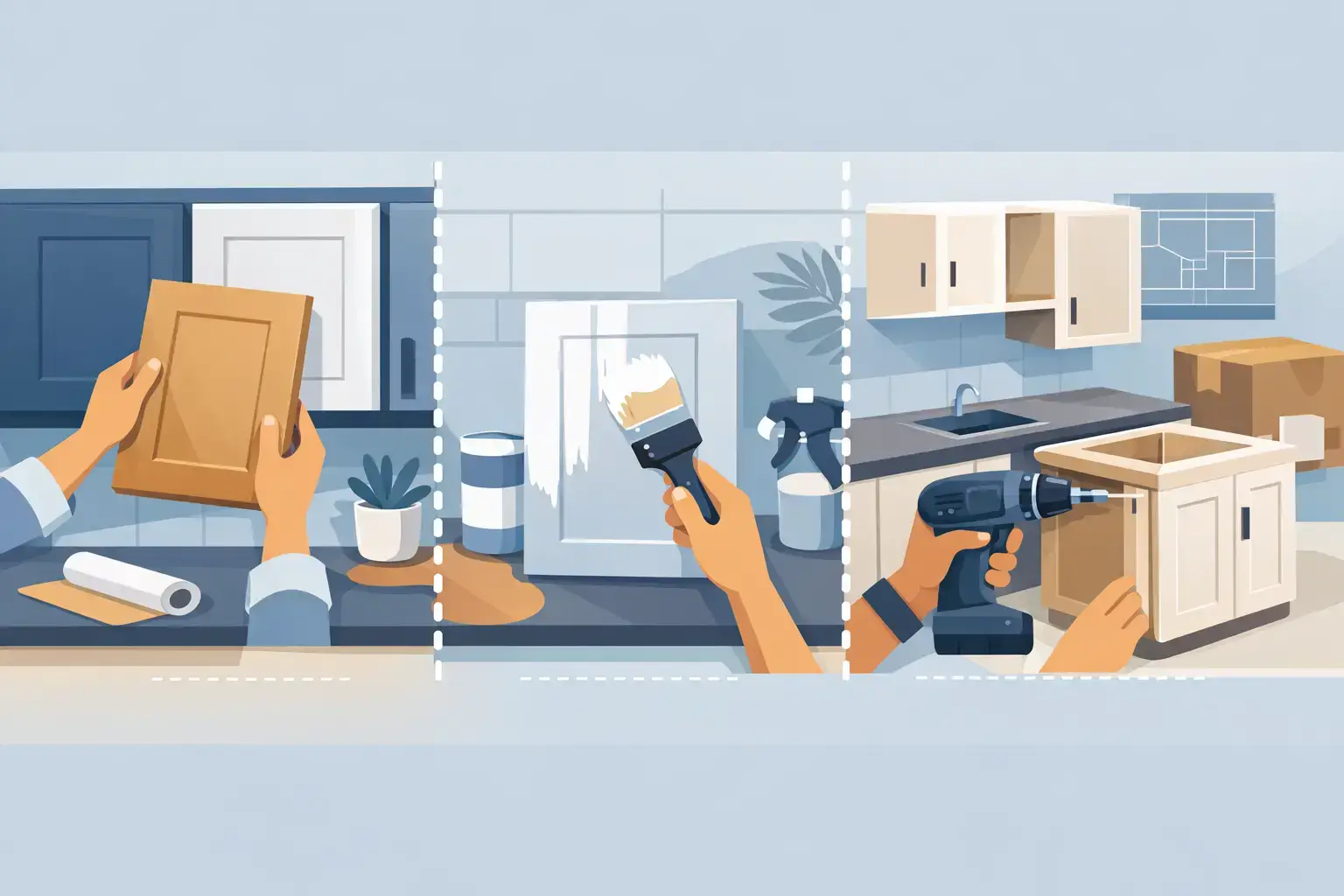
Preparation is what separates a finish that lasts from one that starts chipping too soon. Cabinet surfaces must be cleaned, repaired, sanded or properly prepared, primed when needed, and finished with products designed for kitchen use. This is not the same as applying a quick coat of paint over old cabinet doors.
Refinishing may not be the best fit if you dislike the door profile itself. A dark, worn finish can be changed, but refinishing will not turn ornate doors into a modern shaker style. If the style is the problem, refacing may provide the better result.
When New Kitchen Cabinetry Is Worth It
New kitchen cabinetry is the right call when existing cabinets are beyond repair or when the kitchen needs a meaningful layout change. Maybe the sink is in an awkward spot, the storage is insufficient, the pantry space is wasted, or the cabinets were poorly installed years ago. In those cases, replacement allows the kitchen to be planned around how you actually live.
Replacement also gives homeowners more freedom with cabinet sizes, drawer configurations, storage accessories, and appliance placement. Deep drawers for pots and pans, a better pantry cabinet, pull-out storage, and updated corner solutions can improve function as much as appearance.
Still, full replacement is usually the most expensive option. It can involve demolition, flooring and wall repairs, plumbing or electrical changes, countertops, and other work that grows beyond the cabinets themselves. That does not mean it is the wrong choice. It means the project should be planned carefully so the money goes toward improvements that will matter every day.
For a homeowner who wants a new layout, replacement may be a worthwhile investment. For someone whose kitchen works well but looks worn out, refacing or refinishing can often deliver the more sensible value.
Choose Materials for Real Life, Not Just the Showroom
Cabinet choices should hold up to the way your household cooks, cleans, and gathers. A busy family kitchen needs durable finishes, dependable hinges, and surfaces that can handle regular use. A style that looks great in a showroom may not be the right fit if it shows fingerprints easily or requires more upkeep than you want to give it.
Door style also matters. Shaker-style doors remain popular because they work with many homes, from traditional to more modern spaces. Slab doors offer a cleaner, simpler look. Raised-panel doors can suit classic homes and may be worth keeping if the cabinetry is in good condition.
Color deserves the same practical thinking. White cabinetry can brighten a smaller kitchen, but it may show splatters and wear more readily in a high-traffic home. Medium wood tones can feel warm and forgiving. Dark cabinets add contrast but can make a room feel heavier if the space has limited natural light. There is no universal best choice. The right one fits the room, the home, and the people using it.
Hardware is a smaller decision with a noticeable effect. New pulls and knobs can make cabinetry feel more finished, but they should be comfortable to use and sized appropriately for the doors and drawers. It is also wise to choose hardware that will not feel dated immediately after installation.
Budget for the Parts That Matter
Homeowners sometimes focus only on the price of doors or cabinet boxes, then get surprised by the rest of the project. Countertops, backsplash work, plumbing adjustments, lighting, flooring repairs, and appliance changes can all affect the final cost. A clear estimate should help separate what is included from what may be an additional expense.
It also pays to think beyond the lowest initial price. Poor preparation, thin materials, rushed installation, or subcontracted work with little oversight can cost more later if repairs are needed. A fair price should include solid workmanship, clear communication, and a crew that takes responsibility for the finished job.
Kitchen Perfect has more than 25 years of experience helping local homeowners weigh these choices. By doing its own work and fabricating many components through its in-house cabinet shop, the company can keep closer control over quality while offering a practical alternative to a full kitchen replacement.
Ask the Questions That Protect Your Project
Before choosing a contractor, ask who will perform the work, whether the cabinet boxes will be inspected for damage, and how the work area will be protected during the project. Find out what materials will be used, how doors and drawer fronts will be aligned, and what happens if an issue is discovered after work begins.
For refacing or refinishing, ask how the existing surfaces will be prepared. For new cabinets, ask how the layout will be measured and who is responsible for coordinating details around countertops, appliances, and any needed plumbing or electrical changes. Straight answers at the beginning usually lead to fewer surprises later.
The right kitchen update is not always the biggest one. It is the one that gives you a kitchen you enjoy using, fits the home you already have, and respects the budget you worked hard to build. A careful look at your existing cabinets can be the first step toward a better kitchen without paying for more work than you truly need.