A kitchen can start to feel worn out long before the cabinet boxes are actually worn out. Faded oak, yellowed white paint, scratches near the pulls, and grease buildup can make a solid kitchen look older than it is. So, how long does cabinet refinishing last? With proper preparation, quality coatings, and normal care, professionally refinished cabinets commonly last 8 to 15 years before they may need significant touch-ups or another finish update.
That range is not a promise that fits every kitchen. A quiet household with well-built cabinets may get more life from the finish. A busy family kitchen with pets, kids, frequent cooking, and cabinets that see daily abuse may land closer to the lower end. The good news is that refinishing can give a functional kitchen a major visual improvement without the cost and disruption of replacing every cabinet.
How Long Does Cabinet Refinishing Last? It Depends on the Work
The lifespan of a cabinet finish begins before any color is applied. A lasting refinishing job is not simply painting cabinets over a weekend. Cabinet doors and frames need to be cleaned thoroughly, repaired where needed, sanded or deglossed correctly, primed when appropriate, and coated with a finish designed for cabinet use.
Kitchen cabinets collect years of cooking residue, hand oils, furniture polish, and cleaning products. If those contaminants are not removed, a new coating may look good at first but fail early. Peeling around handles, chips at door edges, and paint that scratches too easily are often signs of poor surface preparation rather than a problem with the cabinet itself.
Professional application also matters. Sprayed finishes generally produce a smoother, more even surface than a brush-and-roll approach. More importantly, a cabinet-grade coating needs sufficient cure time before it is put through everyday use. Dry to the touch is not the same as fully cured. Cabinets that are closed, scrubbed, or bumped too soon can show damage before the finish has had time to harden.
What Affects the Life of a Refinished Cabinet Finish?
The condition of the existing cabinets
Refinishing works best when cabinet boxes, doors, and drawer fronts are structurally sound. Solid wood doors and quality older cabinets are often excellent candidates. They may look dated, but they can still have years of service left in them.
Water damage changes the picture. Swollen particleboard near a sink, separating veneer, loose joints, sagging shelves, or badly warped doors cannot be solved with a new finish alone. Those issues should be repaired, or the damaged parts should be replaced, before refinishing begins. In some kitchens, cabinet refacing or new cabinetry is the more sensible investment.
Daily wear in the kitchen
The areas around knobs and pulls receive the most contact, followed by lower doors near trash pullouts, sink bases, and cabinets beside the range. Darker colors can hide some minor marks, while white and light finishes can show scuffs more quickly. On the other hand, small damage is often easier to see and touch up on a painted finish than on a stained wood finish with fading or discoloration.
Cooking habits matter, too. Grease, steam, and repeated heat exposure can take a toll, especially on cabinets around the stove. A good range hood, used regularly, helps protect both the cabinet finish and the rest of the kitchen.
The coating system and color choice
Not every paint is made for cabinets. Wall paint may cover well, but it is not designed for constant contact, cleaning, and doors rubbing against frames. A professional refinishing system uses primers and topcoats selected for adhesion and durability.
Color can affect maintenance as well. Bright white remains a popular choice because it makes a kitchen feel clean and open, but it may show dirt and food splatters sooner. Deep navy, black, or charcoal can look sharp, yet scratches can be more noticeable when a lighter material is exposed underneath. There is no wrong choice, but it is worth selecting a finish that fits the way your household actually uses the kitchen.
Northeast Ohio humidity and temperature changes
Northeast Ohio homes experience dry winter air, summer humidity, and temperature swings throughout the year. Wood naturally expands and contracts with those changes. That movement is normal, but it can make small joints, seams, and hairline cracks more visible over time.
A properly applied finish flexes and holds up better than a rushed coating job. Homeowners can also help by keeping indoor humidity reasonably steady, using ventilation while cooking, and dealing with leaks quickly. The cabinet under the sink is one of the first places water damage can shorten the life of any finish.
Refinishing vs. Refacing: Which Lasts Longer?
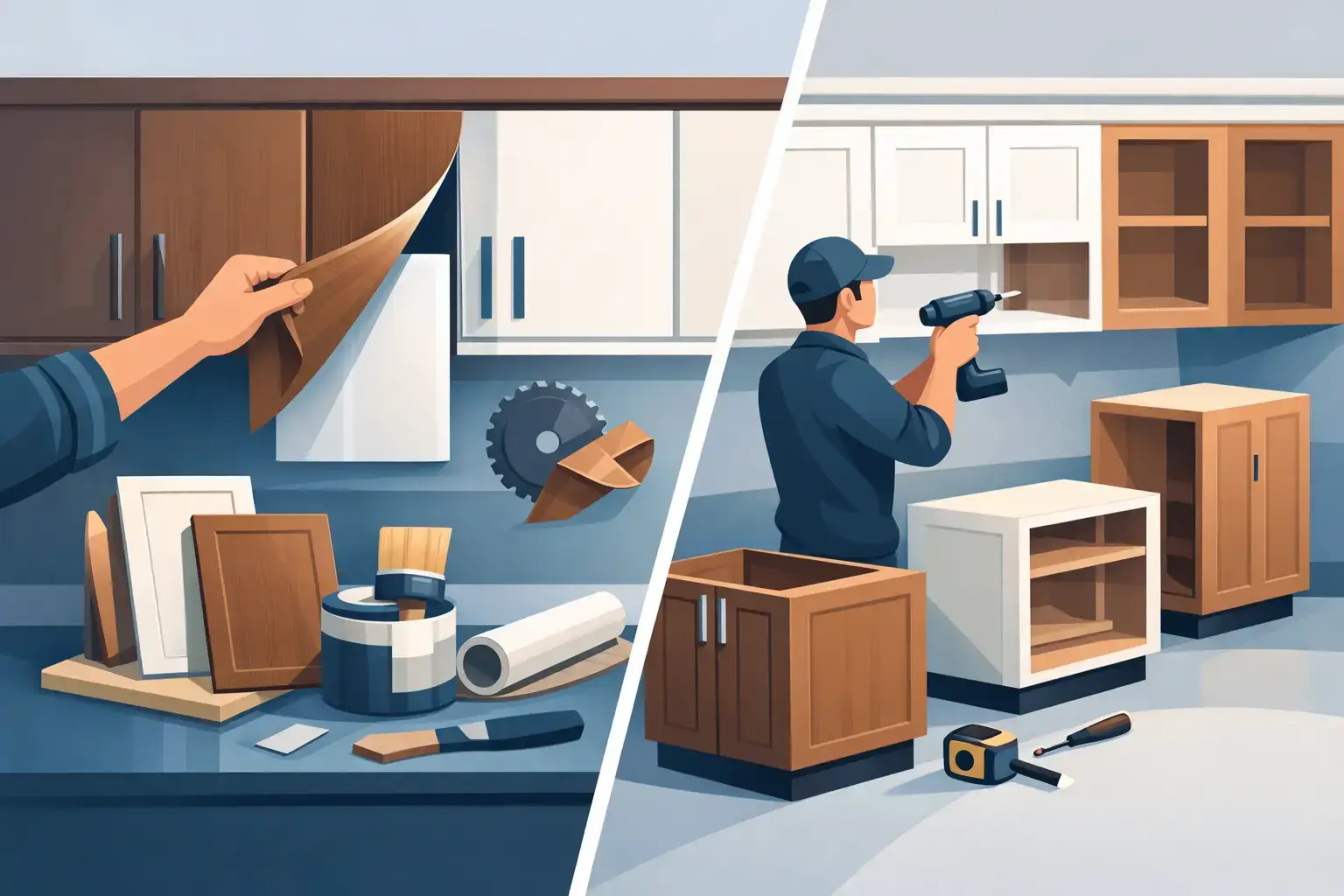
Cabinet refinishing updates the surface of the cabinets you already have. It is a good fit when you like the layout, the doors are in decent shape, and the goal is to change the color or restore a tired finish. It is generally the lower-cost option because the existing doors and cabinet boxes stay in place.
Cabinet refacing goes further. The cabinet boxes receive new finished surfaces, and the doors and drawer fronts are replaced. Because the visible components are new, refacing can be the better choice when old doors are heavily damaged, the current door style feels too dated, or homeowners want a more dramatic change without tearing out usable cabinet boxes.
Neither option is automatically better. Refinishing can provide excellent value and a long service life when the cabinets are good candidates. Refacing can make more sense when the finish is not the only problem. An honest evaluation should look at cabinet condition, budget, layout, and how long you plan to stay in the home.
Signs Your Refinished Cabinets Need Attention
A few small chips do not mean the whole kitchen needs to be refinished again. High-contact areas can often be touched up before damage spreads. The time to take action is when the issue is more than cosmetic.
Watch for peeling near hinges or handles, bubbling around the sink, widespread cracking, finish wear that exposes bare wood or substrate, and doors that stick because of swelling or misalignment. Water-related damage deserves prompt attention. Once moisture gets behind a finish or into an engineered wood cabinet component, the repair can become more involved.
If the cabinets themselves are still solid, another refinishing project may be enough. If boxes are deteriorating, doors no longer operate well, or the kitchen layout is the real frustration, it may be time to discuss refacing or replacement instead.
How to Help Refinished Cabinets Last Longer
Cabinet care does not need to be complicated. Wipe spills and cooking splatter promptly with a soft cloth and mild soap solution, then dry the surface. Avoid abrasive pads, scouring powders, strong degreasers, and cleaners that contain ammonia, bleach, or harsh solvents unless the finish manufacturer specifically approves them.
Do not hang wet dish towels over cabinet doors for long periods, especially near seams. Use the range hood when cooking, and keep an eye on plumbing under the sink and near the dishwasher. A slow leak can do more harm than years of normal opening and closing.
It also helps to adjust loose hinges and hardware early. A door that rubs against another door or scrapes the frame every day can wear through a finish at the contact point. Small maintenance items are much easier to handle than a full repair later.
A Practical Way to Plan Your Kitchen Update
For homeowners in North Royalton and nearby communities, cabinet refinishing is often worth considering before committing to a complete cabinet replacement. If your kitchen works well but looks tired, refinishing can stretch the useful life of good cabinets and free more of the budget for countertops, lighting, flooring, or other improvements.
The key is to start with the cabinets you have, not just the color you want. A careful look at the boxes, doors, water exposure, hinges, and overall layout will tell you whether refinishing is the practical choice. Kitchen Perfect has spent more than 25 years helping local homeowners weigh those options with straightforward recommendations and workmanship handled directly by its own team.
A kitchen finish will not last forever, but a well-prepared refinishing job can give a sound kitchen many years of fresh, dependable service. Taking care of the small things – cleaning gently, controlling moisture, and fixing damage early – helps ensure that the update continues to look like money well spent.