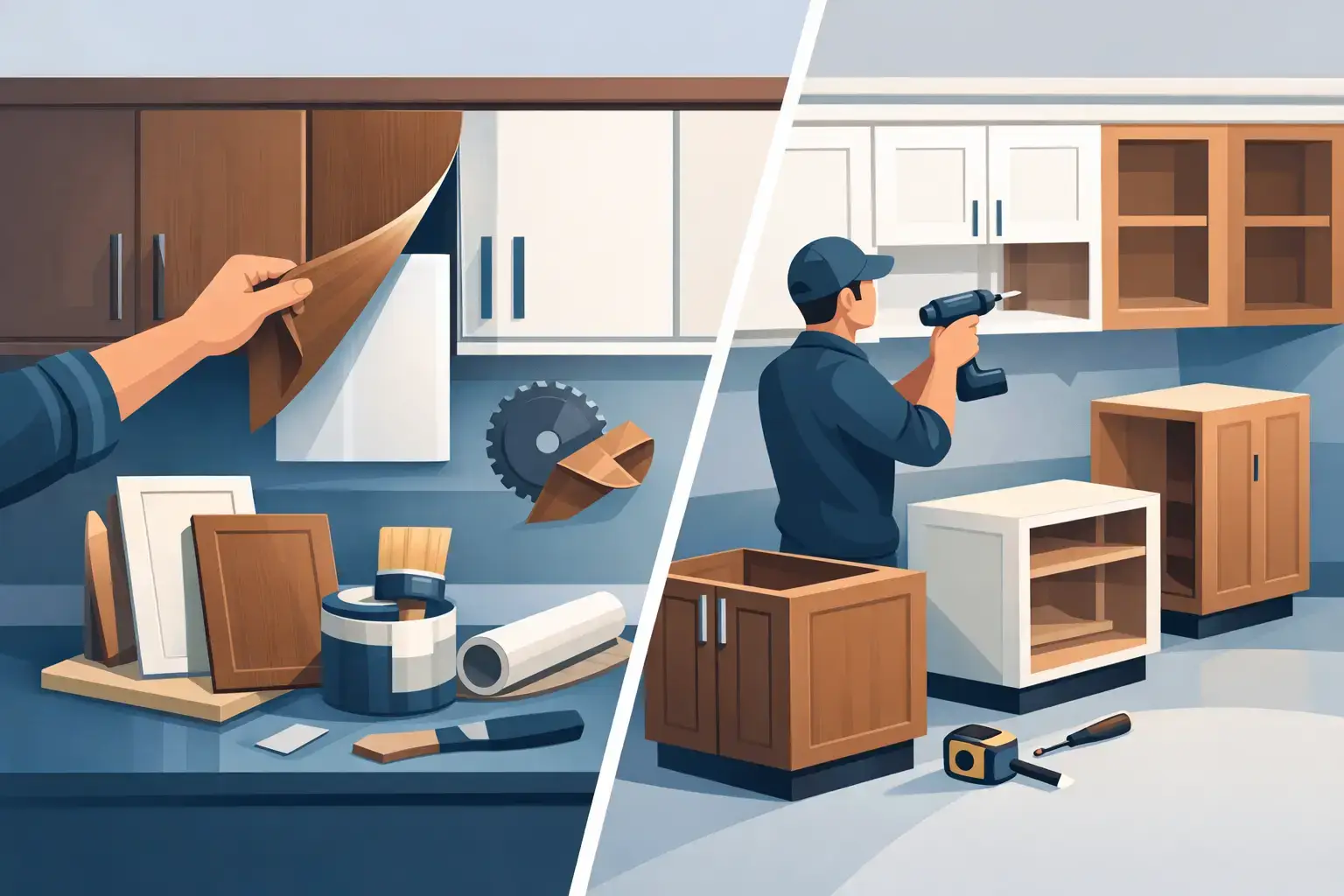
A kitchen can look dated without being poorly planned. If your sink, range, refrigerator, and work areas already sit where they should, tearing out every cabinet may create more expense and disruption than your home needs. That is how refacing preserves kitchen layout: the existing cabinet boxes stay in place while the visible surfaces, doors, drawer fronts, and hardware are updated.
For many Northeast Ohio homeowners, that means getting the fresh kitchen they want without paying to rebuild a room that already works. Cabinet refacing is not a shortcut or a coat of paint. Done properly, it is a practical remodeling option built around sound existing cabinetry, careful measurements, and quality finished materials.
What Cabinet Refacing Leaves in Place
A kitchen layout is more than the placement of cabinets along the walls. It includes the distance between the refrigerator, sink, and range; the counter space beside each work area; traffic paths; electrical outlets; plumbing lines; flooring transitions; and the way the room connects to dining or living spaces.
During a refacing project, the cabinet boxes remain where they are. The exposed face frames and end panels receive new matching material, while old doors and drawer fronts are replaced. New hinges, handles, and pulls complete the change. The result can make an older kitchen feel substantially newer while protecting the arrangement you already know works for your household.
Your daily workflow stays familiar
Homeowners often realize the value of their layout when they imagine losing it. Perhaps the dishwasher is close to the sink, pantry items are within reach of the refrigerator, and there is enough room for two people to prepare dinner without bumping into each other. Those details are hard to recreate by accident.
Refacing keeps that working pattern intact. You can modernize raised-panel oak cabinets with a cleaner door style, change the color, add updated hardware, and choose a new countertop without forcing a redesign of the room. The kitchen looks different, but it still works like your kitchen.
Existing plumbing and electrical can stay put
Moving a sink or dishwasher usually means changing plumbing. Relocating a range may involve gas, electric, venting, and code considerations. Even a small layout change can lead to drywall repair, floor patching, and extra labor that was not part of the original plan.
Because refacing works with the cabinet locations already in place, those costs can often be avoided. That does not mean every upgrade is off the table. Lighting, faucets, countertops, backsplashes, and appliances can still be part of the project. The difference is that they are selected to improve the kitchen rather than to repair problems caused by moving the kitchen around.
Why Keeping the Layout Can Save Money
Full cabinet replacement has a place, especially when cabinetry is failing or the room truly does not function well. But replacement can involve demolition, disposal, new cabinet installation, possible wall repairs, flooring work, and changes to plumbing or electrical systems. Costs add up quickly.
Refacing directs more of the investment toward what people see and use every day: cabinet doors, drawer fronts, finishes, hardware, and other visible upgrades. Since the cabinet boxes are retained, there is less material to remove and replace. There is also less chance of opening a wall or pulling up flooring only to uncover another project.
For value-conscious homeowners, this is often the point. A kitchen does not need to be completely rebuilt to feel clean, current, and enjoyable again. If the bones are good, preserving them is a sensible decision.
A New Look Without Rebuilding the Room
Keeping the layout does not mean settling for the same look. Refacing allows a wide range of visual changes, from warm traditional styles to simple, contemporary cabinet doors. Color choices can brighten a darker kitchen, while new hardware can give cabinets a more finished appearance.
Countertops and a backsplash can make an even bigger difference. When cabinets remain in their existing locations, a new counter can be measured to fit the same footprint. That lets homeowners update the room’s focal point without changing the basic structure beneath it.
Some storage improvements may also be possible within the existing layout. New drawer fronts, replacement drawers, pull-out accessories, or better-organized cabinet interiors can improve daily use. The exact options depend on the cabinet construction and available space, so a qualified contractor should look at the kitchen before promising specific changes.
When Refacing Is the Right Fit
Refacing is usually a strong choice when cabinet boxes are sturdy, properly installed, and free of major water damage. The layout should also meet your needs. If you like where the sink is, have adequate counter space, and can move through the room comfortably, there is little reason to pay for a major reconfiguration just for the sake of change.
It can be especially useful in homes where the kitchen flows into nearby rooms. Moving cabinet runs or appliances may affect flooring, trim, paint, and traffic through the whole first floor. Refacing limits the scope while still delivering a noticeable improvement.
A straightforward inspection is the best place to start. Look for sagging cabinet boxes, swollen material near the sink, severe structural damage, or doors that do not close because the cabinet itself has shifted. Those are signs that replacement may be the better long-term investment.
When Preserving the Layout Is Not Enough
Honest remodeling advice includes knowing when refacing is not the answer. If a kitchen is too cramped, lacks basic storage, has unsafe appliance spacing, or forces people to walk through the cooking area, keeping the same layout may preserve the very problems you want to solve.
The same is true for badly damaged cabinets. Surface updates cannot correct cabinet boxes weakened by long-term leaks, poor installation, or inferior materials. Homeowners planning major wall changes, additions, or a completely different appliance arrangement may also benefit more from new cabinetry.
There is no benefit in choosing refacing simply because it costs less if the finished kitchen will still frustrate you. The goal is value, not just the lowest initial price. A good contractor will explain the condition of the cabinetry and help you compare the realistic options.
What the Refacing Process Looks Like
A well-run refacing project begins with an in-home evaluation and careful measurements. The contractor checks cabinet box condition, reviews door styles and finishes, and talks through improvements that fit the room and budget. This planning matters because new doors and applied surfaces need to fit accurately and look consistent from one cabinet run to the next.
Once materials are selected, the work focuses on the cabinets rather than a full demolition site. Old doors and drawer fronts come off, exposed cabinet surfaces are prepared and covered, and new components are installed. Hardware is aligned, doors are adjusted, and the finished kitchen is checked for fit and function.
The timeline depends on kitchen size, material choices, countertop work, and any added upgrades. Still, refacing is generally less disruptive than removing and rebuilding all cabinetry. For families who use the kitchen every day, reducing the length and mess of the project is a real advantage.
Local Craftsmanship Makes the Difference
The value of refacing depends heavily on the workmanship behind it. Careless measurements, poor surface preparation, or mismatched materials can make even a good layout look unfinished. Experienced installers pay attention to cabinet alignment, door spacing, edge details, and the small adjustments that make the room look right.
Kitchen Perfect brings more than 25 years of experience to homeowners in North Royalton and surrounding communities. As a family-owned company with an in-house cabinet shop, the team handles its own work and maintains closer control over the finished quality. That helps keep the process personal, practical, and focused on fair value.
If your kitchen works well but no longer looks the way you want, do not assume a full tear-out is the only path forward. A careful evaluation of your existing cabinets can show whether refacing will preserve the layout you rely on while giving the room a fresh, durable new look.